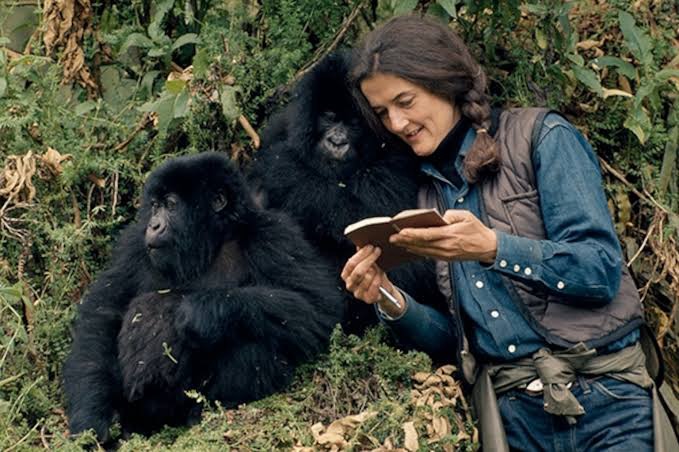
Dian Fossey (1932-1985) released her field work / autobiography— Gorillas in the Mist – in the summer of 1983.
Two years later she’d be murdered in her cabin on Boxing Day of 1985 and buried with her gorillas beneath the volcanos of Rwanda on New Year’s Eve.
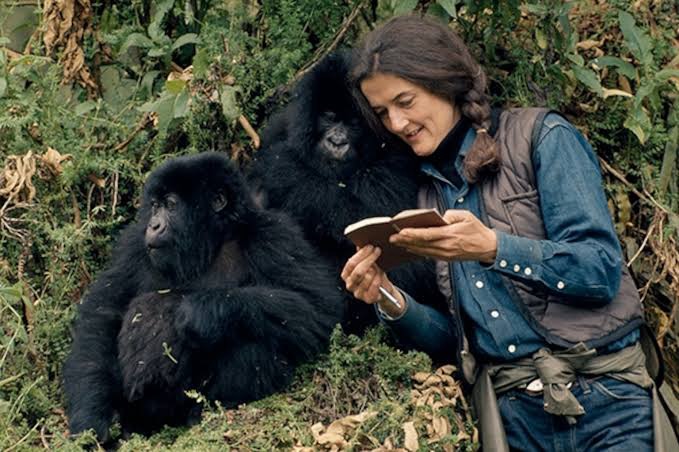
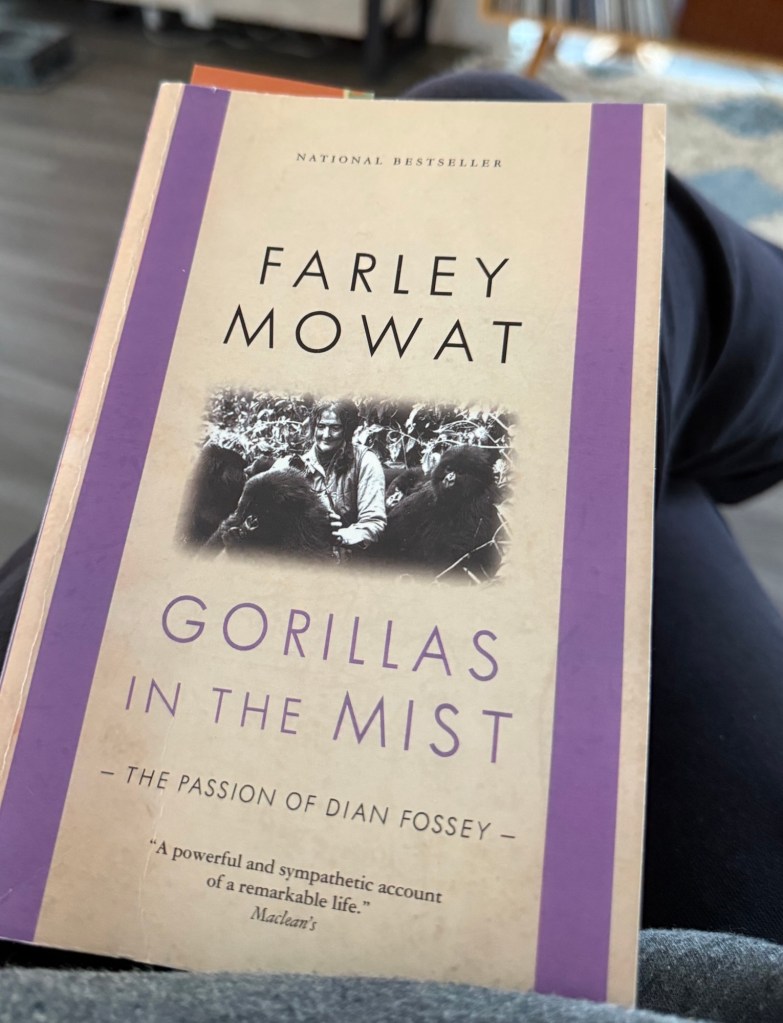
Farley Mowat wrote a true biography of Fossey in 1987 with Gorillas in the Mist: The Passion of Dian Fossey.
His book starts fresh using all source material that Fossey used to make her own autobiography. Mowat goes beyond a focus on Apes and weaves together a story of politics, colonialism, racism, lovers, fame, illness, hatred, death and of course – gorillas.
I admit I didn’t know tons about Fossey. However, the list of unexpected facts has some depth:
- Botched Illegal Abortion: Fossey’s own medical trauma (a botched abortion and hemorrhage) occurred after a Belgian doctor in Congo left tools in her body. This occurred months after an affair with National Geographic photographer Bob Campbell.
- Students, marriages, and clashing theories. One of her best field assistants was Rosamond Stewart – who in the science world was more famous than her actor father, James Stewart. She married another student, Sandy Harcourt, and the couple would become Fossey’s arch nemesis in the fight of the role of science is research vs Fossey becoming police for active conservation.
- Whole families slaughtered for infants. Poachers targeted silverbacks to grab babies for zoos—a single raid could wipe out a group. Fossey describes Digit’s murder and the cascade of orphaned gorillas shipped to Europe. If you see a gorilla in zoos of Germany or Netherlands they are often the offspring of entire groups of murdered gorillas.
- From observer to enforcer. She began as a researcher and became a self-appointed protector, organizing armed patrols, destroying traps, and confronting poachers head-on.
- The colonialist shadow. Her tactics—kidnapping poachers, psychological torment, violent deterrence—were rooted in Western “save the animals” ideology. One chilling passage details stripping a poacher and lashing his genitals with nettles, an act she recounts with unsettling matter-of-factness. She was known for the poor treatment of many of “her Africans” and for making her own decisions that gorillas were superior to the livelihoods of not only poachers but of entire communities who relied on the mountains for cattle grazing.
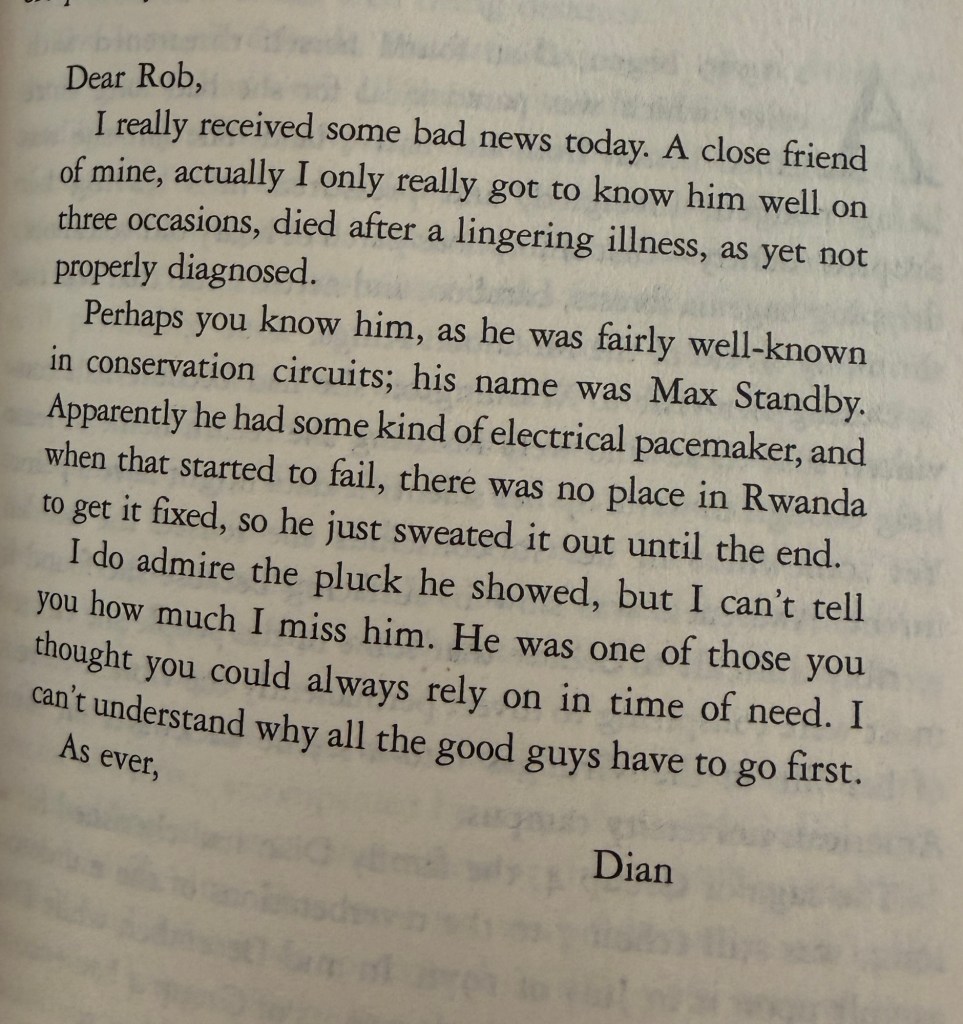
- Max, the electric dildo. Fossey’s New Year’s Eve 1979 spent with a battery-powered device named Max is recounted as a darkly comic, lonely counterpoint to her feral mountain life.
- The two year visa was a death warrant: Fossey regularly fought with corrupt park officials. They wanted her to leave Rwanda and never look back. They had the power to hold up visas and regularly used the renewals as ways to frustrate her to leave. Eventually political allies in Rwanda decided to grant her a two year visa eliminating the power of park officials. Mowat argues this was her signed death sentence.
- The Trio of Scientists were not Equal: Jane Goodall (chimps) and Biruté Galdikas’s (Orangutans) spent time with Fossey on speaking tours. Fossey struggled getting along and Goodall often played peacemaker. Fossey also struggled paying bills – likely because of her difficult personality. The others in the trio regularly received large grants and support.
- Murder by President’s Brother?
Mowat makes the argument that Protais Zigiranyirazo – known as Monsieur Zed – a corrupt businessman, was the person who arranged the murder of Fossey. The motive was her interference in the poaching trade. Zed was also the brother of Rwandan President Habyarimana who ruled Rwanda from 1973 to 1994. This is the same Hutu president who was assassinated when his plane was shot down – known as the official start of the genocide.


Leave a comment