Mugged, extorted, and global reactions to terrorism from afar
Toxic positivity – a byproduct of social media – amplifies the best parts of life while self-censoring the struggles. Letting the good times role serves as a marketing strategy for personal happiness that omits reality of life’s ups and downs.
Travel rarely goes according to plan. Sometimes the mishaps become the highlights—the stories you retell for years. Other times, they’re buried, moments of embarrassment that you’d rather forget or escape from.
Robbed at knife point
Durban – a coastal city on the Indian Ocean is home to around 4 million South Africans. The daily high temperature ranges from 26 to 30 Celsius. It’s among my favorite cities.
Yet, beneath the sun-soaked beaches, Indian Ocean breeze and friendships— is the memory of personal fear that I carried for years and I’ve since stored away.
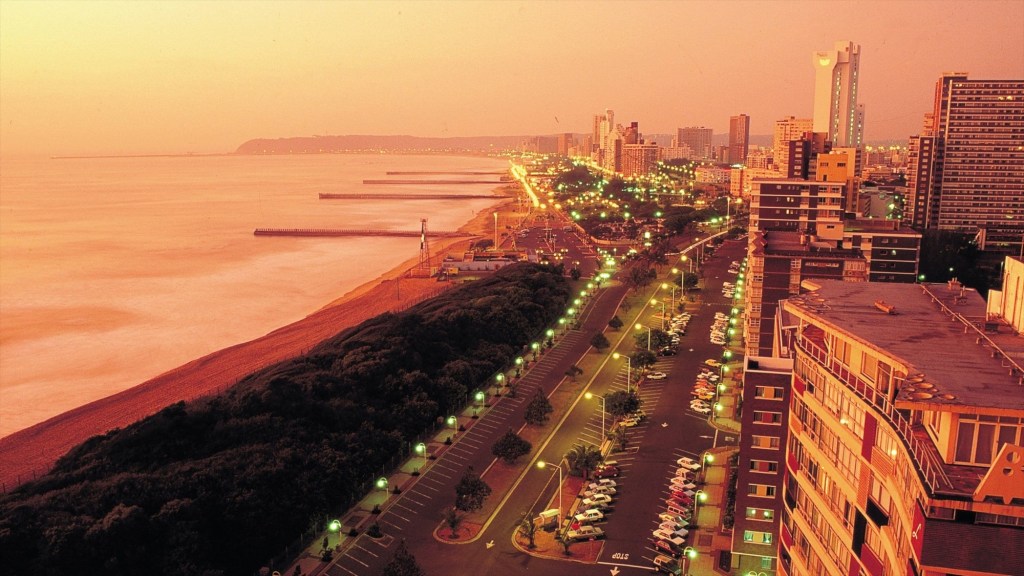
For the most part, I stayed vigilant about my personal safety in South Africa. Meeting South Africans before leaving Canada, during a week of orientation in Ottawa, shaped that protective mindset. Everyone seemed to speak at length about violent crimes. The first weeks of daily life reinforced it. Gated communities and armed private security at businesses and homes was common. I also learned that driving at night required caution – many drivers slowed at red lights but didn’t stop, fearing carjackings.
This criminal element is closely linked to extreme inequality, poverty, and chronic unemployment. South Africa’s official jobless rate has hovered between 25% and 35% for years. When entire communities face so little economic opportunity, desperation hardens — and crime becomes a predictable outcome. You see that pattern worldwide — and it often manifests in brutally direct ways.
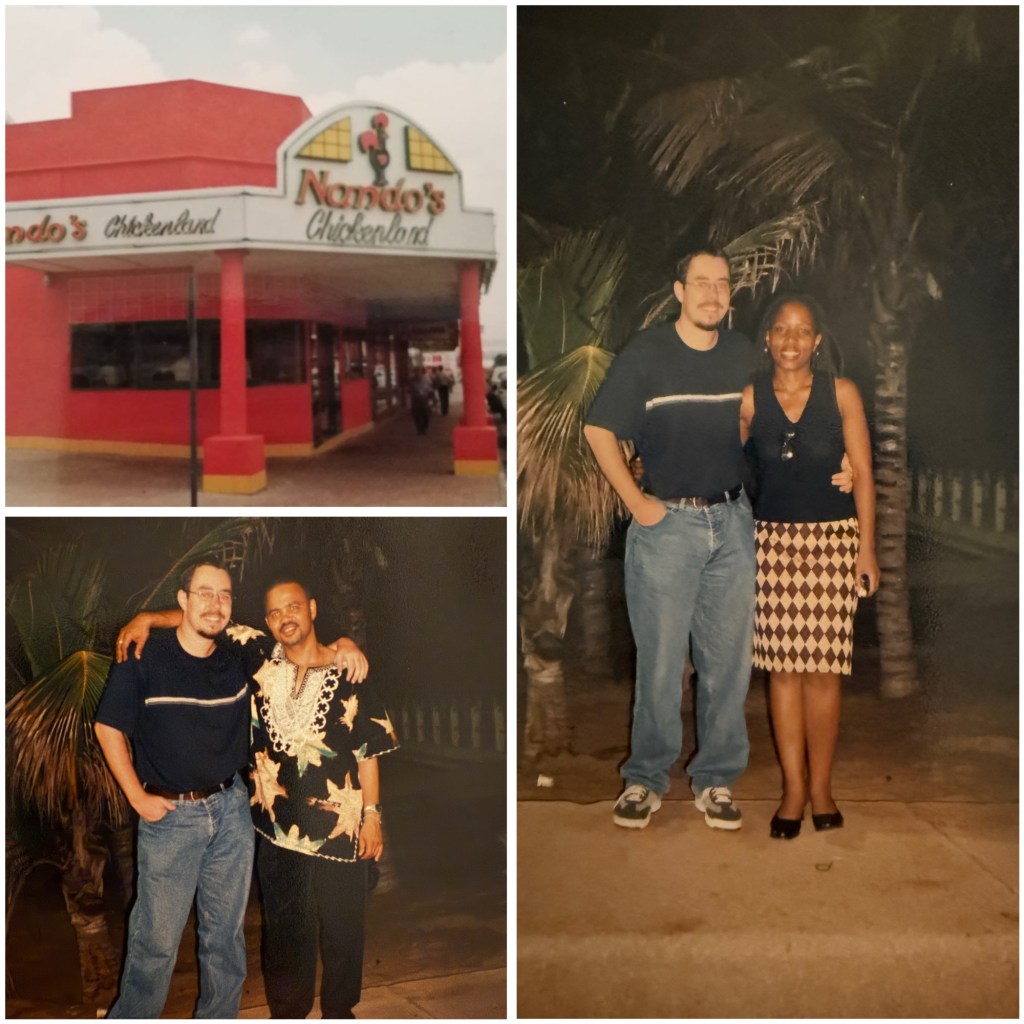
One night I let my guard down to those realities. I was out with colleagues for dinner. We met a group of women at Nando’s — the Portuguese-inspired chicken chain founded in Johannesburg in 1987 — and we all got talking. Drinks followed. Eventually the night splintered into smaller groups as we wandered out onto the pier and the beach.
It wasn’t long afterward that I glanced left as a kid was talking in my ear — I couldn’t even make sense of what he was saying. Then I looked ahead, and another kid was holding the tip of a knife just under my jugular. At the same time, someone behind me was going through my pockets.
There was no chance to run, and I didn’t fight. I froze — a reaction that later became a point of criticism from friends.
Moments later, I saw the backs of four street kids — none older than 14 — sprinting away, flinging everything from my wallet except the cash and credit cards. The entire scene lasted maybe 60 seconds.
Not ten minutes later we were all reunited, and my friends were instantly furious with me. “You need to fight for yourself!” one snapped. Another cursed himself for leaving his gun at the hotel. In their view I had disgraced myself by letting my property be taken without resistance. From my perspective, I’d gotten off easy — I lost about 70 Rand (roughly $10 CAD in 2002) and the cards were cancelled almost immediately.
Once the adrenaline drained away, I was left with months of lingering shame, anxiety, and fear. For a while I even worried I’d embarrassed myself in front of the woman I was with — but that concern vanished the next day when she invited me to dinner.
The Bangkok Tailor Scam
Tourists are easy marks for scams — extortion is often the common thread. Most of these schemes fall somewhere on a continuum: from heavy-handed pressure all the way to real force and actual threats. I’ve experienced both ends.
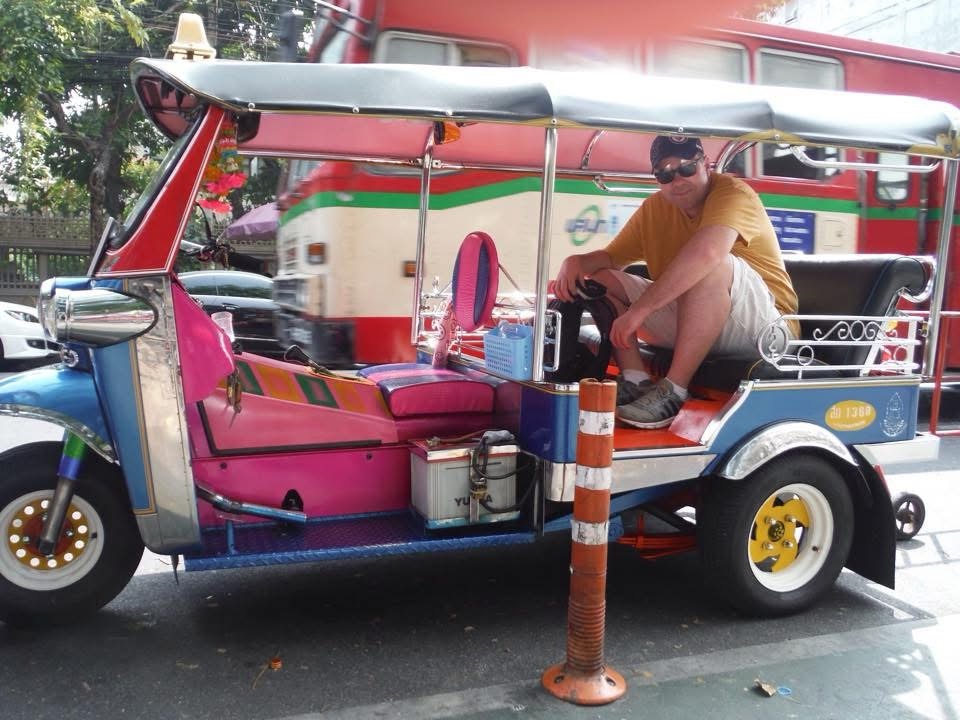
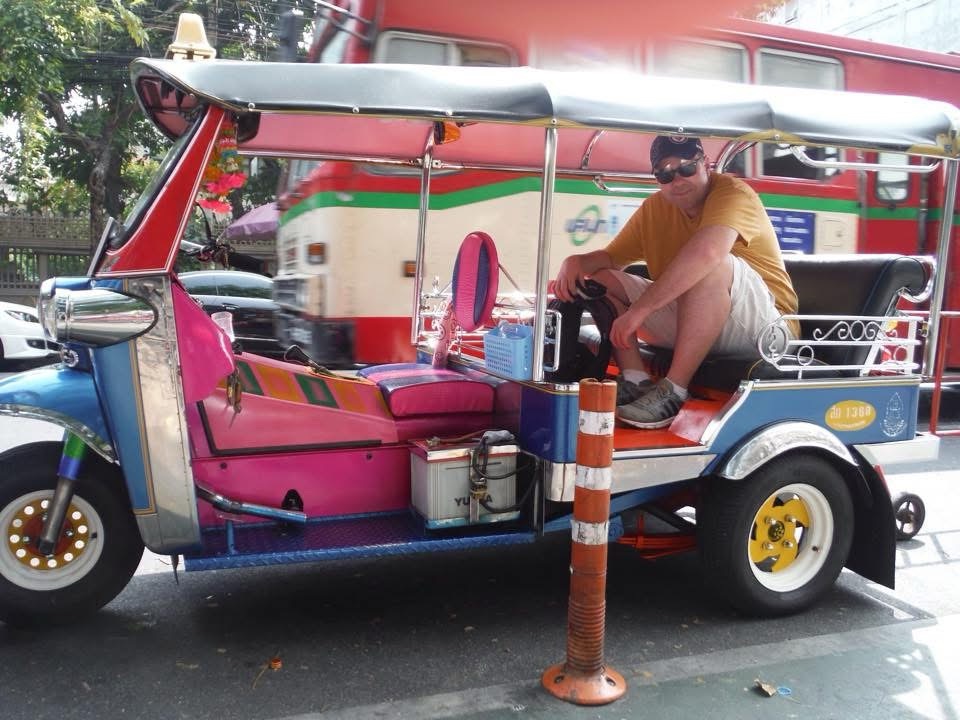
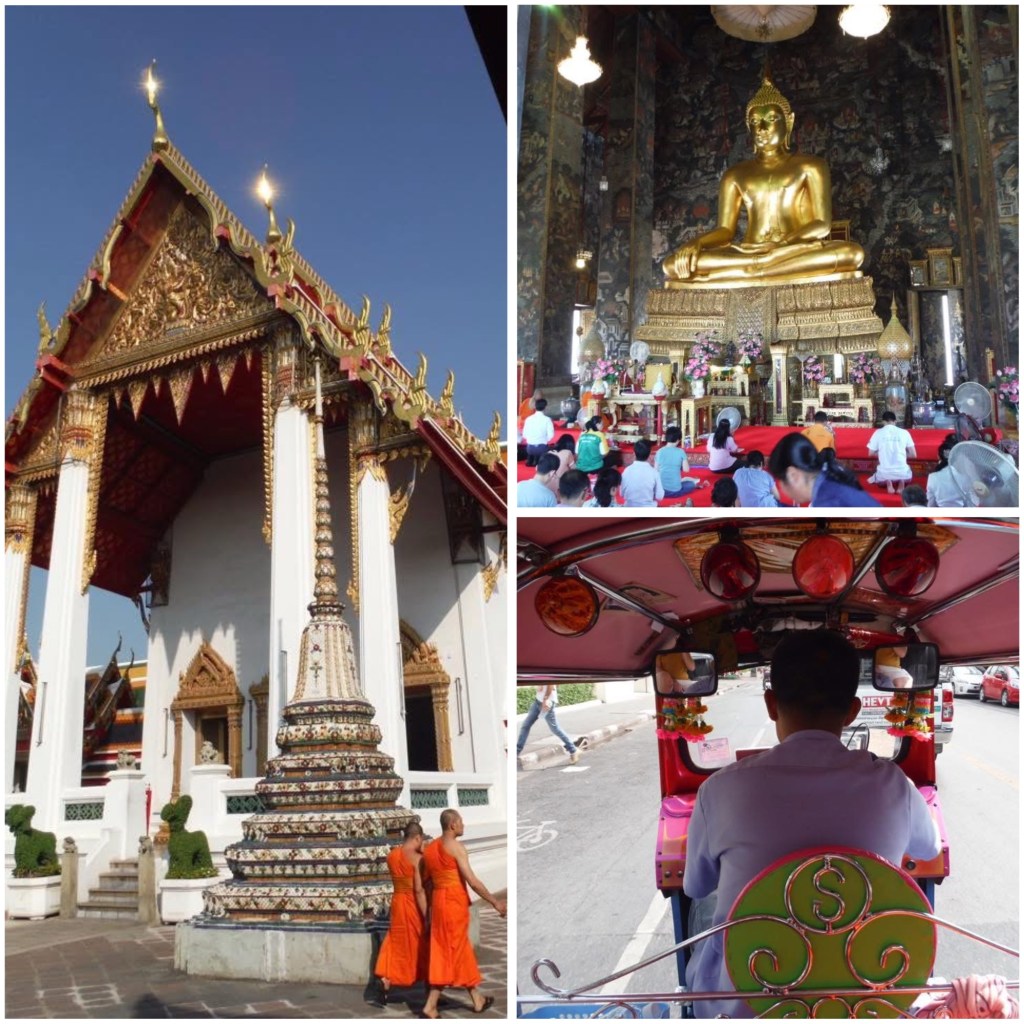
Generally, I try to prepare. Before visiting a country, I research the most common cons and street hustles. For example, when I went to Thailand I already knew about the infamous Bangkok tailor scam, which helped me recognize the setup fairly quickly when a tuk-tuk driver tried to pull it on me.
The approach is simple: the driver offers a ridiculously cheap ride — in my case to an out-of-the-way Buddha shrine and then on to my actual destination. The “catch” is that he detours to a tailor shop. Your “payment” for the cheap fare is supposedly just stepping inside and browsing for a moment. Once you enter, the pressure begins. Staff block the exit and push knock-off suits under the guise of “custom tailoring,” followed by hidden charges and shipping fees. It’s all designed to trap you long enough — and squeeze you hard enough — to make you buy something you never wanted in the first place.
In my case, the driver took me to the shrine, I wandered inside, and when I came back out he was nowhere to be seen. Another tuk-tuk driver appeared and casually explained mine had gone to the restroom. While we waited, he made small talk — including asking if I knew where Armani suits were made — then hinted there were “amazing deals” just outside Bangkok in the fashion district.
He disappeared just as my original driver re-emerged. The engine started, and we were suddenly on our way again toward my supposed final destination: Khao San Road, the infamous backpacker drinking strip. By that point I knew exactly what was coming — the tailor shop detour was inevitable.
Sure enough, he eventually turned down a street lined with fashion storefronts. He admitted he’d earn a commission if I simply stepped inside. I pushed back — calmly — telling him I’d paid for a ride, not for a detour or thirty minutes trapped in a tailor shop. I offered 100 baht (about $4 CAD) — twice what I’d paid for a similar route the day before — to end the charade and take me straight to my stop.
Instead, I got a “life-in-the-fast-lane” joyride through Bangkok’s traffic, weaving between cars and motorbikes until he screeched to a halt in front of a random bar and shouted what I’m sure were some colourful Thai swear words. I climbed out into a street full of vendors trying to sell Buddha trinkets.
The Paris Pig Alley Shakedown
Another well-known Thailand hustle is the Ping-Pong Scam. Tourists are ushered into bars with “no cover” and a first drink “on the house.” Once inside, they’re treated to a bizarre show featuring a nude performer ejecting ping-pong balls from “down south.” It’s become a rite of passage — The Hangover Part II practically mainstreamed it.
The trouble comes when the bill arrives. Tourists assume drinks two through five will be a few bucks each. Instead the bill is four figures — every beer listed at hundreds of dollars, plus exit and entertainment fees. I once watched a group of Australians sprint out of a bar and end up in a brawl with bouncers when they refused to pay. I avoided that trap entirely.
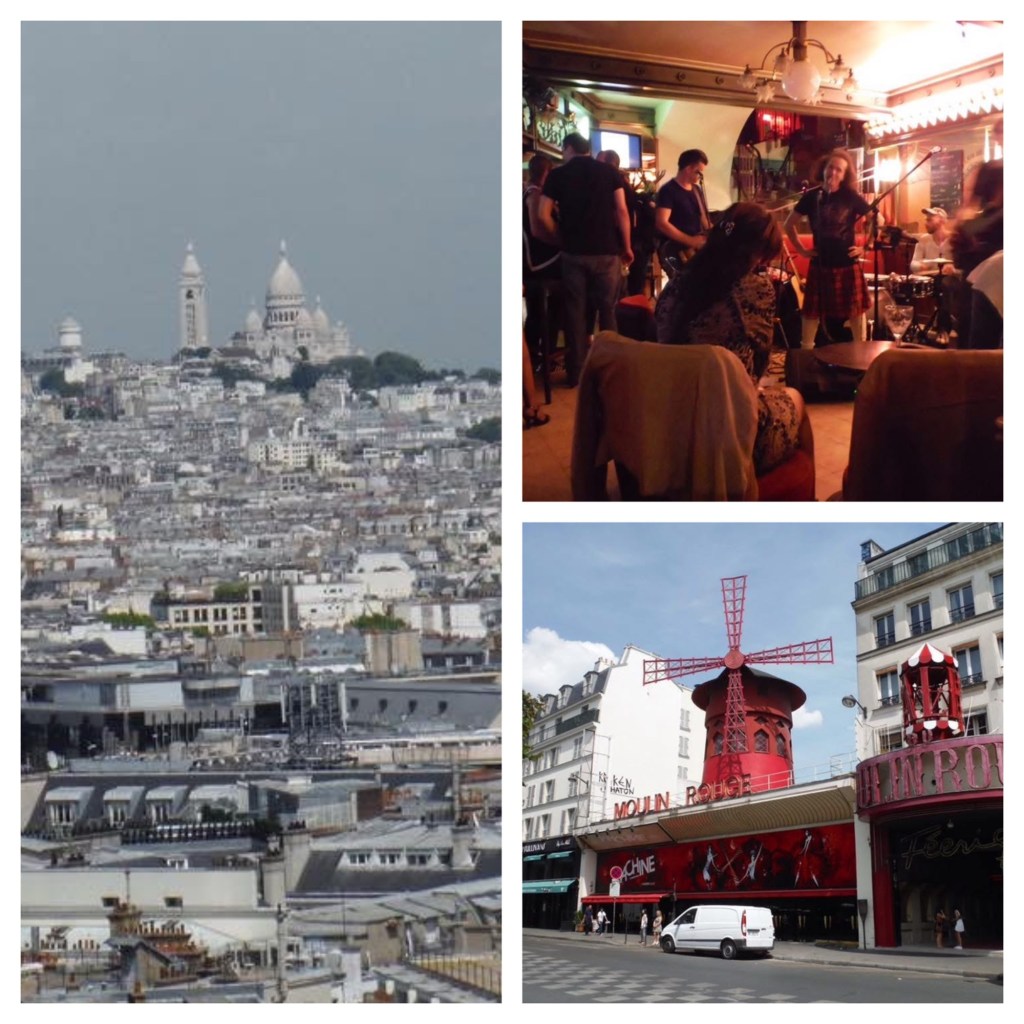
But unconscious racial bias worked against me elsewhere — I assumed western Europe was safer, more regulated, more predictable. That’s how I fell for the equivalent scam in Paris — in Pigalle, the seedy strip of Montmartre. Had I done even basic research, I would have known allied troops literally called the neighbourhood “Pig Alley” during WWII because of its red-light reputation and it’s been a questionable area in the Paris night since.
On my last night in Paris in 2015, I’d been drinking in a bar near the Moulin Rouge, listening to a French guy — in a kilt — belt out Bruno Mars. Around 2 a.m. I left with about 20 euros in my pocket. A gorgeous “barker” outside a club waved a coupon for a free beer and no cover. I figured: free drink, buy one more, enjoy a quick show, call it a night.
She led me to a tiny “club” — really just a small room with a few tables — and I was the only customer. I immediately got uneasy and tried to leave. This wasn’t the type of stripper bar I’d been to in Winnipeg. A huge Russian man stepped in, handed me an already opened beer, and told me to sit. A dancer with a different Eastern European accent sat down on my lap. I said clearly I did not want a lap dance — that I thought there’d be a stage show — and I wanted to go.
She vanished and returned with a bill for 375 euros. “Your drink was free,” she said, “but you were touched — lap dance fee.”
I protested — said I never asked for that and I wanted to leave. The next ten minutes were among the most tense of my life. When I stood up, a thick Russian voice roared: “Pay up!” The door was blocked. A second man joined in. The dancer shouted, “You get services and don’t pay?! Pay now, fucker!”
The only thing I could think to do was pull out my passport and say I wanted to call the police to help us settle this.
That made it worse.
The man at the door charged me and shoved me hard to the floor. He ripped my shirt picking me back up, then slammed me against the wall by the throat. I repeated that I wanted the police — not realizing I was inches from getting properly beaten.
“Open your wallet.”
All I had was a single 20-euro note. He demanded my cards — to drag me to their ATM — and I emptied my pockets to show I had none. (By pure luck I’d left my cards in the hotel safe.)
They finally grabbed the 20, hurled me toward the door and literally threw me out onto the street like the sabertooth tossing Fred Flintstone out into the street.
The actual violence was mild and brief — the shame stayed longer.
I haven’t told that story to many people because of that embarrassment – which is exactly what makes those scams so successful.

9/11
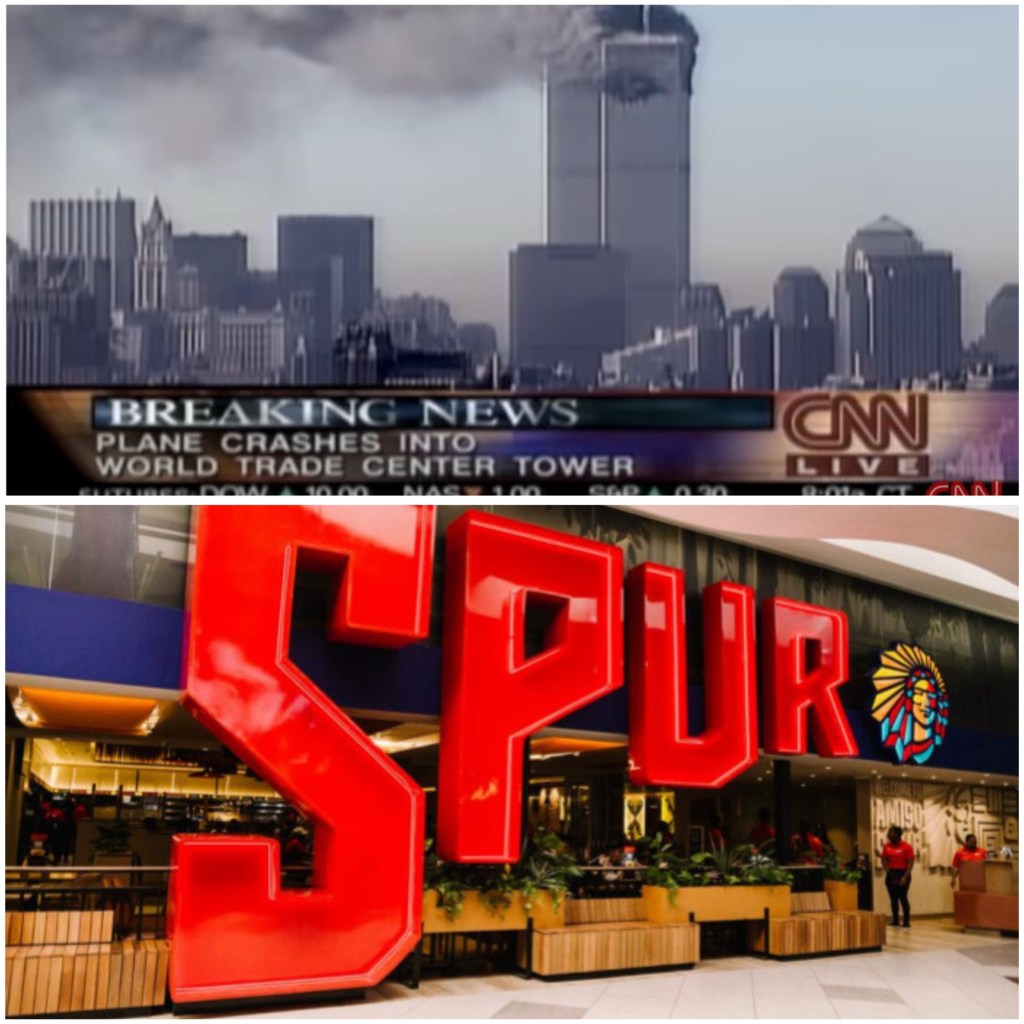
And so I’ll return to an evening in Durban South Africa on September 11, 2001. Rather than return to Amanzimtoti, the oceanfront beach we were staying at, a few of us went to Spur – a chain of popular South African family restaurants based on stereotypes and the appropriation of Native American culture, all at affordable prices.
The waitress, assuming we were Americans, came over and said we should really look at the TVs. Footage of planes striking the World Trade Center towers in New York played on a loop.
In the weeks after 9/11, the attack itself was replaced by observations of how the world was changing. The natural beauty of Durban’s oceanfront clashed with the nonstop roar of U.S. news anchors, who pushed for the rebranding of French fries to freedom fries and abandoned analysis for flag-waving shouts of “Cowards! a line soon echoed by President Bush.
I found myself drawn into debates about global politics and the consequences to come. In Pretoria, I saw the American embassy construct an armored vehicle perimeter. In Cape Town, I saw Bin Laden’s face spray-painted on walls reflecting the reality that many believed he was a hero.
I felt conflicted. My anti-violence values and disgust for the war crime of collective punishment made the attacks horrifying, yet as a critic of American foreign policy I could also understand the geopolitical context that contributed to them. I did my best to resist the swelling chorus of revenge and deliberately dropped the superficial, jingoistic anthems—Toby Keith’s “we’ll put a boot in your ass” among them. Music that celebrates killing civilians or overthrowing governments with no connection to 9/11 is reprehensible; it offers spectacle, not justice.
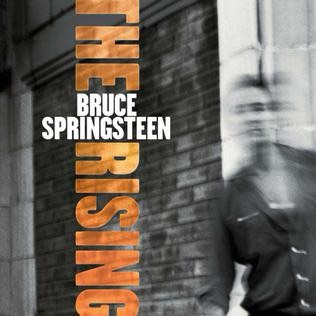
Instead, I turned toward lyrics of reflection. Bruce Springsteen’s words stayed with me: “A little revenge and this too shall pass. Better ask questions before you shoot. Deceit and betrayal’s bitter fruit. It’s hard to swallow, come time to pay. That taste on your tongue don’t easily slip away.”
Springsteen foreshadowed what has become the era known as “the war on terror” that’s defined global politics throughout most of my adult life. Hundreds of thousands of lives lost in 22 nations including America’s longest war ever in Afghanistan, the massacres and regime change in Iraq, and interventions in Syria, Pakistan, Yemen, Libya, Somalia.


Leave a comment