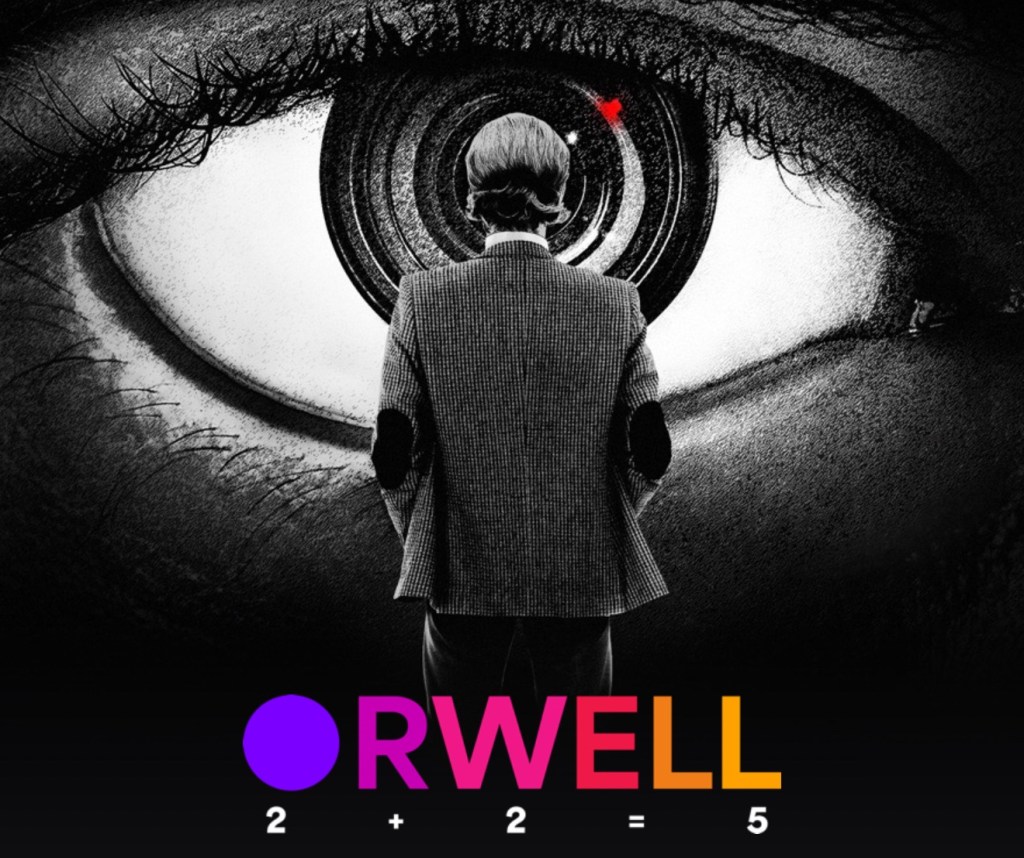
Raoul Peck’s 2025 Documentary on the life, times and importance of George Orwell for current society.
Motihari — a small Indian city — is where Gandhi launched his first Satyagraha, and it’s also the birthplace of George Orwell (born Eric Arthur Blair), whose father served in the British Opium Department.
The town that ignited non-violent resistance against the British empire also produced a writer who grew up directly benefiting from colonialism, yet later cited that as a reason he became one of its fiercest critics.
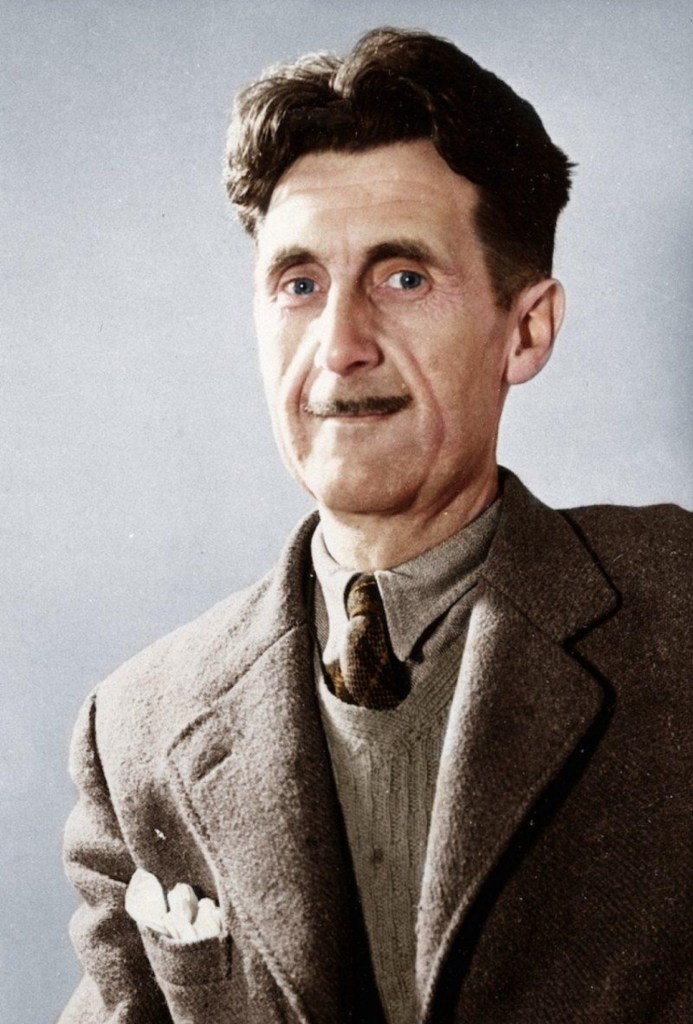
Raoul Peck — best known for his 2017 Oscar-nominated documentary I Am Not Your Negro, a searing social critique built around the writings of civil rights activist James Baldwin — returns with a similar treatment for the life of George Orwell, the writer whose work became the voice of Antifa (anti-fascism) throughout the later half of the 20th century.
Actor Damian Lewis (best known for the lead role in Homeland and Billions) plays Orwell by narrating his diary in the last years of his life while he was battling tuberculosis and writing 1984 – his final novel.
Orwell’s Antifa credentials run deep. He voluntarily served in an international brigade, joining the Workers Party during the Spanish Civil War. That war highlighted a growing fascism across the western world that included Italy and Germany. That war was also a catalyst for his untimely death at age 46. Orwell sustained a bullet to the neck – an injury that is suspected to have led to contracting tuberculosis which eventually led to his passing.
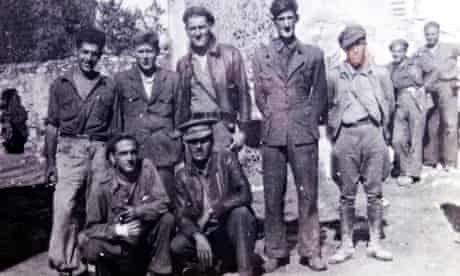
George Orwell (back row – 4th from left) violated the British Foreign Enlistment Act by fighting in the Spanish Civil War (1937).
Orwell considered himself a democratic socialist. That ideology allowed him to critique all totalitarian systems of government. Animal Farm – arguably his best work – was a critique of Soviet society and communism.
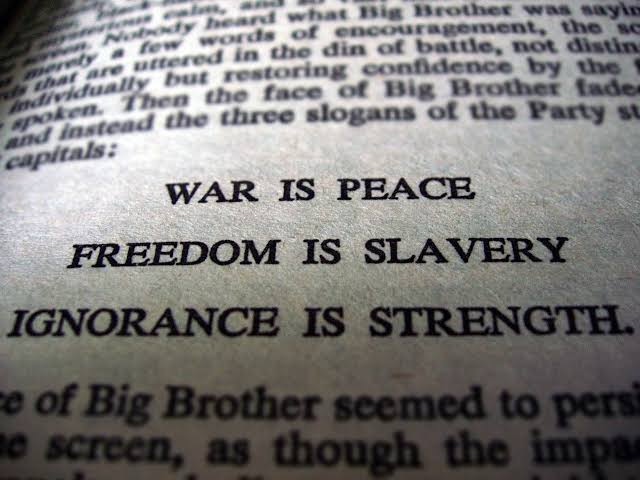
The documentary is haunting in the way it applies the themes of 1984 to the landscape of modern day geopolitics. The phrase, “Make Orwell Fiction Again” is part of modern discourse – however, history demonstrates that Orwellian concepts of totalitarian rule invoke three paradoxes that have always existed and continue to this day to different degrees.
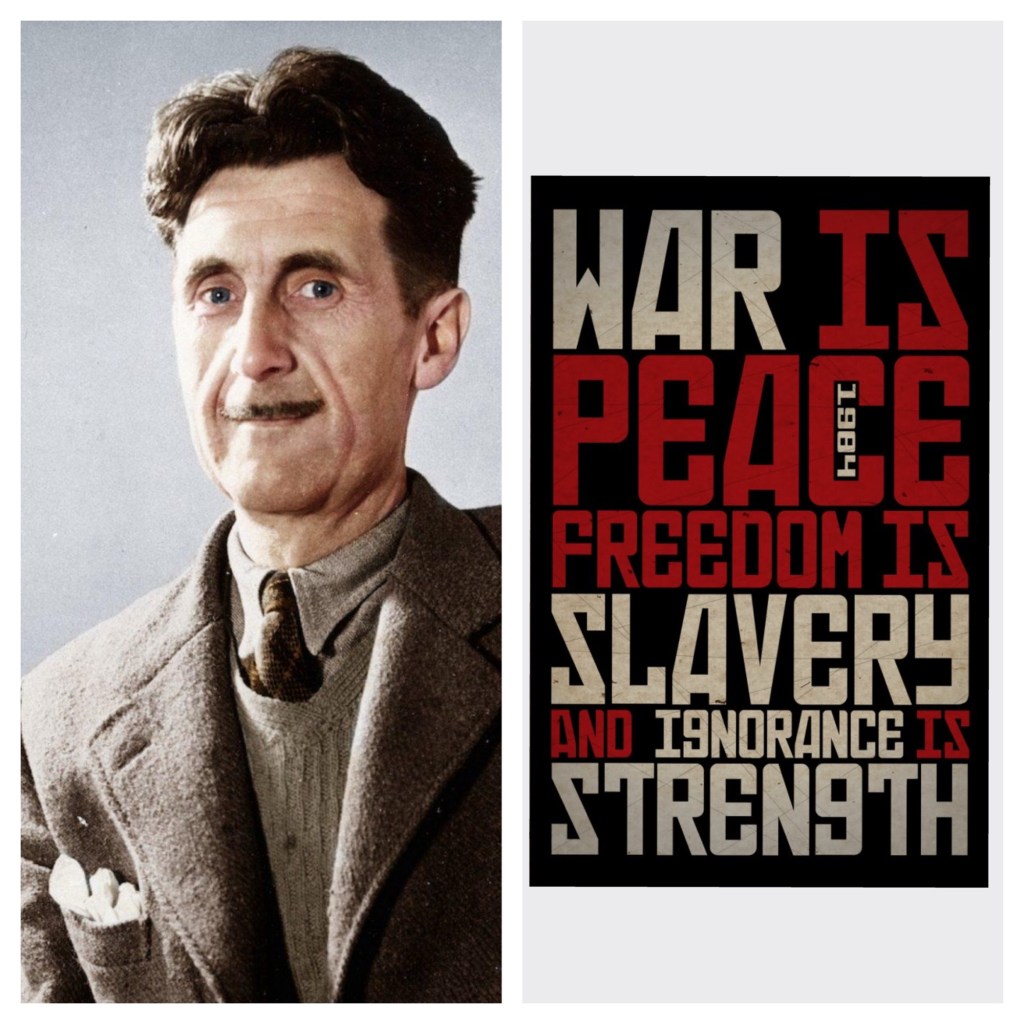
War is Peace
This paradoxical slogan is designed to keep citizens obedient through the machinery of endless conflict. Hatred and fear that might otherwise be directed at the ruling elite are instead redirected toward a permanent external enemy — an enemy that conveniently justifies surveillance, repression, and unquestioning loyalty.
In 1984, the three superstates — Oceania, Eurasia, and Eastasia — are locked in a perpetual war that may or may not even be real. Winston, working inside Oceania’s propaganda apparatus, begins to doubt whether these rival powers exist in the way the state describes them. His daily job for Big Brother is to rewrite newspapers, speeches, and records so that yesterday’s enemy becomes today’s ally, and today’s manufactured threat becomes tomorrow’s unquestionable truth.
This War is Peace slogan could just as easily describe the modern era of conflict — wars launched on “pre-emptive” grounds where one country pulverizes another without any real provocation.
The United States is almost never at peace. In nearly 250 years since 1776, Americans have experienced only about fifteen years without a war. Fear has become a defining political tool — a constant narrative that some foreign power is lurking, rising, plotting, or preparing to strike.
To neutralize these ever-shifting threats, the public is asked — again and again — to buy into another “necessary” conflict. A new forever war. A new enemy. A new justification for military expansion, surveillance, and the suspension of skepticism.
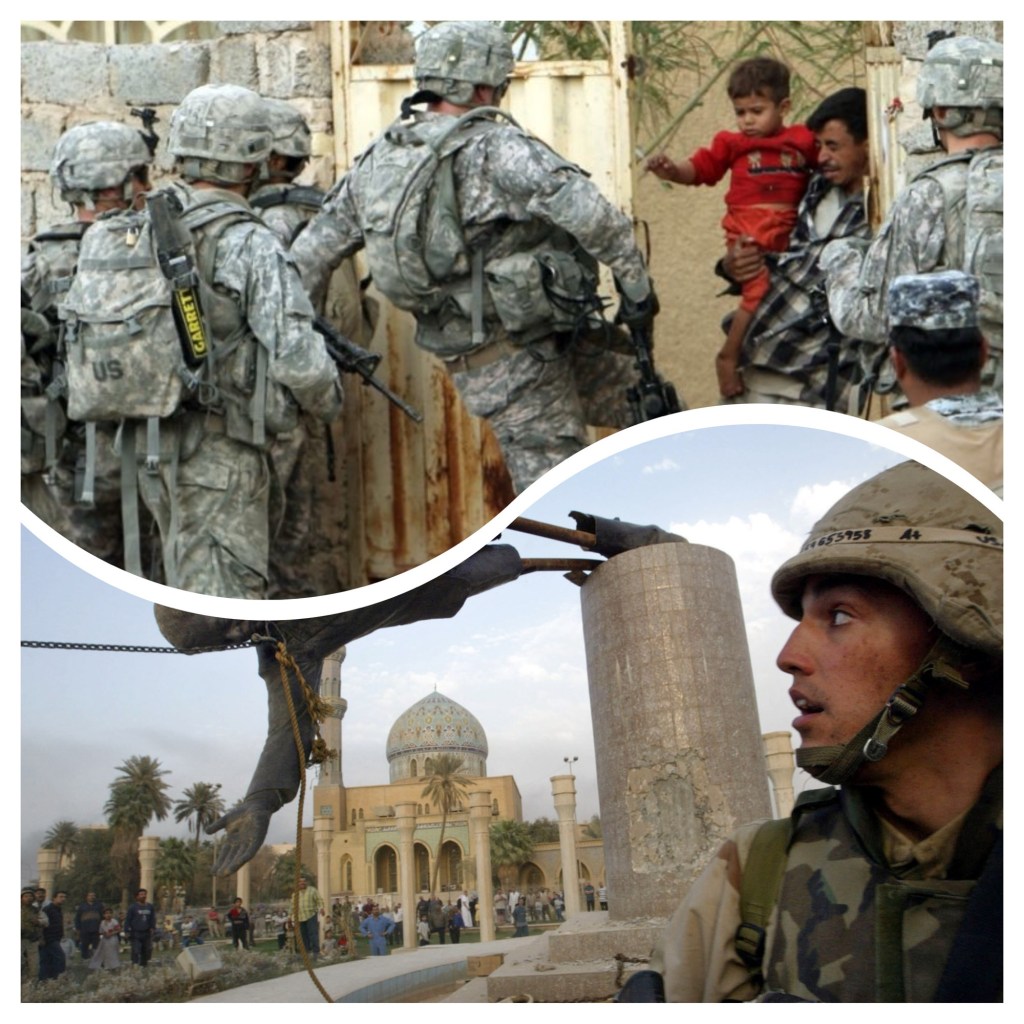
The U.S. invasion of Iraq is the clearest example. The killing of hundreds of thousands of Iraqi civilians was sold to the West as the price of keeping the world “safe.” It’s no coincidence this happened in the shadow of 9/11, when American war hawks seized the moment to pursue regime change and gain more favourable access to Iraq’s natural resources. They could easily manufacture all Muslims as a threat. That perception continues today as a factor in growing racism and hatred.
The threat was always fictional. Iraq had no capacity to harm the United States, no weapons of mass destruction, and no link to the perpetrators of 9/11. The narrative was a farce — but it worked. America waging that war was sold as necessary for peace.
Russia’s invasion of Ukraine follows a familiar pattern. In one interview, a Russian civilian calmly explained he supports the war because he believes Ukraine is packed with Nazis preparing to invade Russia — a fear deliberately stoked by state propaganda, echoing Soviet memories of the Second World War.
And so the cycle repeats: war waged in the name of “peace,” fear weaponized to justify aggression, and entire nations convinced that security comes from destroying someone else’s.
Invasion of Iraq – 2003
Freedom is Slavery
This second paradox shows how totalitarian systems manipulate language so completely that people mistake obedience for liberty. In his words, “political language is designed to make lies sound truthful and murder respectable.”
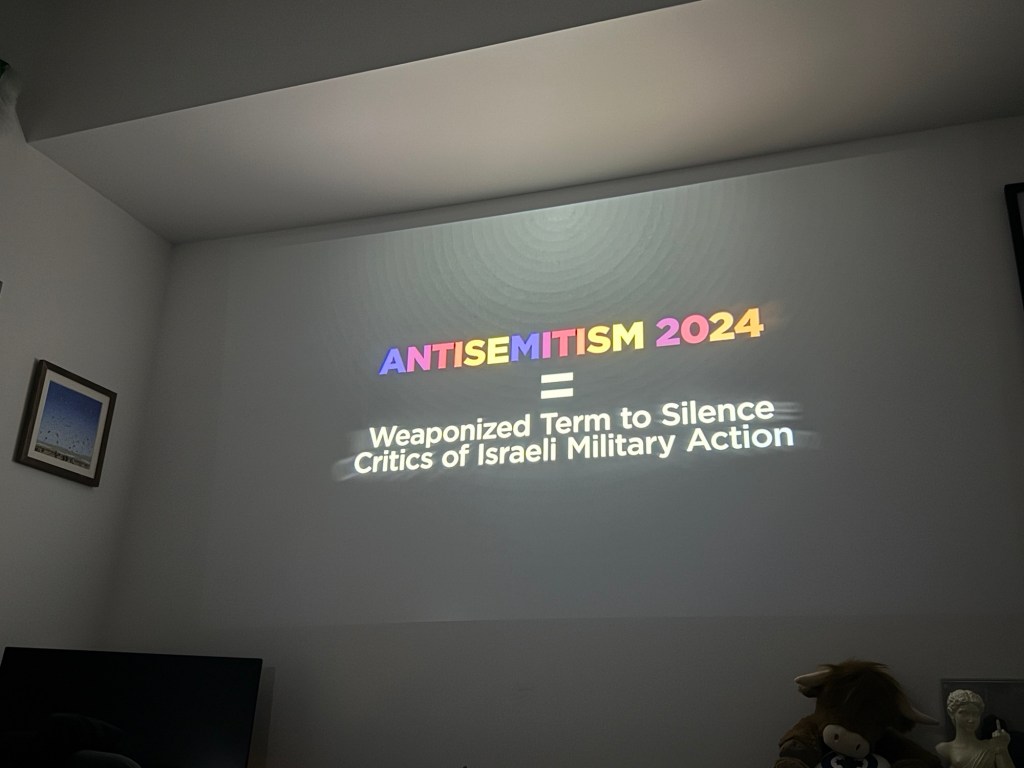
The documentary drives this home through countless examples, but none more powerfully than the reinvention of the term antisemitism.
A word that once existed to shield Jewish people from discrimination has been stretched into a political weapon — used not to protect a vulnerable population, but to shield one of the most powerful militaries on earth from criticism.
Jay’s private screening room
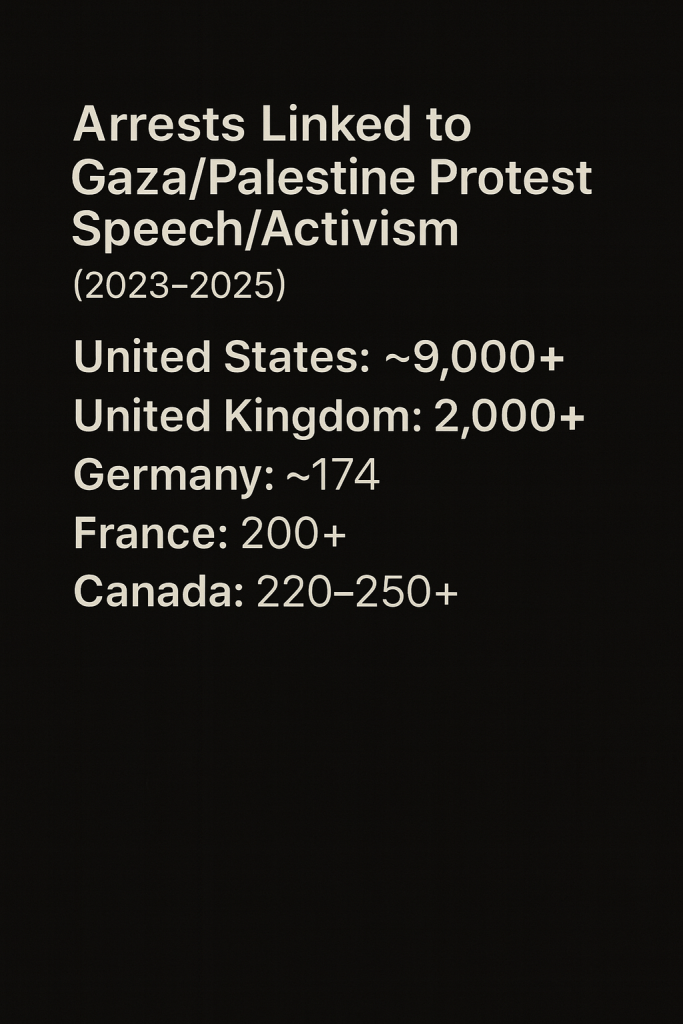
In this reframing, Israel becomes the perpetual victim, even as a state that, since 1967, has controlled, bombarded, imprisoned, starved, and segregated the very population it occupies. When the world protests these realities, the facts are blurred, and the language of dissent is criminalized. Thousands across the so-called “free world” have been suspended, fired, smeared, or even arrested for nothing more than political speech.
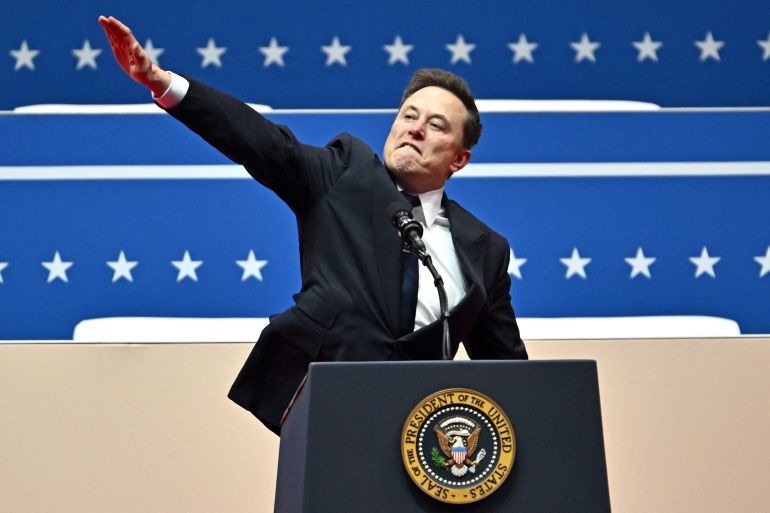
One of the clearest examples of how the term’s meaning has been distorted came during Trump’s inauguration, when Elon Musk repeatedly raised his arm in what visibly resembled a Nazi salute. The Anti-Defamation League shrugged it off as merely “an awkward gesture in a moment of enthusiasm” and urged everyone to “give one another a bit of grace.”
It was a stunningly gentle interpretation of a gesture tied to the murder of six million Jews.
Elon Musk saluting his Fuhrer Trump?
Contrast that with the same organization’s stance toward campus protesters:
“I would like to see the FBI investigate these groups for their espousal and elevation of Hamas propaganda… It’s about time law enforcement apply consequences.”
Most of those students never voiced support for Hamas. They criticized state violence, occupation, and apartheid — yet their words were flattened into “terrorist sympathizing.” Their political opinions were rewritten as criminal intent.
This is Orwell’s warning made real: language twisted so tightly that the powerful are recast as the persecuted, dissent becomes extremism, and the right to speak becomes a punishable offence.
Ignorance is Strength
The final paradox shows how a population’s ignorance becomes the government’s greatest strength. When people accept what they’re told without questioning, analyzing, or thinking critically, their loyalty becomes automatic. Blind. Predictable.
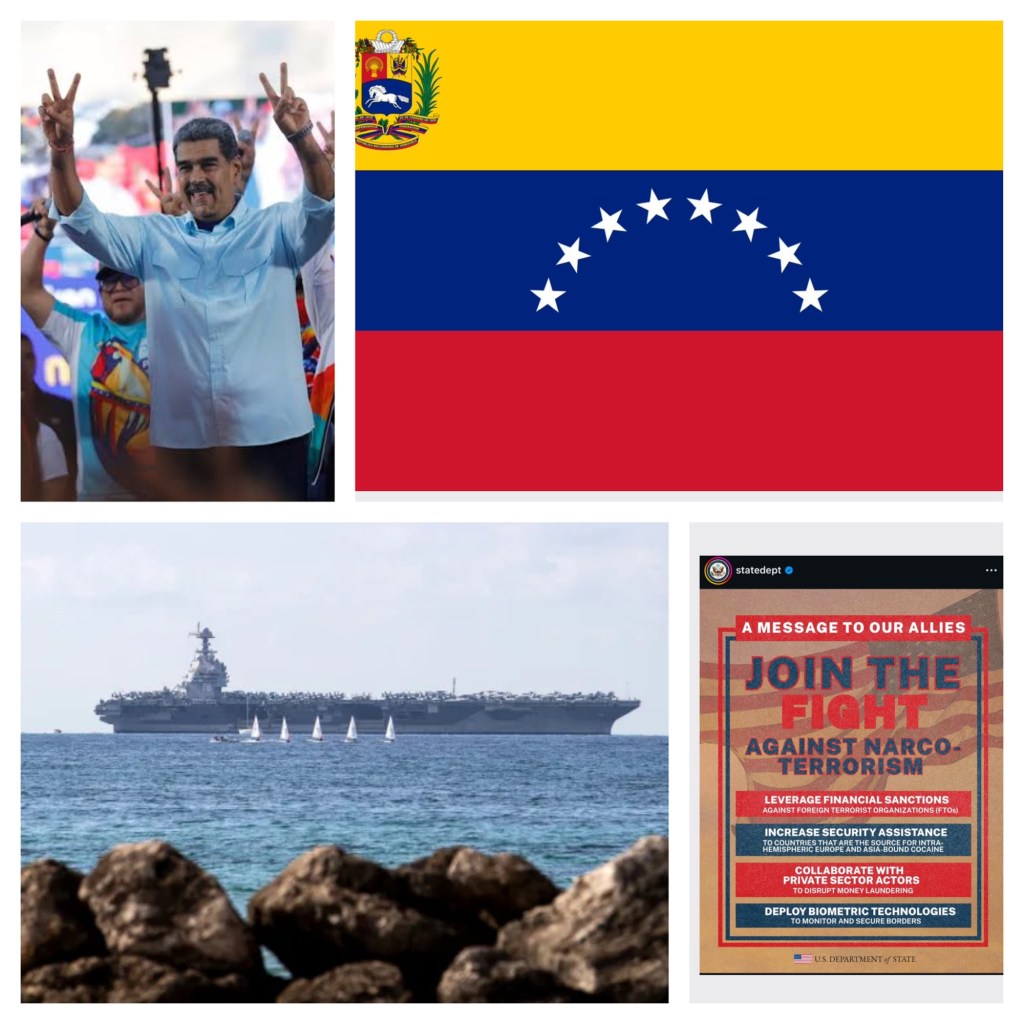
You can see this pattern repeating in the current push to frame Venezuela as the next enemy.
For decades, this South American nation has lived in the crosshairs of U.S. foreign policy — not because of humanitarian concerns or democratic ideals, but because it sits on one of the largest oil reserves on the planet.
Clockwise: Venezuela President Nicolas Maduro, Flag of Venezuela, US State Department propaganda, USS Gerald R Ford – 1 of 3 navy vessels surrounding Venezuela
Now, the public is being primed for another “necessary” confrontation. The sales pitch? That Venezuela is responsible for flooding America with dangerous drugs. Every ship near the Venezuelan coast is suddenly branded a “narco-terrorist” vessel — a label that magically aligns with military escalation and the bombing of those ships.
But this is a rewriting of reality.
It contradicts the CIA’s own assessments, which do not list Venezuela as a major player in the drug trade. If stopping narcotics were truly the objective, U.S. bombs would fall on Mexico and Colombia — the actual hubs of production and trafficking. Instead, the narrative is bent to serve strategic interests, not public safety.
This is the power of engineered ignorance: a population taught to fear invented enemies will cheer for wars that have nothing to do with the reasons they’ve been given.
Conclusions :
Orwell: 2 + 2 = 5 is a powerful reminder of how a state can quietly erode the pillars of democracy through the manipulation of its own citizens. The film traces Orwell’s life almost in real time — from his childhood to his final days — while his diary entries frame the emotional and political spine of the story.
Between chapters, the viewer watches a haunting animation set inside Orwell’s lungs, bacteria multiplying as his tuberculosis worsens. It’s an unsettling but brilliant device that shows the body betraying him at the very moment his mind is fighting hardest to warn the world.
The documentary makes clear that Orwell wasn’t writing from abstraction or theory. His lifelong encounters with tyranny — in colonial Burma, in the Spanish Civil War, in the rise of fascism and Stalinism — shaped his fierce commitment to exposing lies, propaganda, and state power run amok.
That he travelled to the remote Scottish island of Jura to finish 1984, fully aware he was nearing death, feels almost mythic. It was a final act of clarity and defiance: to leave behind a warning sharp enough to survive him.
This is a must-watch for anyone who worries, even a little, that the world is drifting toward the very dangers Orwell laid out. He didn’t live to see how prophetic he was — but he must have died knowing he had done everything he could to sound the alarm.


Leave a comment