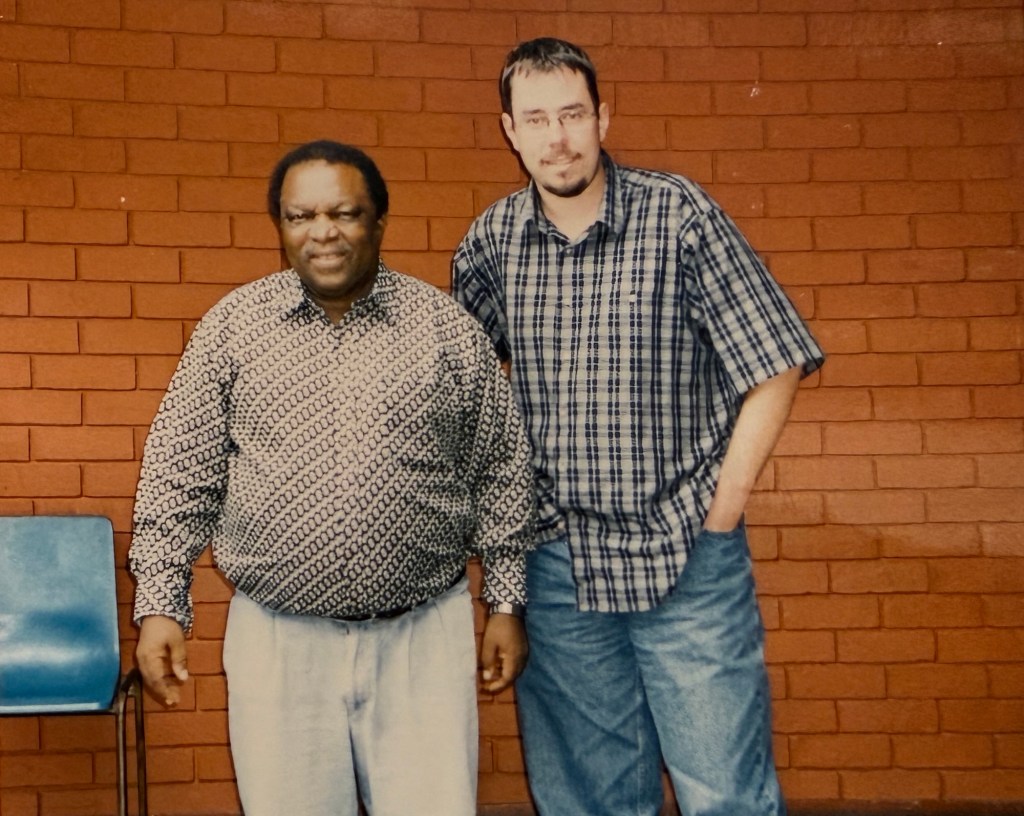
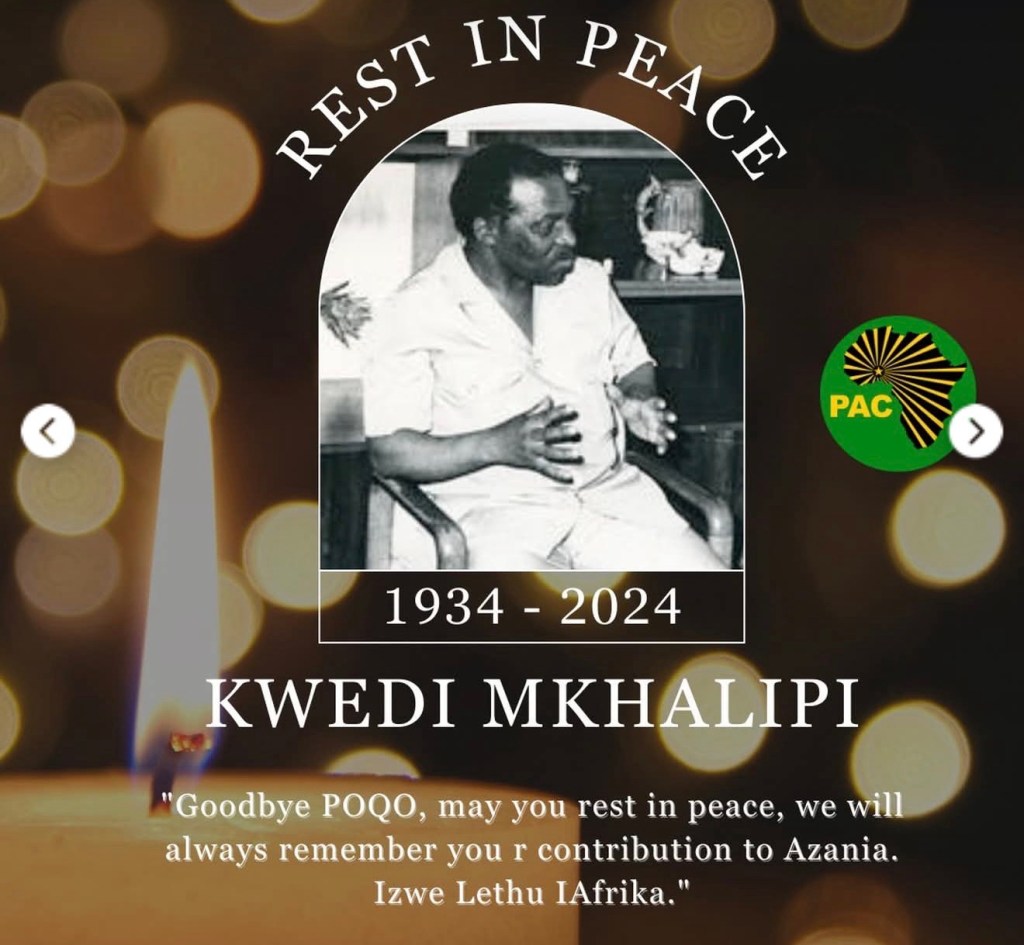
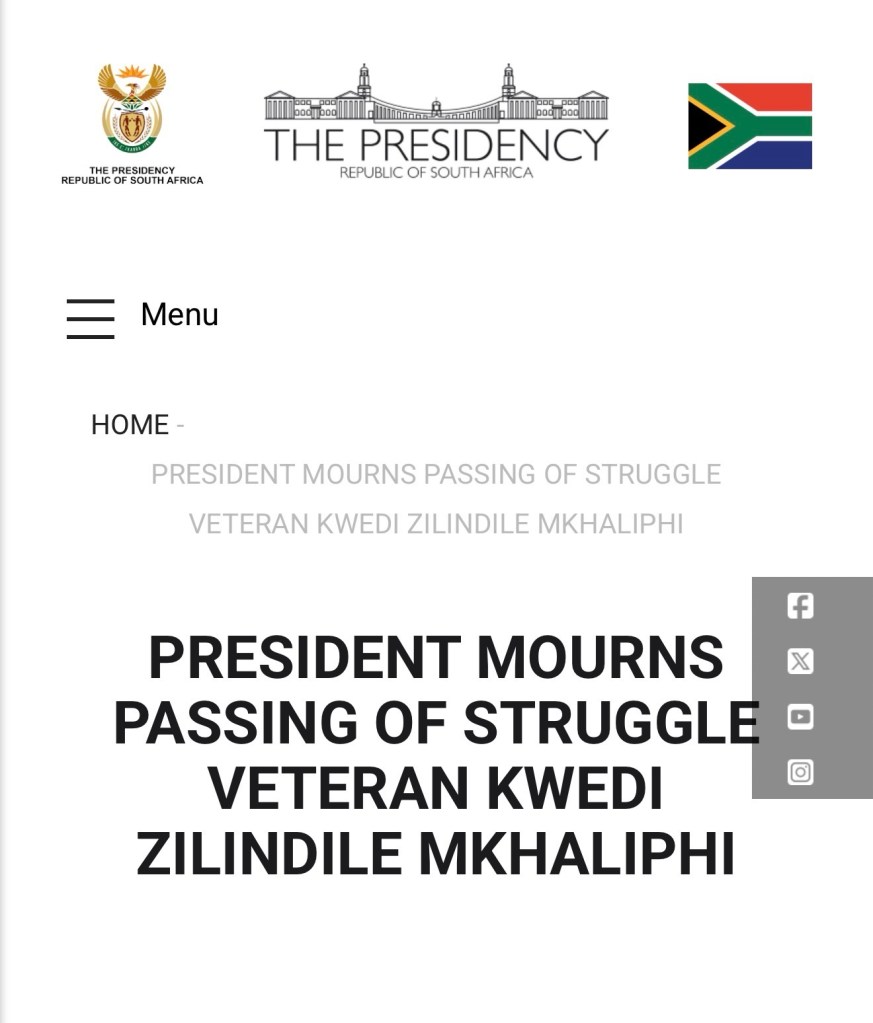
I recently discovered that Kwedi Mzingisi Zilindile Mkhaliphi (Kwedi) of Bazian, South Africa passed away at the age of 90.
Embarrassingly, this knowledge came to me long after he’d passed in May of 2024.
The Revolutionary
Kwedi’s personal compass became political in his late teens. He was first arrested in 1952 for participating in the Defiance Campaign against South Africa’s racist, oppressive government.
The campaign involved mass civil disobedience inspired by Mahatma Gandhi. Kwedi deliberately broke apartheid laws (curfews, pass laws, segregated facilities). He was part of a movement that chose jail over fines to burden the state and gain platforms in court.
Kwedi left the African National Congress (ANC) to join the Pan Africanist Congress (PAC), a splinter group with a more radical ideology.
While the ANC pursued a multi-racial, inclusive approach, the PAC emphasized Black consciousness and Africanism, seeing multi-racial alliances as a compromise to liberation.
He helped organize the mass protests that led to the 1960 Sharpeville Massacre, when police killed 21 Africans peacefully protesting apartheid laws. Afterward, the government banned both the PAC and ANC, and many PAC members concluded that peaceful protest was ineffective.
I was so green and innocent that, once at lunch with Kwedi, I remarked on the injustice of him spending years in prison for peaceful resistance. He quickly and quietly corrected me, explaining that he often used explosives in his activities. I left it at that.
Kwedi belonged to Poqo, the PAC’s underground armed wing modeled on the Chinese People’s Liberation Army. It was there that he met his wife, Nontombi.
Poqo sought immediate, widespread violence to spark a general uprising, targeting people associated with apartheid, not just infrastructure.
Kwedi was arrested four times between 1962 and 1964 on charges including suspicion of communism, membership in a banned organization, and sabotage. His 1964 arrest for sabotage led to a year-long trial, resulting in a twenty-year sentence. He served this in Section B of Robben Island’s maximum-security prison, which housed prominent political leaders.
Political Prisoner
I didn’t discuss specifics with Kwedi often, but he shared a powerful story about solidarity in prison. A staunch activist, he clashed with moderate ANC members, including Mandela.
Yet, when he arrived at prison, he became a news source, and fellow inmates gathered around him to shield him from the warden’s eyes as the man providing outside news. Kwedi became accustomed to a growing solitary among past adversaries.
The quarry, where inmates did their hard labour was dubbed ‘The University.’ It was where Section B inmates bonded over politics, science, and math, bridging ideological gaps. Future leaders including Kwedi, Mandela, Sisulu, Mbeki, and Kathrada were among the ‘students.’
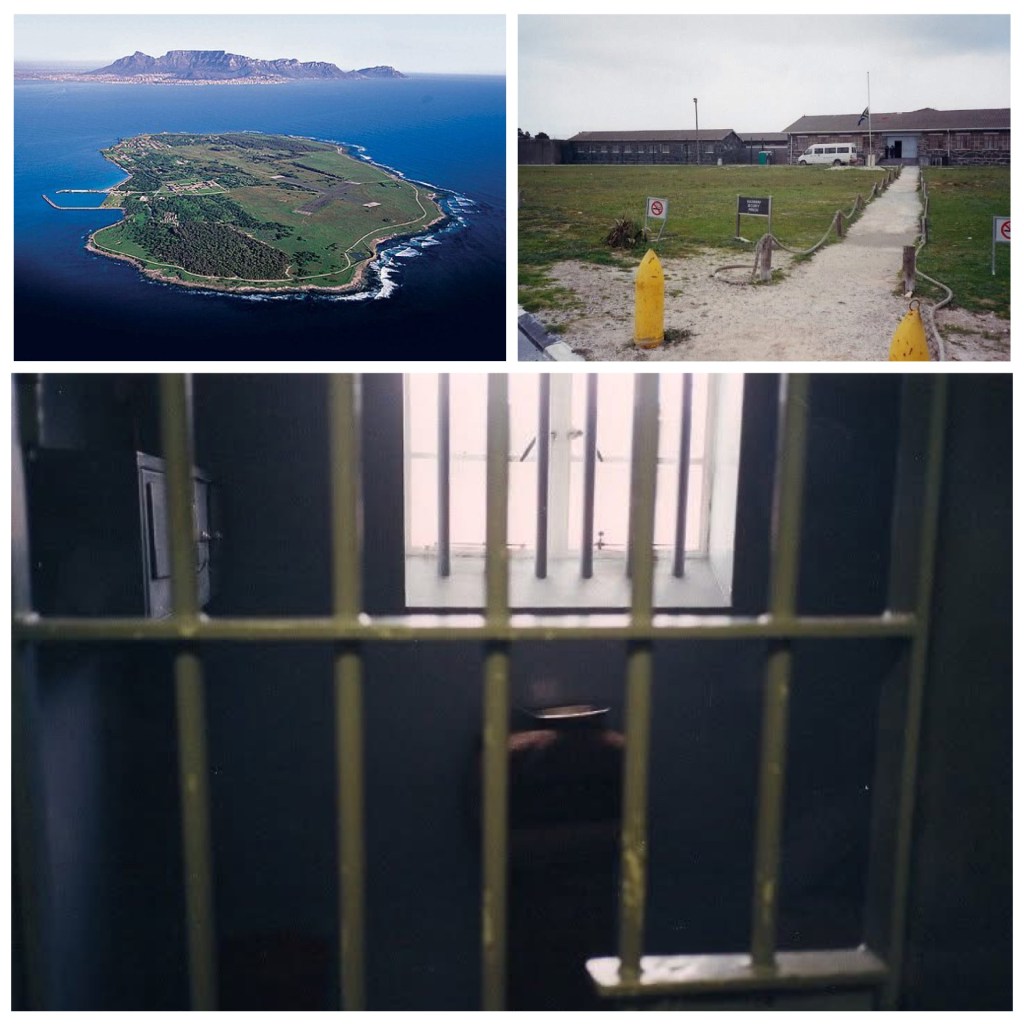
photo of the prison and Nelson Mandela’s prison cell, that I took during a tour of the island on my birthday in 2001).
Kwedi was released in December of 1985, only to be rearrested and detained without charge so that he’d miss another Christmas with family. He finally reunited with them weeks later. Post-apartheid, he taught economics and later led the National Co-operative Association of South Africa (NCASA) as CEO.
Working with a National Hero
NCASA was a national organization that supported housing, health, and other worker cooperatives. I began an internship there in the late summer of 2001 and was later offered full-time employment, which I held until 2003.
Working with Kwedi came with its fair share of frustrations. As the Canadian on the ground, I often found myself juggling priorities that didn’t always align. I had to navigate the expectations of South African staff at NCASA, the leaders of the Canadian Co-operative Association who funded the organization, the Canadian High Commission, and the everyday members of NCASA who depended on its support.
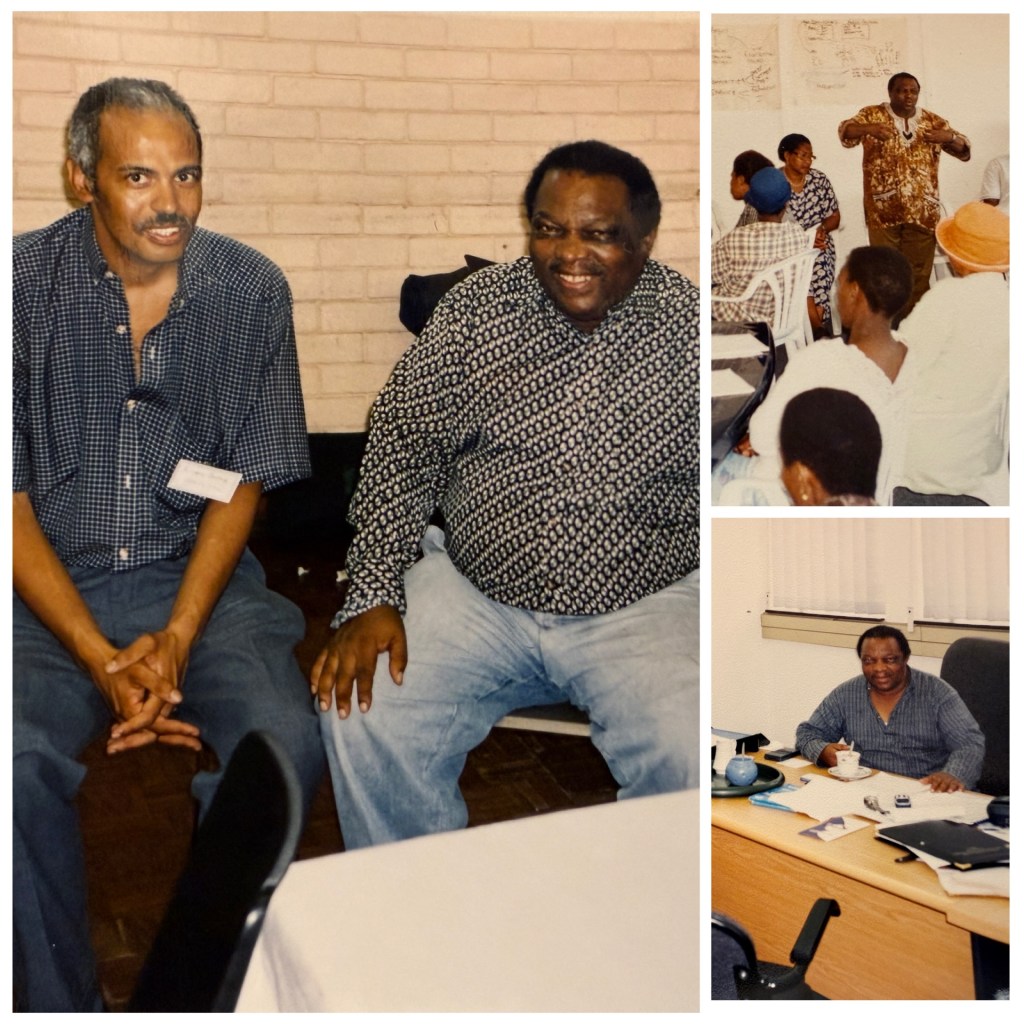
Kwedi’s strength was his charm and his status as a national hero. Yet this often came into tension with staying focused on specific tasks. He would spend hours meeting and talking with countless admirers, which often led to long “to-do” lists filled with promises that didn’t always align with the office’s priorities or budget.
Looking back, however, those moments of frustration turned into some of the most memorable—and frankly wild—experiences of my time in South Africa, outlasting many other memories from that period.
Kwedi employed a man who assisted him in many ways—running errands, acting as his chauffeur, and sometimes serving as a bodyguard. When this man became ill for an extended period, Kwedi turned to me to help with driving.
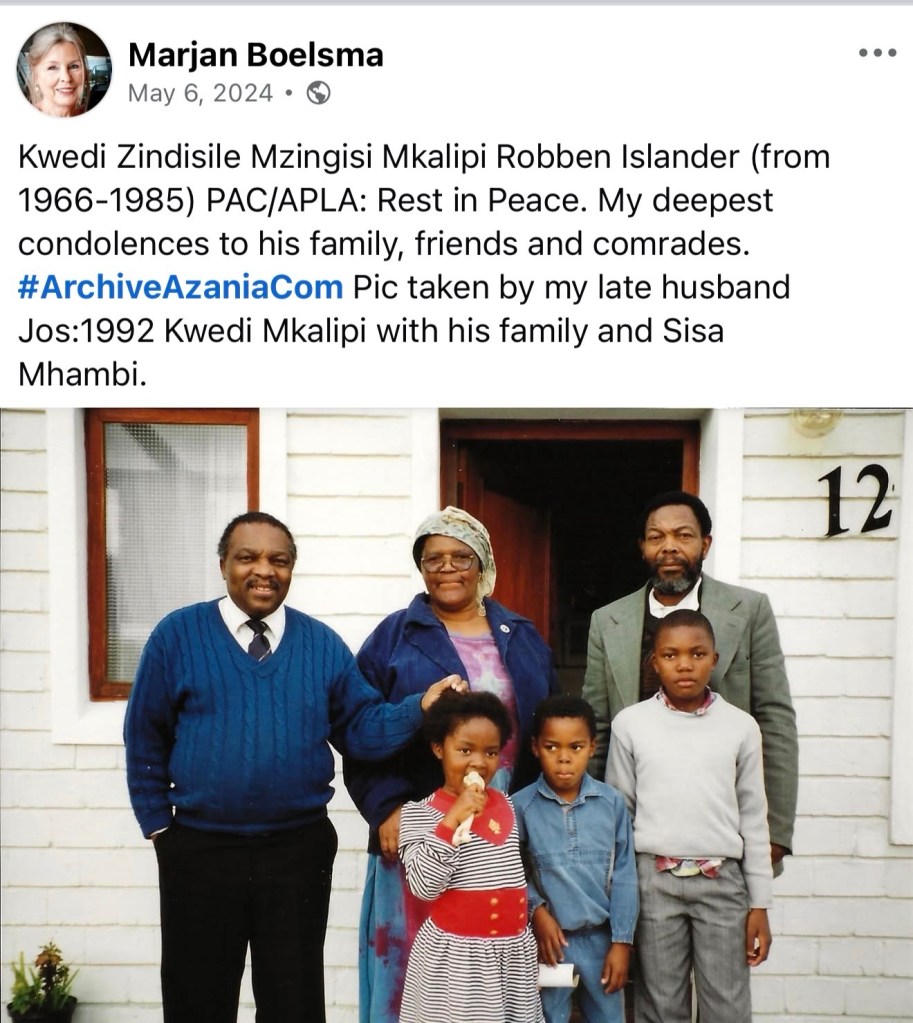
Being a chauffeur was not my strongest skill. I was still learning to drive on the opposite side of the car and the road. I was asked to drive him from Pretoria in Gauteng Province to Twazi, a rural community in the Eastern Cape, to meet a local chief.
On the way, Kwedi had me stop in Soweto to pick up another person. He then frequently changed our route, asking me to leave the main highway and travel on dirt roads so he could check in on people he knew. What should have been an 11-hour drive ended up taking almost 16 hours.
In another situation, Kwedi asked me to drive him to a meeting of the Robben Island Museum Council, where he was appointed to serve. Once we arrived, I joined the other drivers in the waiting area. I was the only white person in the room, and I could sense some people felt uncomfortable or unsure how to interact. Trying to break the ice, I said, “I graduated at the top of my class at the University of Pretoria Chauffeur School.”
Months later, at another event, a man confronted me, saying he had looked into it—and, of course, there is no Pretoria Chauffeur School. I had to admit that my sense of humor doesn’t always land.
Finally, the day after I was mugged in Durban, Kwedi announced to a room of 200 people what had happened—and added, for the single women in the crowd, that they could make me feel better by talking to me, as I was looking for a bride. That comment became a running theme in nearly every conversation I had for months afterward.
When I heard of Kwedi’s passing, I immediately thought of so many memories from what was a formative period of my life. I feel fortunate to have experienced so many of those moments.
Kwedi was a freedom fighter who helped me with a path that expects equality regardless of religion, race, gender and ethnicity.
Hamba kahle, Kwedi


Leave a comment