Is the impact of a death ever worth more than the impact of a life?

Comedian Anthony Jeselnik mentioned that Martyr was one of 2024’s best novels. I’d never heard of it despite it appearing in the top ten NYT books of the year and it being shortlisted for the National Book Award.
It’s been on my list to read for a year. It’s become by far the best of the 33 books I’ve read to date in 2026.
Martyr, Keveh Akbar’s 2024 novel, follows Protagonist, Cyrus Shams, a queer Iranian-American who is a recovering addict obsessed with a belief that martyrdom may give his life meaning.
Shams’ life in America is anchored in his mother’s decision to fly back to Iran solo to visit her brother – rather than her initial plan to bring her infant son.
The USS Vincennes, an American naval ship, shot her flight out of the sky over the Strait of Hormuz killing her and the other 290 passengers.
Martyr’s fictional characters exist within a universe of historical accuracy. The American ship did indeed kill hundreds of civilians in 1988 by shooting down Iran Air Flight 655 traveling from Tehran to Dubai.
The Americans have never formally apologized to the families – mostly Iranian – who watched their loved ones perish.
The American government would eventually settle through an International Court of Justice Tribunal by giving Iran two Airbus airplanes and compensating victims families with $300,000.
I had to pause my reading of the novel – and now this blog – to admit that I had not heard of this incident, so it was intriguing to research its impact on Iranian / American diplomacy.
However, the most interesting aspect is the American media’s coverage of Flight 655 relative to their coverage of the Soviet Union shooting down Korean Air Lines Flight 007 (1983) or Russian insurgents shooting down Malaysia Airlines Flight 17 (2014).
The significant difference in media coverage provides disturbing evidence of the close connection between the American media and its war machine. Anyways, I digress.
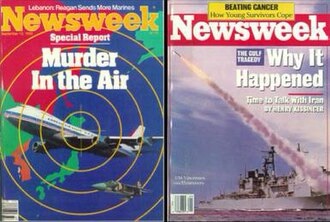
Right: Newsweek cover for flight from New York City to Seoul via Anchorage –shot down by USS Vincenne an American ship.
In Martyr, Cyrus funds a spiritual trip – by reluctantly using the American blood money he received for his mother’s death – to visit DEATH-SPEAK, a living art exhibition at the Brooklyn Museum of Art in New York.
The exhibition provides Cyrus with the opportunity to speak with Orkideh, an artist who has decided to live her final weeks in the museum while refusing treatment for the cancer that is extinguishin her life. The exhibit invites people to have open and frank conversations about mortality.
The daily visits with Orkideh form a bond that helps Cyrus as he works through his existential crisis. Orkideh’s eventual obituary would indirectly describe her advice to Cyrus:
Even when I was subject to the murderous whims of patently evil nations, men, I knew the badness for how different it was from the goodness. When I say “nations,” I mean “armed marketplaces.” Always. That understanding made the world a little bit easier to comprehend, if not tolerate.
The novel’s substance is found in supporting chapters that describe the lives of his mother, father, uncle, and his male and female romantic partners. These descriptions transcend pre and post revolution Iran and cold war America to present day.
Akbar sprinkles poetry about the lives of historical martyrs throughout the novel, including:
- Bobby Sands (1981) and his hunger strike for equality in the North of Ireland,
- Hypatia (415 AD) murdered by a Christian mob who rejected her intellectual thought as a threat to their religious fanaticism in Alexandria, Egypt,
- Qu Yuan (278 BC) who died of suicide in exile to protest and advocate for political reforms against the powerful Qin State,
- Bhagat Singh (1931), the Indian revolutionary executed for resisting British colonial rule,
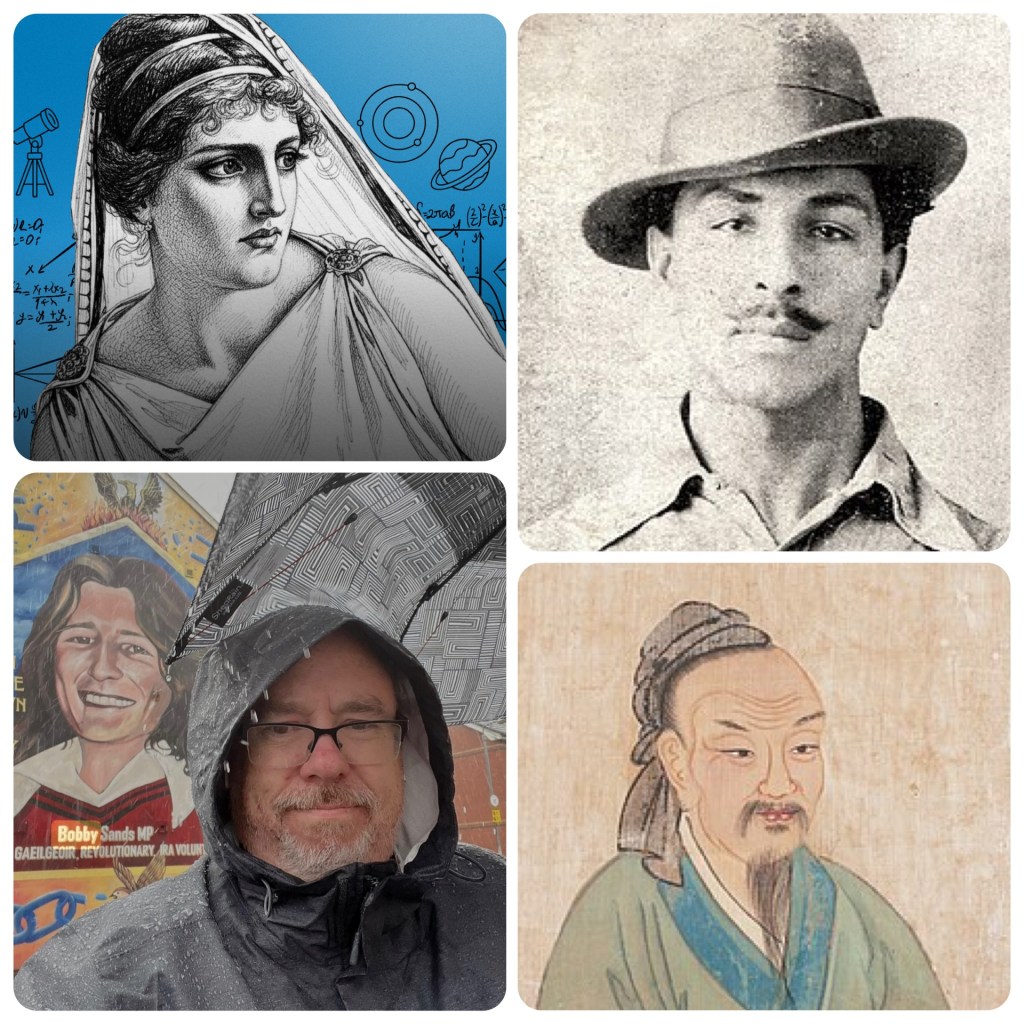
For Cyrus Shams, the decision for martyrdom would come down to an assessment of the relative benefit described in the question, “What can I make of being here? And what can I make of not?”
The novel delivers a breathtaking plot twist that culminates in a highly open and ambiguous ending. It’ll make one want to immediately reread and collect all the clues and breadcrumbs scattered throughout its chapters.


Leave a comment