Four days in Palestine’s Mountain of Fire
SEP 02, 2026
Getting to Nablus on the Sabbath
In April of 2019, I journeyed from the Christian city of Bethlehem to the Muslim city of Nablus, not recognizing it was Friday.
Navigating three different Sabbaths got the best of me in the holy land. Essentially it’s a day of rest from Friday evening until Monday morning because three distinct communities – segregated by city or neighbourhood – are respecting their sabbath. Muslims on Friday’s, Jews from Friday evening to Saturday evening, and Chistians on Sundays.
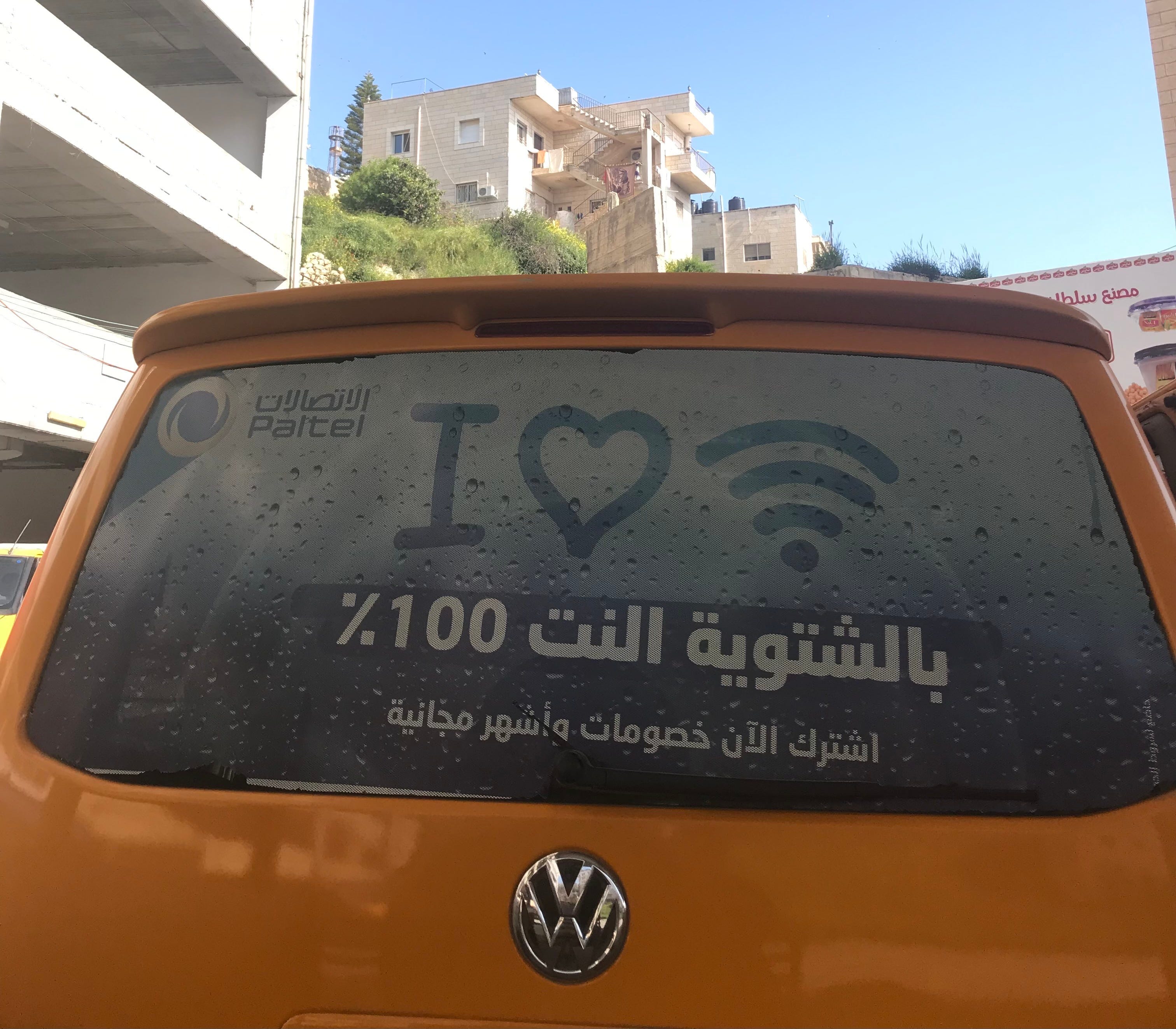
It’s easy to lose track of the day of the week when you’re on vacation. Finding a communal taxi – aka a shared minivan – from Bethlehem to Ramallah was quite easy. Bethlehem was hustling and bustling.
However, finding a similar taxi from Ramallah to Nablus would prove more difficult – it being the Islamic day of rest.
Arriving at the taxi stand in Ramallah, I found out that I had just missed the taxi to Nablus. The next driver successfully used his body language, nodding towards the curb across the street and his wiping his brow of sweat, to suggest I wait in the shade across the parking lot, rather than baking in the vehicle under the sun.
Normally this would be an enjoyable experience – people watching is the best free activity in another land. However, it was a ghost town, and I feared I would quickly run out of power by listening to music.
Fast forward some hours later and not a single additional person had queued with me for a ride to Nablus.
However, in the span of 5 minutes, an influx of people started climbing into that taxi – likely from a larger bus that had arrived from Jerusalem. I was frozen and panicked as the once empty van was full, and I hadn’t pealed myself off the curb.
Fortunately, the driver waved me over and started maneuvering people around, clearing a spot at the rear of the taxi.
Nothing is more humiliating than looking at a spot that will fit no more than one third of your body – I fit the stereotypical overweight westerner perfectly.
The remainder of my body was squeezed up and plastered on the side of the window – ear pressed next to a speaker blaring Arabic music.
This discomfort slowly subsided as people started to get off one-by-one along the way. By the time it reached Nablus, the van had emptied, with the exception of two younger men and an older woman.
It was around noon – almost 5 hours after leaving Bethlehem – before I became excited at arriving at the Palestinian city everyone had warned me about.
That feeling quickly turned into worry and confusion. As I adjusted my backpack, a man started following me, yelling, and cursing. I was a deer in headlights, and the rush of memories overtook me.
First, the EL-AL (Israeli Airlines) security person in Toronto who reviewed my reservations for my entire trip grilled me with, “Why, so many West Bank?!?” By the time he got to the hostel reservations for multiple days in Nablus, he decided to empty the suitcase with all my clothes on the airport floor and muttered something about “terrorists.”
Then about 11 hours later, a customs agent in Tel Aviv suggested tourists shouldn’t visit Nablus. It was too dangerous.
Had those Israeli warnings been correct? Was the enraged man in Nablus about to harm me for being an outsider? Will everyone in Nablus act similarly? I immediately wanted to revert back to the taxi.
Fortunately, the woman who got off the taxi with me demonstrated the protective openness I’d experience time-and-again over the four days in Nablus.
She started yelling back at him, spun her finger in the air around her ear in what I believe must be the universal sign for “he’s crazy,” and then quickly took me by the arm and led me the entire 5-minute walk to the city center.
We arrived at a convenience store, and she spoke in Arabic to a teenager who was cleaning the front.
That teenager followed the direction of his elder, and came over greeting me with, “Habibi” حبيبي (my friend) and proceeded in English to ask if he could show me to the place I was staying.
This was my first 10 minutes in Nablus – a city that Israeli military spokespersons call, “West Bank’s Capital of Terror.”
Jabal Al-Nar (The Mountain of Fire)
Nablus – a cultural and commercial center of Palestine (the West Bank) – has a rich 4,000-year-old history ranging from Canaanite settlement and destruction (Shechem), Roman rule (Flavia Neapolis) and Arab conquest in 636 CE in which its Latin name was Arabized to Nablus.
It would be ruled by the Crusaders, the Ottomans, the British (WW1 until they fulfilled their mandate to transfer a land from a majority population to the cause of Zionism.), Jordan (1948) and Israeli occupation (since 1967).
The city – at its most diverse – had a population that was 93.8% Muslim, 2.3% Samaritan, 2.1% Christian and 1.7% Jewish (1596 Census).
The area has been predominately Muslim for as long as Islam has been a religion. The death of the prophet Muhammad in 632 CE led to early Caliphate’s that cemented the importance of this Islamic community.
Nablus has become a community that Israeli Occupation has consistently surveilled and attacked.
In 2022, The New Arab ran an in-depth article highlighting how Nablus became the heart of Palestinian resistance and nationalism.
A large general strike was coordinated from the Nablus soap factory during the British mandate (1936).
This led to a three year revolt against the British who were fulfilling their gift of Palestine to European Jewish Zionists.
The Bund – a large community & political force in European Jewish society in the late 19th and a third of the 20th centuries – warned against the ethnic cleansing that would have to accompany the mass migration, forced land transfer and lack of Arab civil rights.
That political force was decimated for a number of reasons – the Holocaust being the obvious. However the Bund predicted the kind of misery that Israel would create – how could any society function properly when the Christian and Muslim majority would face slaughter and political apartheid that has continued to this day?
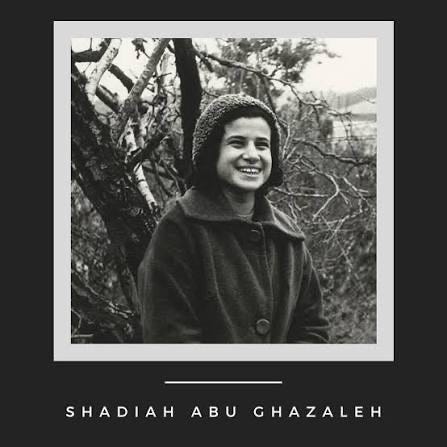
Palestinian resistance grew substantially in response to Israel occupying Nablus in 1967. This has included several women led urban guerrillas – the most famous of which was Shadia Abu Ghazalah.
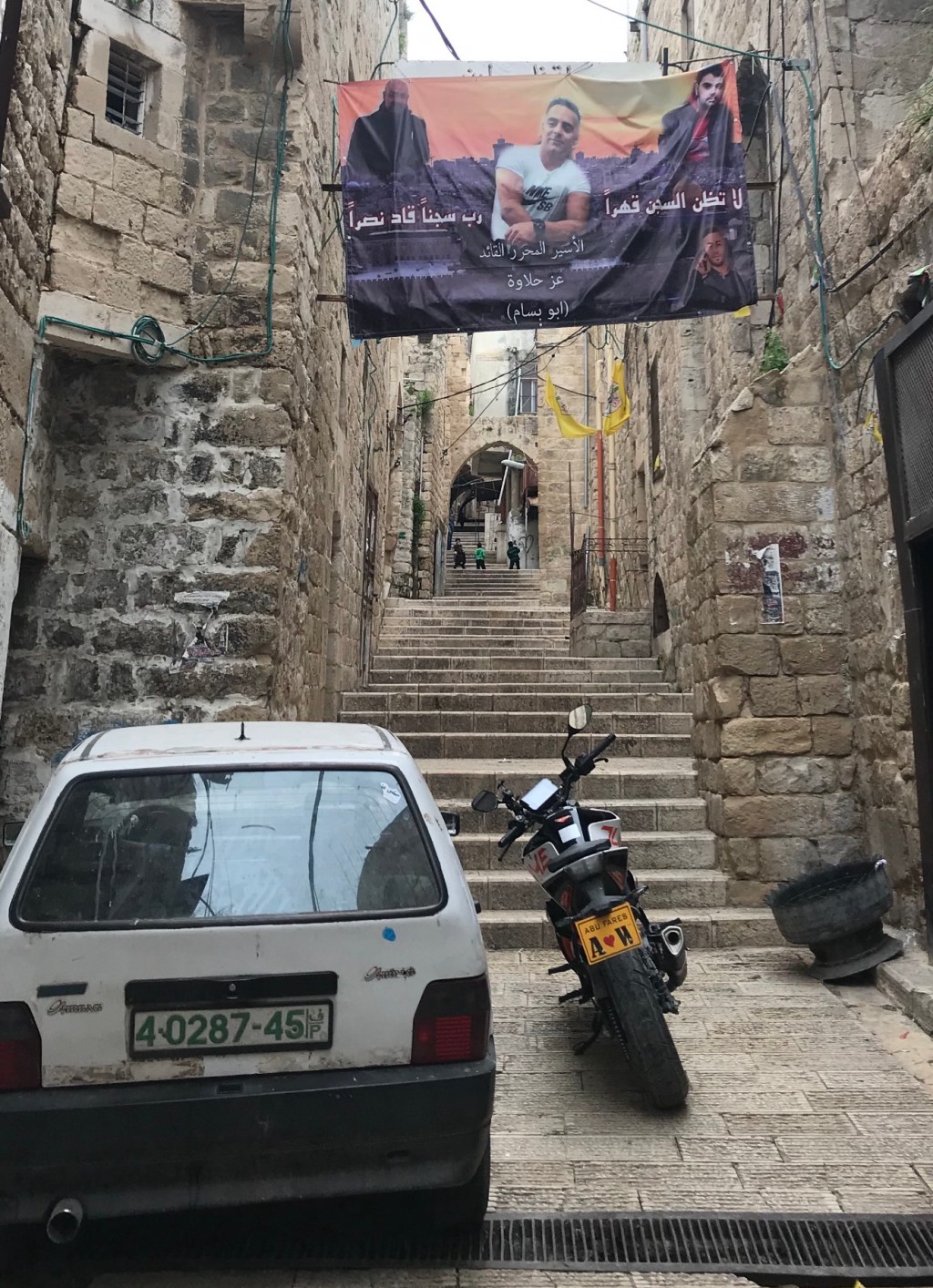
In 2004, during the Second Intifada, the diversity of competing resistance groups in Nablus was real.
Israel conducted a raid killing Abu Sharkh a key founder of the Al-Aqsa Martyrs’ Brigades, a military wing linked to Fatah.
He was killed while hiding with two other fighters from competing resistance groups; Jaafar Al-Masri, from Hamas, and Fadi Al-Bahti, from the Palestinian Islamic Jihad.
The city commemorates the release of prisoners and detainees who Israel has convicted or detained indefinitely.
It’s this tradition that’s garnered various names including The Mountain of Fire, Hornets Nest, and West Bank’s Capital of Terror.
The irony is Israeli officials targeting Nablus as a “capital of terror” is that the forever occupation hasn’t promised a roadmap to peace – and in fact it’s done the exact opposite.
The Israeli Occupation Forces regularly provide military cover for illegal Jewish settlements and their extremist members who live on top of hills surrounding the city.
The “Hilltop Youth” are a Jewish terrorist group who frequently raid the community, set fires to homes and vehicles, and uproot olive trees – all with the stated goal to make life unbearable leading to further displacement of families descendent from the first communities in the area.
I challenge any person to think of the following and the response you’d take:
Your grandparents have been killed or forced off of the land they’ve had for hundreds of years.
Your farm livelihood has been destroyed as olive trees are burned and bulldozed.
You need permission from Israel to travel from one Palestinian community to another resulting in arbitrary decisions that impact everything including job prospects, family unity and emergency medical treatment.
You’re detained for years without charge or access to legal representation (there are approximately 8,000 Palestinian detainees without due process who are subject to regular beatings, rape and no medical care). The word “detainee” should be replaced with “hostage” in this context.
Israel decides if water and electricity flows to your community.
I think most rationale westerners would come to understand that an occupying force that withholds democratic options to improve life will naturally have to come to terms with other forms of resistance.
To pretend this is some type of irrational “terror” is ridiculous. History rightfully acknowledges Jewish Europeans who took a stand against Nazi occupation in the Warsaw uprisings. Nablus resistance to an illegal occupation is no different.
I was humbled and proud to spend time in Nablus.
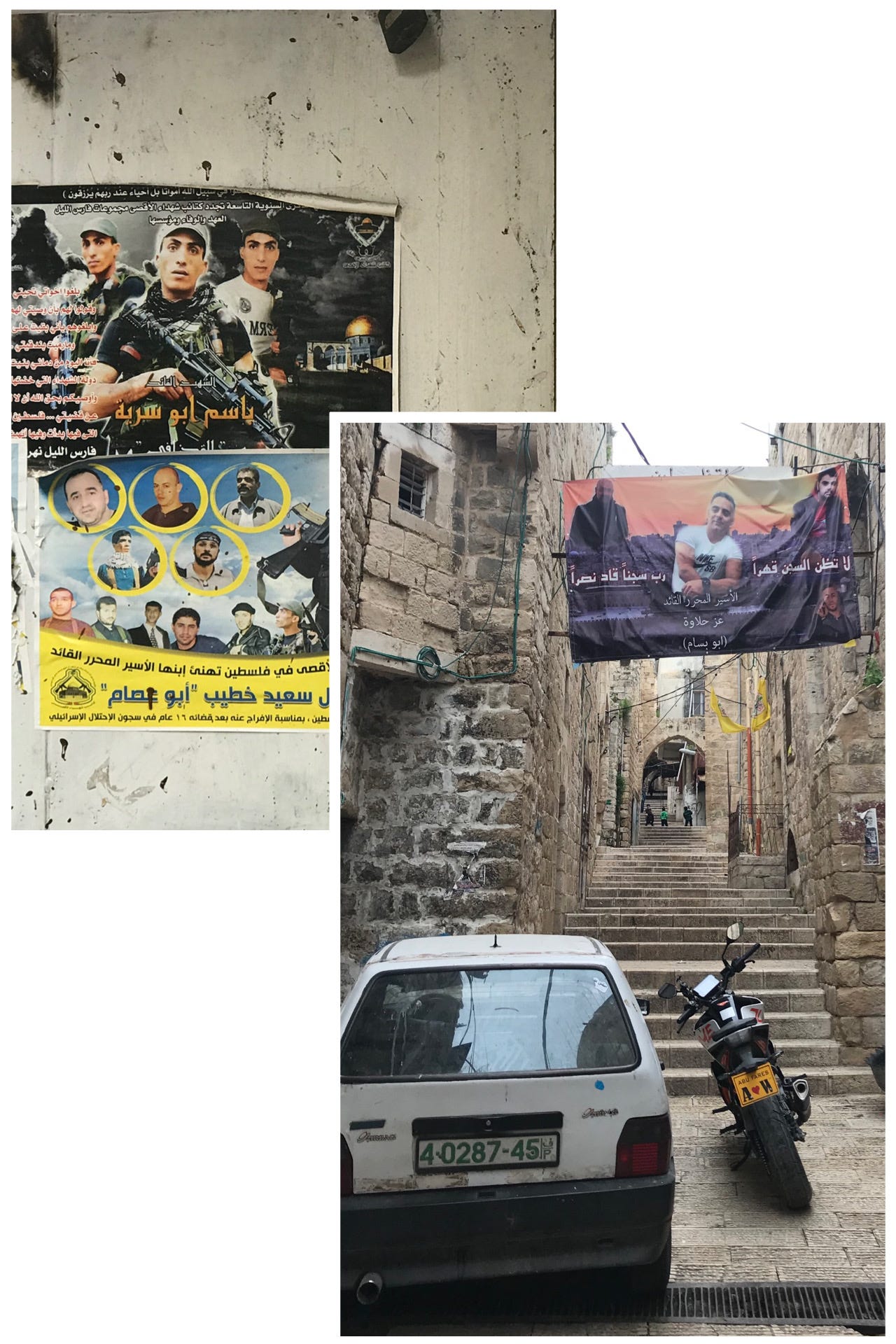
An Entire City to Myself
Once I calmed from the excitement of arriving to Nablus, I met Bakr, the man who ran the hostel I was staying at.
Bakr is short in stature but big in personality and excitement for his hometown. My non-existent Arabic and Bakr’s broken English meant we were once again communicating with body language.
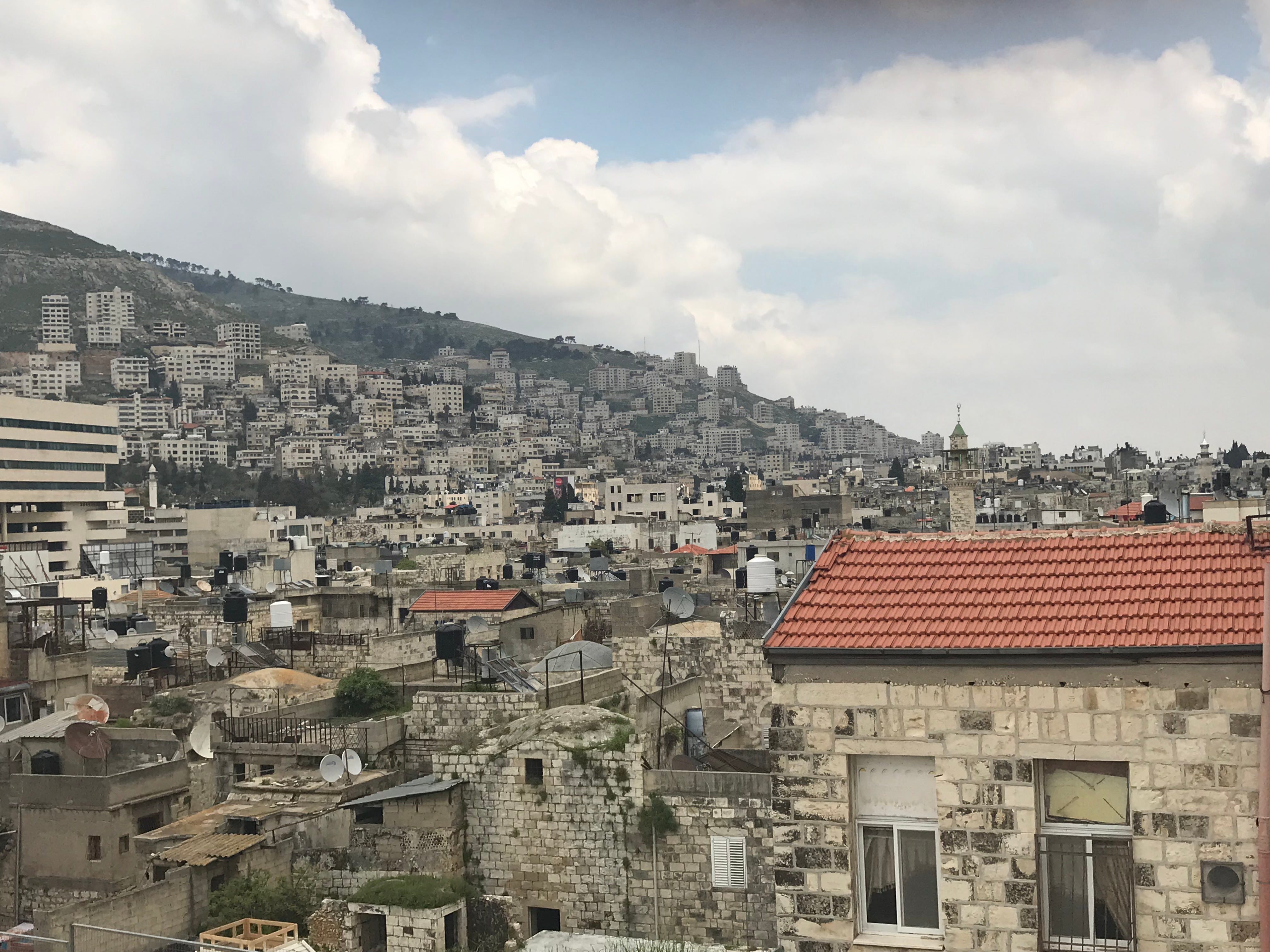
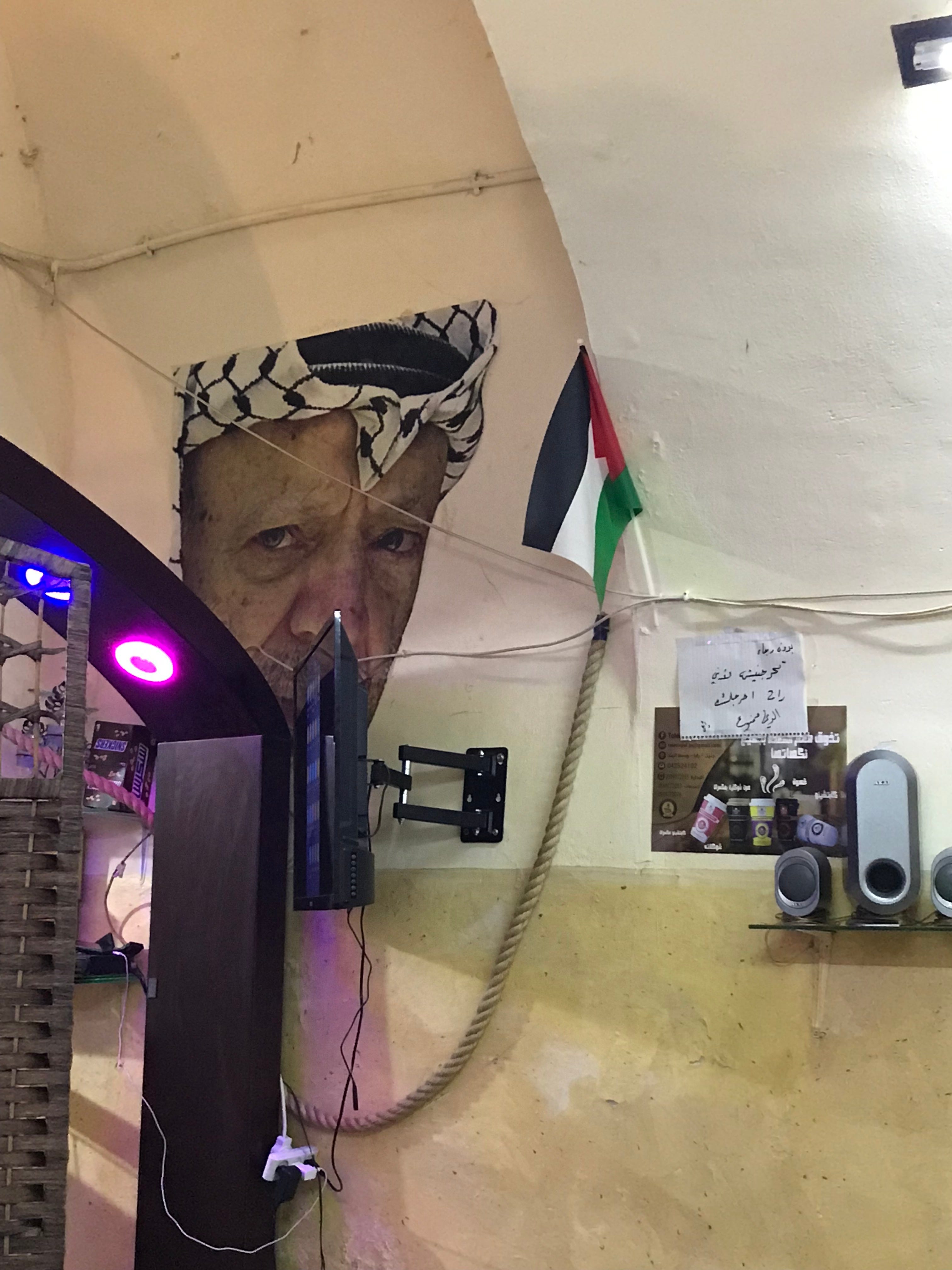
Bakr immediately showed me to my room, made me a cup of tea and led me to his roof which was under construction. This was when I fell in love with the physical beauty of the community and where I would listen to the call to prayer echo throughout the city.
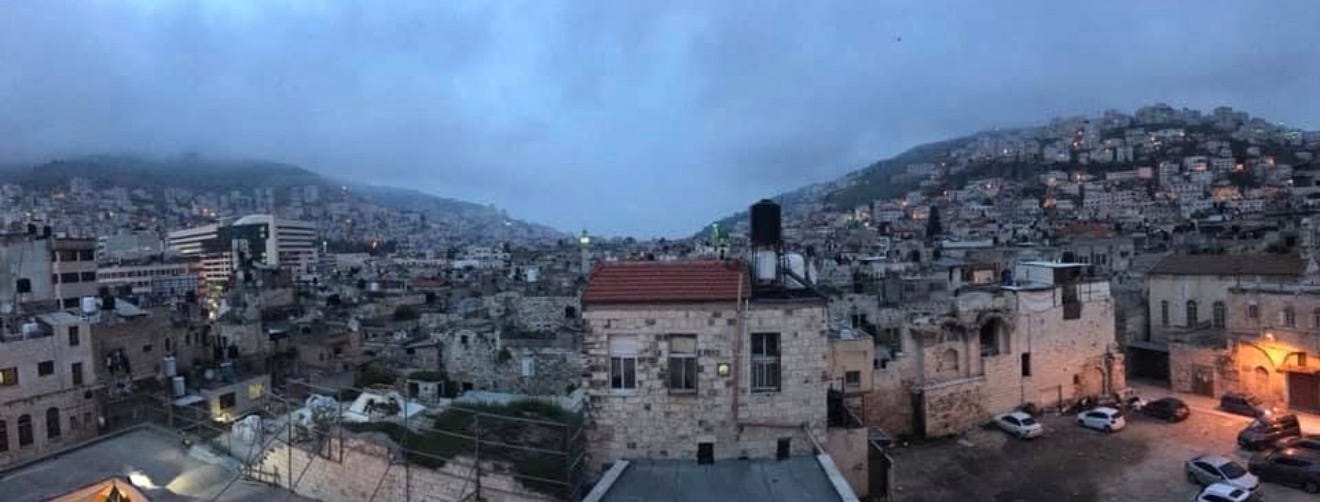
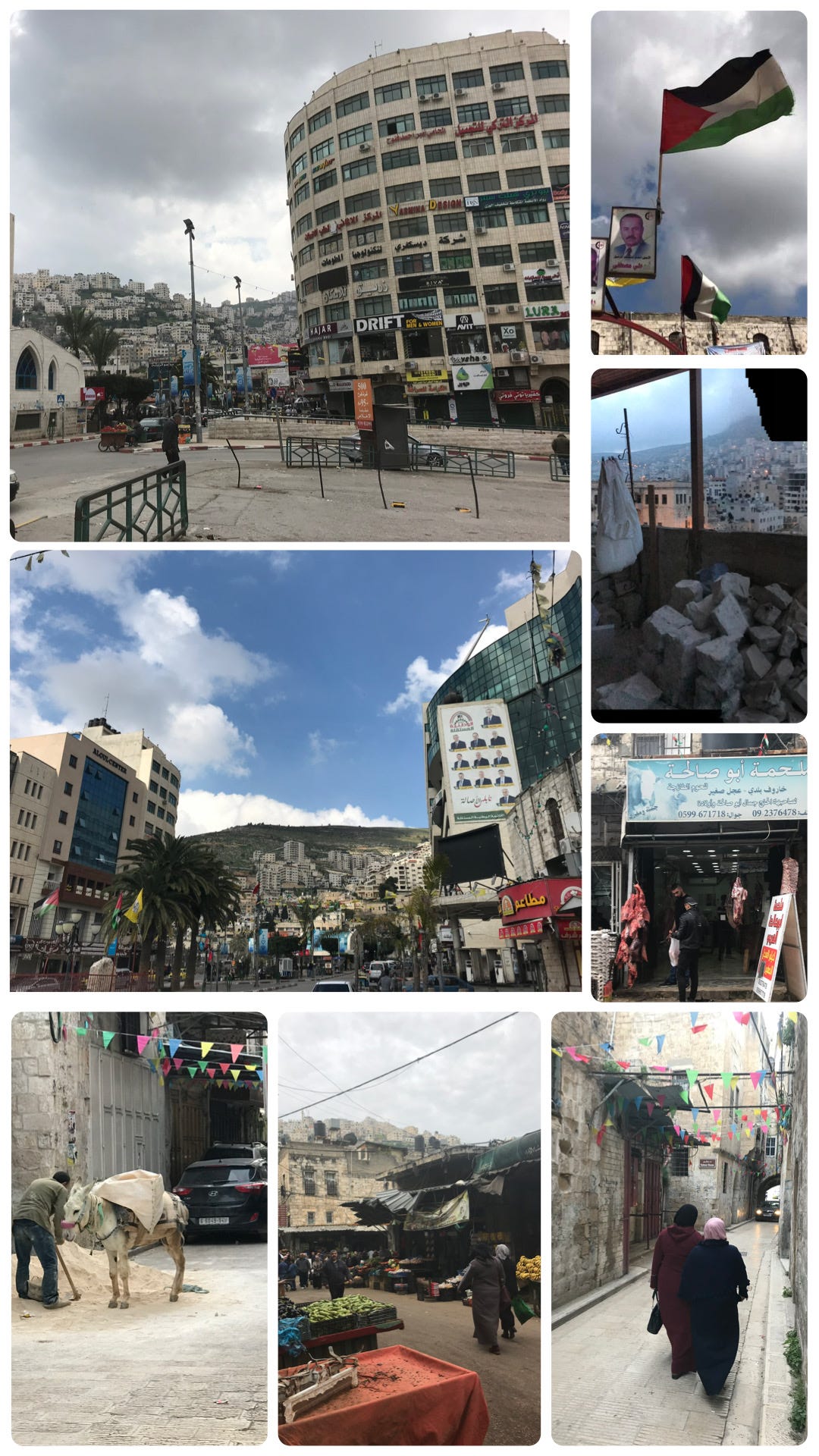
Many of the more than 157,000 residents of Nablus live in homes that dot the rolling hills overlooking the old town. There is beauty in the ability to visually connect with the entire community from any location.
I finished my tea and immediately went for a walk. That Friday stands as one of the two times – the other Kigali in 2026 – where I was in a city centre that was empty outside of Me.
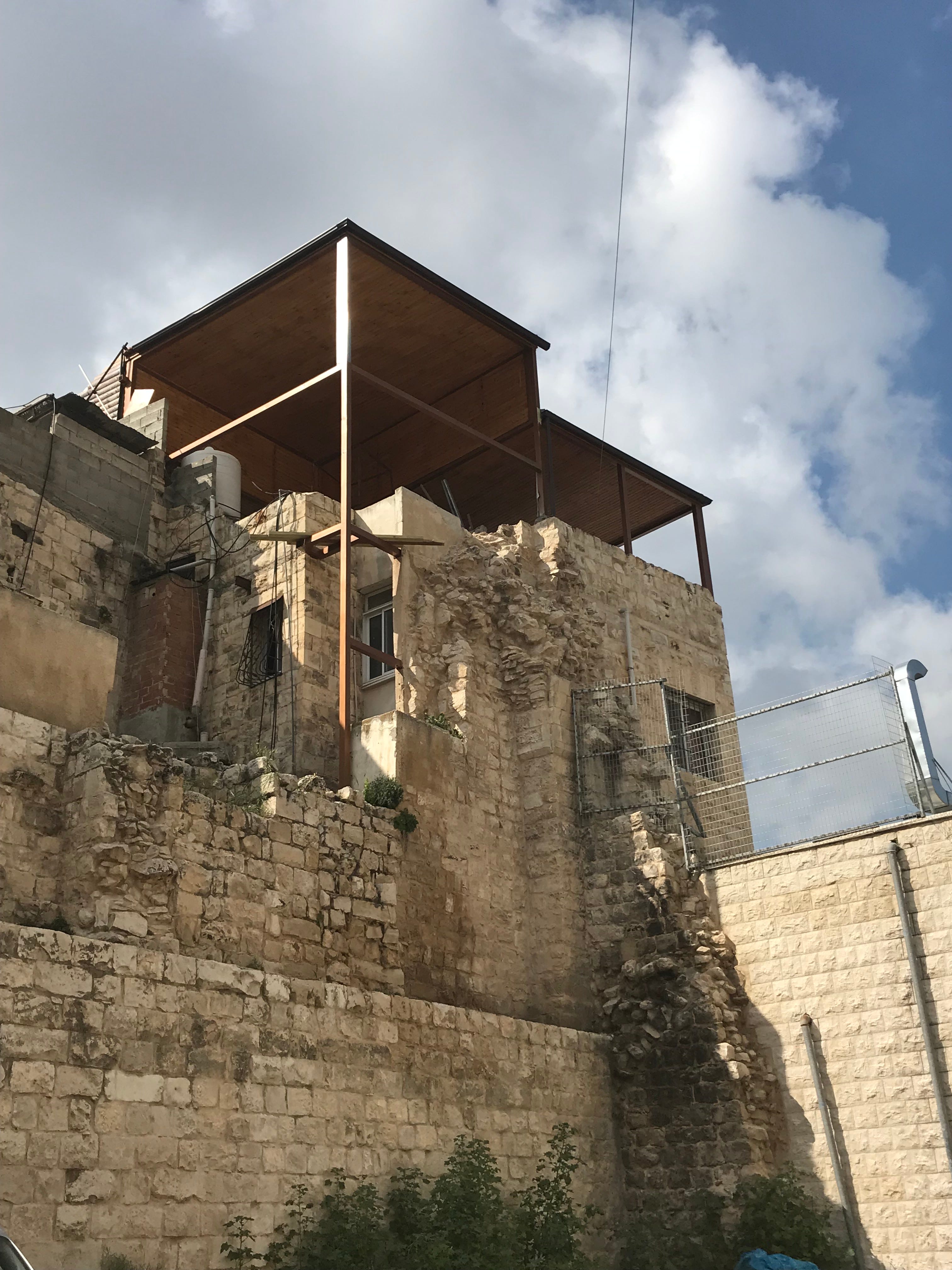
The walk was surreal – streets were empty and no traffic was ideal for enjoying the architecture and snapping photos.
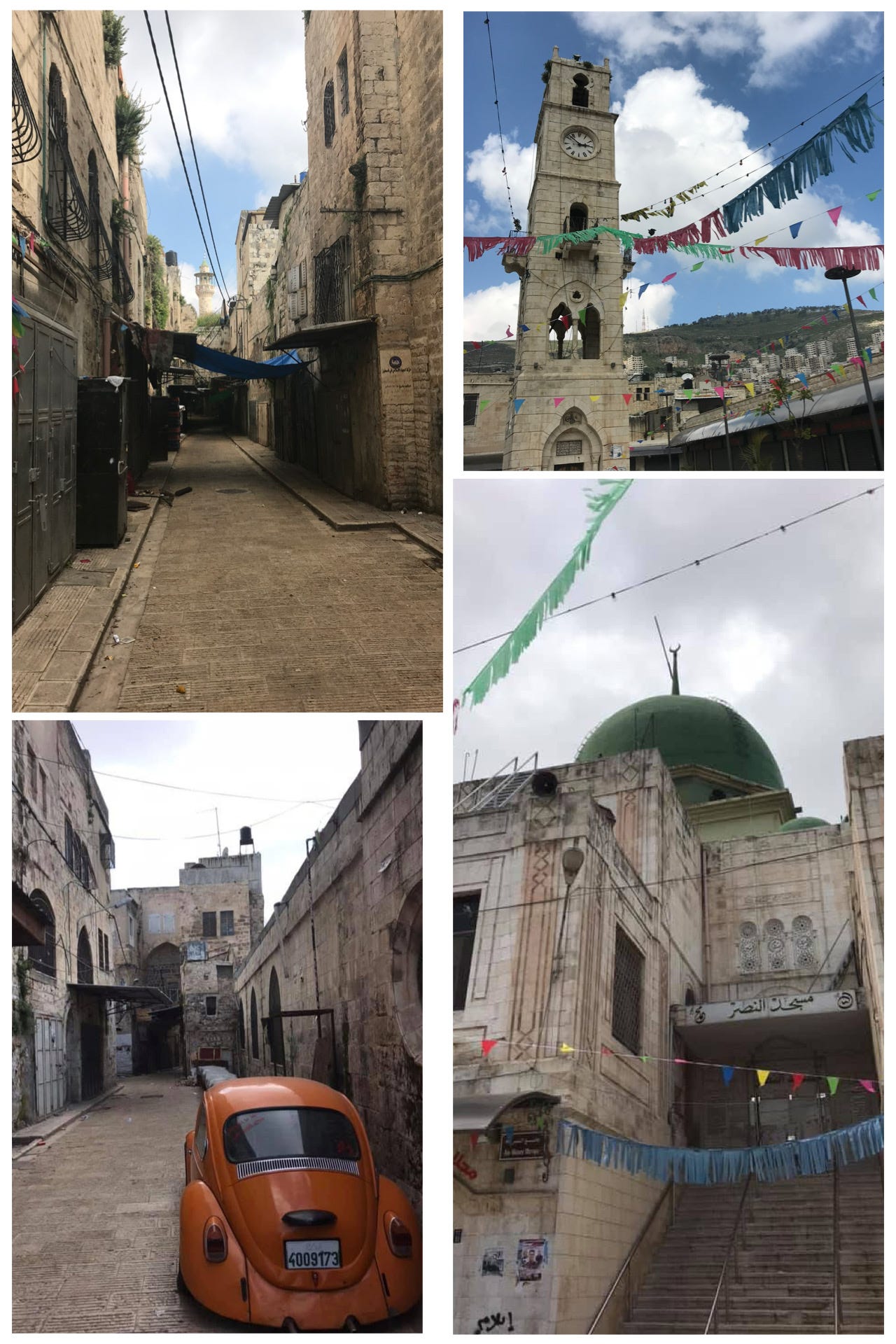
I found a basement cafe that was open to have a cold drink before calling it a night after a long day.
Three young men were playing pool. I purchased a cola and sat back watching them. They spoke English well and were Interested in learning about Canadian winters and ice hockey.
I never lead a conversation into politics – especially in places that have so much trauma that historical distance Isn’t a reality.
These men saw me take the photo below and gave me a lesson on the differences between Fatah, modern Palestinian politics and Arafat as a symbol of resistance.
I was grateful but I ensured I just thanked them for their information rather than dive into my irrelevant thoughts on that matter.
The Saturday market
Nablus was not the same city the following morning. I went for another walk as the markets were setting up for the day. In a matter of 15 minutes it became overwhelmingly busy.
I’d successfully purchased locally made soap – the famous Nablus pure olive oil soap. The salesperson was surprised that I wasn’t like other Europeans buying it by the crate full.
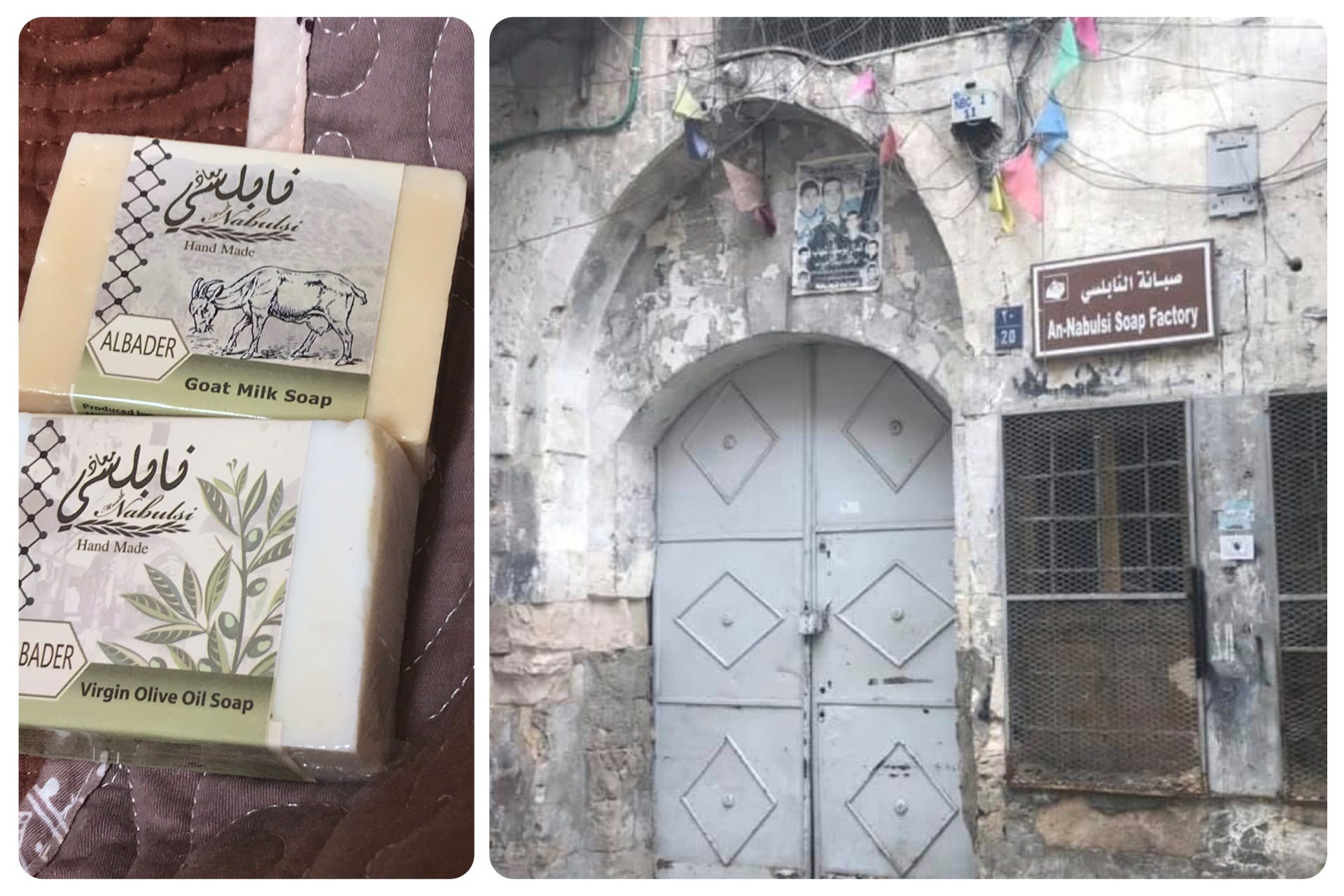
I wanted to head to the hostel to drop the soap off and get some water. I got lost in shallow alleyways and disoriented in larger streets. I’d convinced myself that it was in the direction of that hill on the left. However, I discovered every way had identical looking hills and homes.
My budget also refused to pay inflated prices for Israeli cell coverage so I had no phone or map – other than WiFi which was courtesy of the hostel that I couldn’t locate.
My frustration was that I was lost and kept walking the same streets. A shop owner identified my stress.
He came to me offering his arm as he pointed towards a chair next to his store. He then brought a warm tea which I kept saying the only Arabic words I knew which were fitting.
Shukran شكرًا… Shukran Jazilan شكرًا جزيلًا (Thank you. Thank you very much).
I was able to get my bearings. I noticed part of a mosque that I should be on the other side of.
I calmed myself and gained respect for one human – a Nabulsi man – seeing another human – a lost bumbling tourist on the verge of tears – and he provided help.
I retuned to the hostel via a short stop for street food and took a much needed day of rest alternating between bed and trips to the roof.
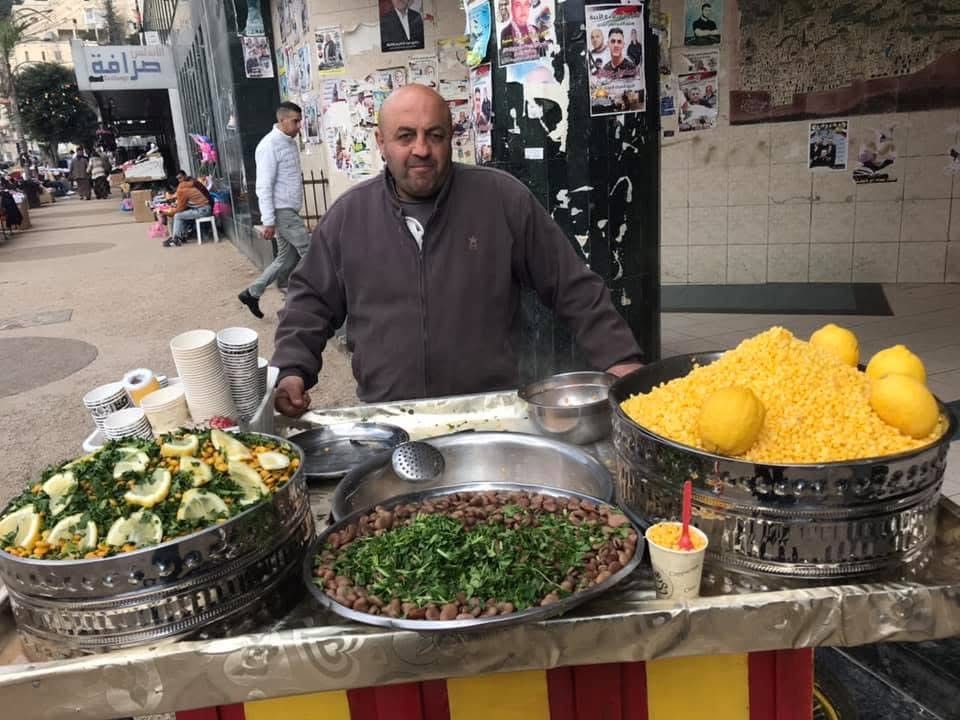
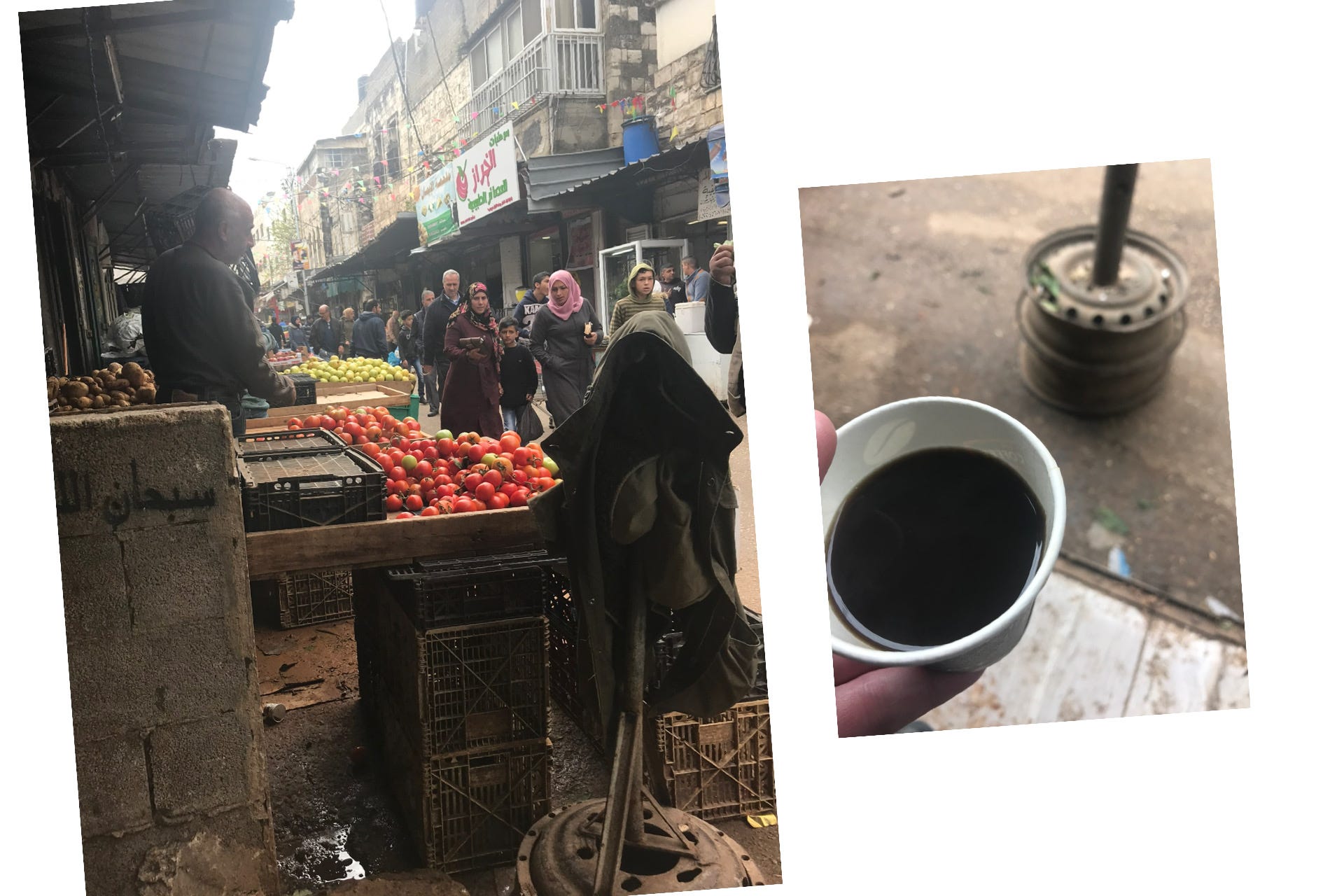
Knafeh Sunday
I woke up with primary and secondary goals for the day – dessert and relaxation. The primary goal came from a place of nervousness.
This was my third day in Nablus and I became worried I would miss out trying the star attraction – Knafeh, the world famous dessert dish.
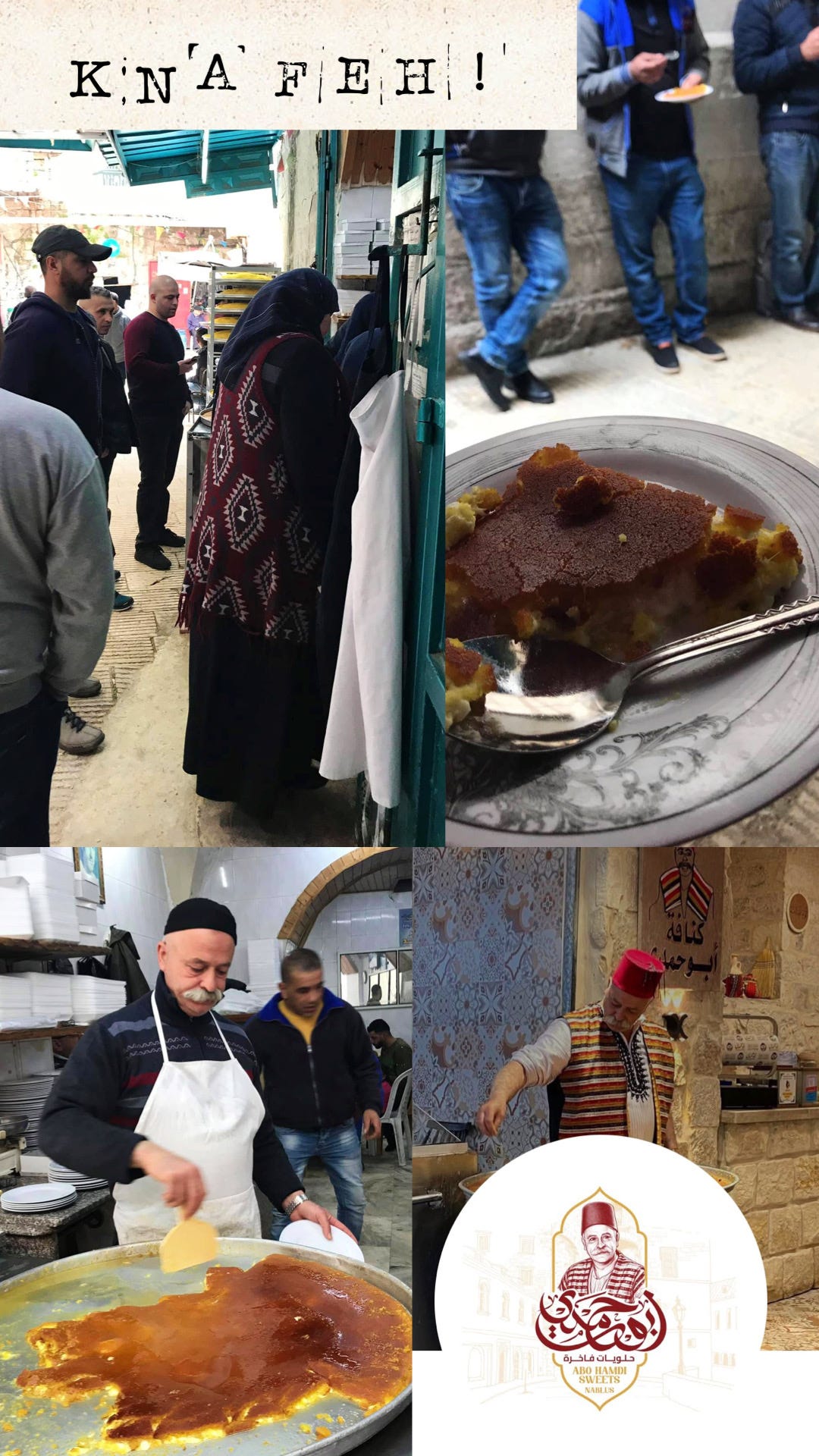
Knafeh features a warm layer of white cheese topped with crispy shredded pastry and sweet sugar syrup. It has existed in Nablus since Ottoman times in the 13th century.
I spent most of the morning walking past Abu Massoud, one of the city’s artisans who regularly makes hundreds of trays of the desert.
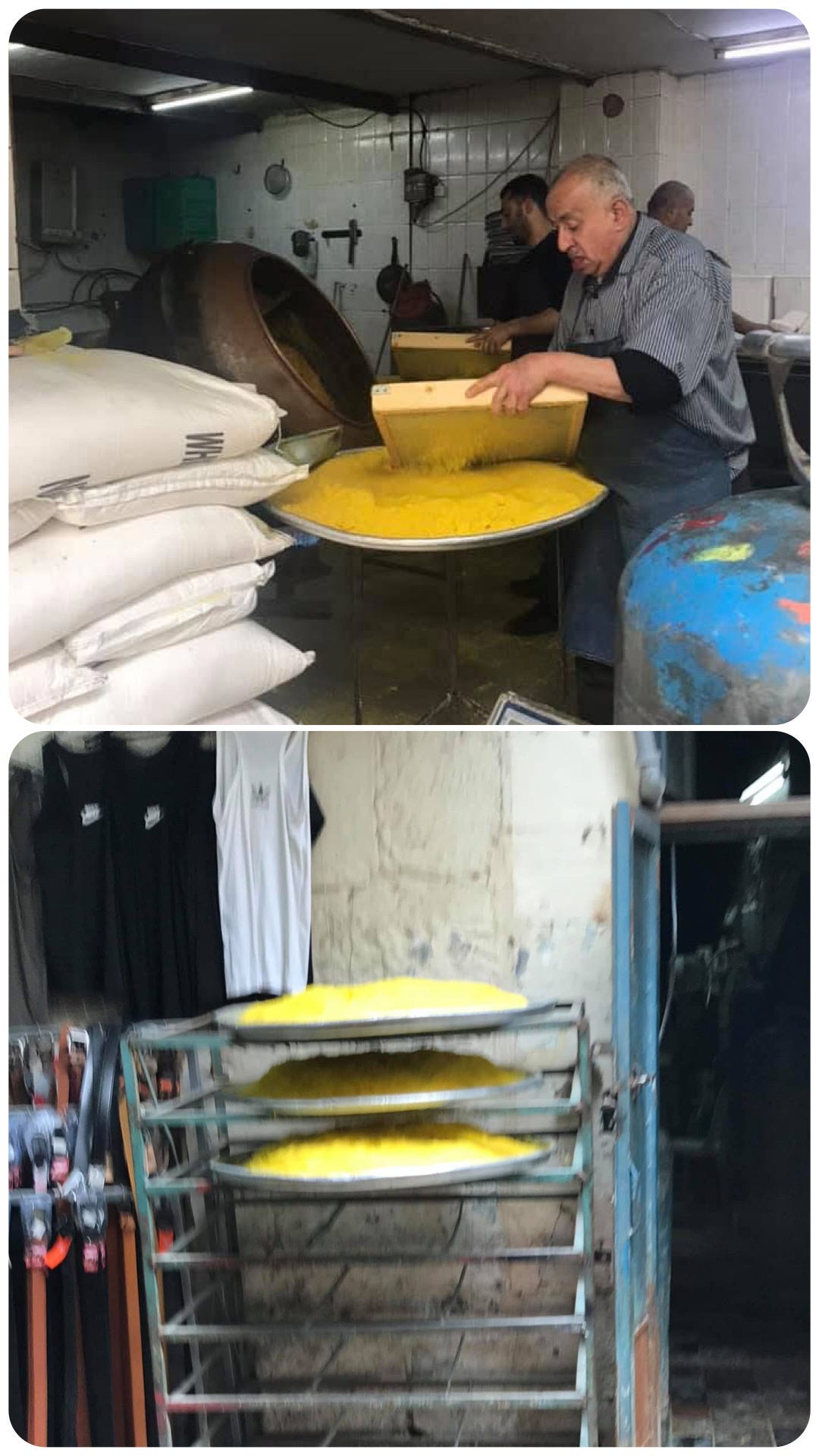
Shortly after noon when I made my way to the shop of Master confectioner Abu Hamdi Alqudoumi, who has spent around 50 years perfecting Palestinian sweets. He personally cut me a piece of the warm dessert and I joined lines of others who were leaning against a wall to scarf it down.
Turkish Tough Love
For 50 Shekels ($19 Canadian) I experienced all the pleasure expected when relaxing with a group of semi-naked men.
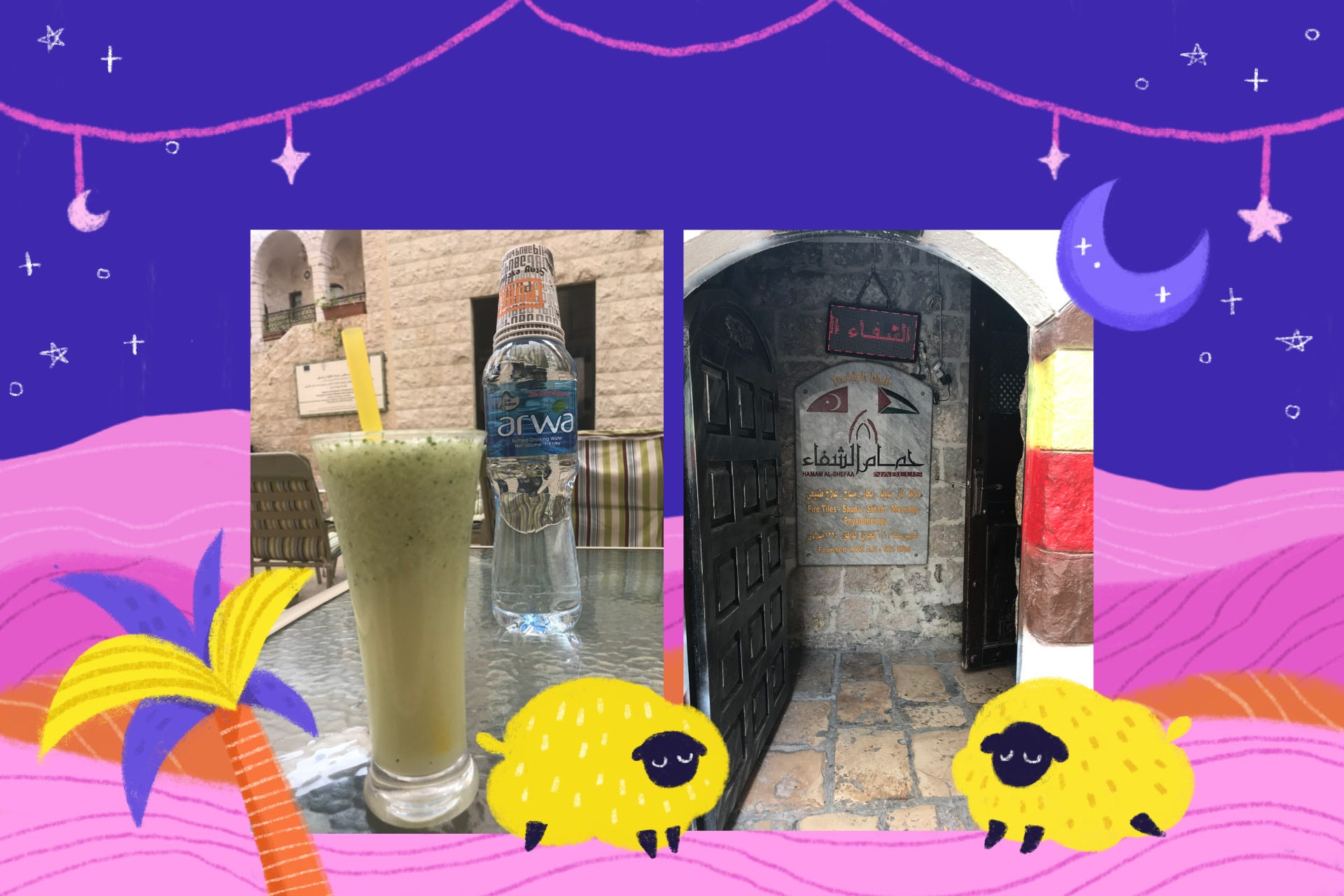
Hamam Al Shefaa – one of the oldest Turkish Baths in the world (almost 800 years) – had been on my list of things to try in Nablus. It was extremely intimidating to me because I would never go to a spa – but the historical value and curiosity pushed me to try one.
The routine went as follows…I showered and then put myself in a towel and walked into a huge steam filled room. Heads turned towards me – largely, I imagine because I stood there unsure what to do or where to start – and partly because I clearly had the largest man-boobs in the room.
Another patron left his group of five to show me the ropes. He pointed for me to lay on “fire tiles”that were set at 55 Celsius – and used his hands to explain that I was to remain there for 15 minutes.
The immediate sensation was that I had thrown myself on the grill of a BBQ. However, I knew that pain subsides if you stick it out. With that said – I lasted 6 entire minutes.
Then I was shown to alternate between freezing cold showers, sauna, and steam room for about an hour.
I was led to the massage room from a local university aged student who spoke English and was very friendly.
He then gave my muscles tough love (he slapped me around for 15 minutes).
He warned me not to tell anyone I was from Canada or Sweden because I’d be converted and married before I left.
His advice was that I could easily pass as German and nobody wants to go to Germany.
The end of the experience was the highlight – and lowlight – of the bathhouse.
A man told me to lay down as he washed me with scalding hot water – and scrubbed my testicles from behind like it was Christmas morning and he was testing out a new chainsaw.
I’ve often look back at that moment wondering if that guy worked there or was another customer?!.
To be honest, it doesn’t really matter – I was grateful that he took me under his wing – literally.
I exited the bathhouse and enjoyed an ice cold mint lemonade in a posh courtyard as the final relaxation.
The Final Night and Memories Not Forgotten
I can remember returning to the hostel for my final sleep after another amazing and busy day.
I listened to Blue Rodeo as I sat on the roof waiting to hear both the Maghrib (Sunset) and then Isha (Night) call to prayer. They echoed across the community loudly over the speakers of the Grand Mosque.
I was experience an evening in the heart of Palestine. And I loved it.
I’d leave the next afternoon for a night in Jerusalem before starting a planned escape to Jordan.
Nablus sticks out for me as an example of how propaganda and travel advisories can easily dehumanize an entire community.
I purposely shelved my fears and decided to visit.
The people and experiences I’d encountered were warm, welcoming and caring. This is a city that isn’t afraid to demonstrate their humanity while also resisting a never ending and illegal occupation.
Just last year I was waiting for my son at the end of a soccer game. There were tons of other parents waiting.
A man and his wife came to me and said, “sir, we love your Kufiya.
I spoke with the couple to discover they were from Nablus. They were forced to leave after terrorism from settlements. I proudly told them my love for Nablus and we all hugged (and I’m not a hugger).
Later that night I came to realize how privileged I’ve been and became embarrassed about the excitement I shared.
This family missed their home. Israeli apartheid and continued colonialism pushed them out…because of the crime of who they are ethnically and religiously.
I fell in love with a community that maintains its humanity without apologizing for resisting Israeli war crimes.


Leave a comment