As told through travel, politics and sports.
“Keep politics out of sport” is the rallying cry of fans who want to escape after a long week of work.
In the U.S. and Canada, that’s the norm—broken only by individual acts of resistance like Colin Kaepernick taking a knee.
The Winnipeg Jets show how sport can unite a community regardless of culture, religion, or class. But in many parts of the world, that unity is harder to find.
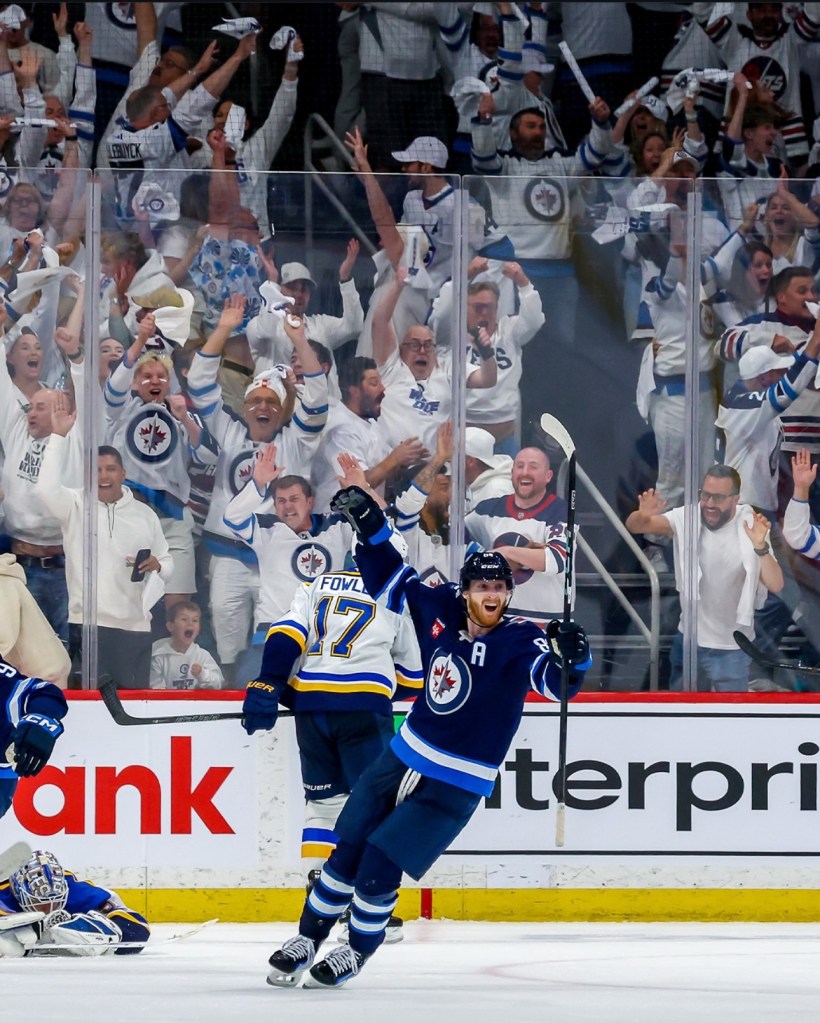
Game 7 (2nd OT)
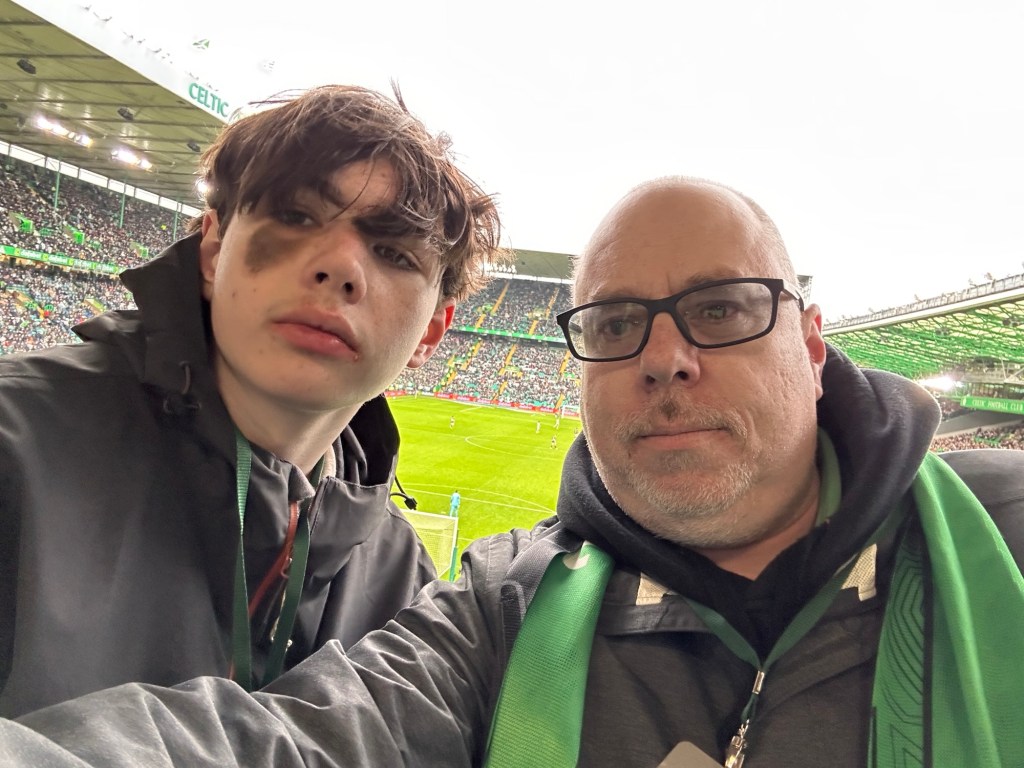
I’m one of the fans wearing glasses (May 2025).
South Africa: Post-Apartheid
From 2001 to 2003, I attended sports matches while living in South Africa. Apartheid—modeled in part on Canada’s ethnic cleansing of Indigenous peoples—had ended just seven years earlier, at least on paper.
When I went to matches, the makeup of the crowds told its own story. From a visual glance, almost all the rugby fans were white, the cricket fans were largely Asian, and the football (soccer) crowds were overwhelmingly black. It wasn’t just about sport—it was about history, culture, and identity.
Rugby had long been the pride of white Afrikaners, tightly bound to privilege under apartheid. Cricket carried a strong following among Indian communities, especially in Durban, where the game had taken root generations earlier. And football belonged to the Black majority, played in the townships and cherished as a game of resilience, access, and pride.
The politics of inequality was experienced in all of them.
Cricket
At Newlands Cricket Grounds – Cape Town, while waiting in line for a drink, I struck up a casual conversation with an Indian man about bowlers. When Makhaya Ntini’s name came up—the first Black bowler to make the national team and still a record-holder—the exchange shifted.
Instead of celebrating Ntini’s rise, he launched into a kind of “Make South Africa Great Again” monologue. For him, the benchmark of a better time was when Black communities were “kept under control” by apartheid, when cricket remained insulated from what he called “crime-ridden” neighborhoods.
Over time, I began to notice that the most racist incidents I observed didn’t come from white Afrikaners, but from Indian men directing hostility toward Black South Africans. It jarred me at first—until I raised it with neighbors who offered some perspective.
They explained how, under apartheid’s rigid categories, Indians were slotted above Coloured and Black South Africans, but still below whites. That precarious middle position fostered a sense of identification with Afrikaners, a way of aligning upward on the hierarchy rather than downward. For some, it seemed easier to side with power than to share in the struggles of those even more marginalized.
It revealed a deeper truth about the social architecture of apartheid: it didn’t just separate groups, it cultivated rivalries and resentments between them. Racism, in that way, became less a singular force than a ladder—one where each rung was taught to fear or disdain the one beneath it.
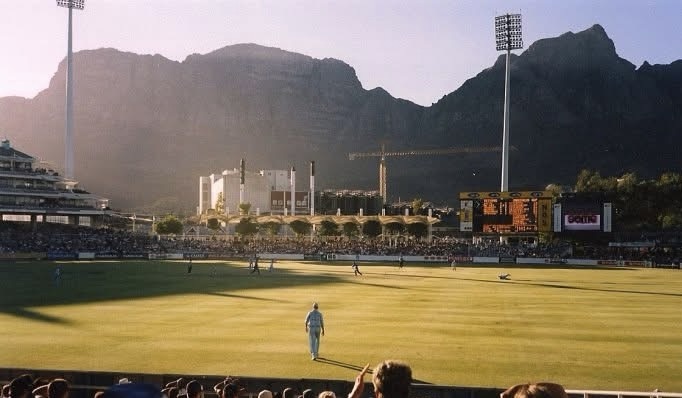
Newlands Cricket Grounds – Cape Town (2002)
Football
To say the experience went much better at Ellis Park, Johannesburg in November 2002, would be an understatement. South Africa men’s national football team faced Senegal before a crowd of 40,000.
With the Ellis Park Disaster still fresh, stadium security employed strict crowd-control strategies. A year earlier, nearly 120,000 fans had overwhelmed the 60,000-seat venue, leaving 43 dead. That dark and tense mood over the crowd soon changed.
The match was a Nelson Mandela Challenge that raised money for charity. I don’t recall much of the play—other than South Africa losing on penalties—but I’ll never forget the awe I felt when Nelson Mandela was announced before kickoff.
He joined the ceremonies and anthems, and the stadium erupted. Then, to my surprise, he circled the pitch in a Pope-style secured vehicle, drawing the loudest, most roaring sustained ovation I’ve ever witnessed. I hadn’t known he would be there in person.
He carried the weight of unmatched experience. Once branded a terrorist and imprisoned as one, he was later recognized as a freedom fighter jailed simply for demanding humanity and responding with dignity and force if necessary. He went on to unite the factions of men in prison, around compassion and the power of peace. This led to his leading a new nation as President under those principles and becoming a global rock star for humanitarianism until his passing. He was the father the world needs today. The game reflected hope for a more equitable future.
I had never been overcome by that much emotion in public before, and never with tears of joy. At first, I worried the neighbor who brought me and his family would think I was a weirdo—until I saw they were crying too. They were born into the legal classification as South African “Asian,” and in that moment we opened up more with each other than our superficial meeting.*
*The World Cup sparked our first meeting during South Africa’s clash with Spain. The kickoff came at 1:30 in the afternoon Johannesburg time, and workplaces let people out early so no one would miss it. I started the match at a crowded bar but slipped home for the second half. When South Africa scored, the entire apartment block erupted—neighbors spilling outside to cheer together in unison. We met in the middle of that celebration.
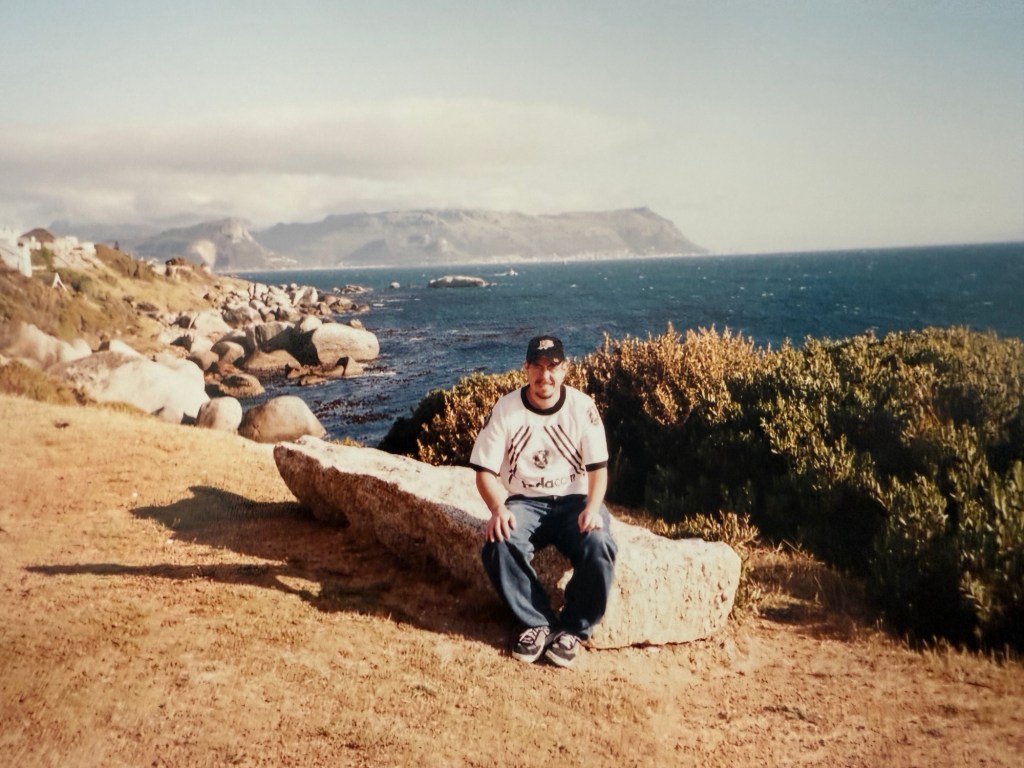
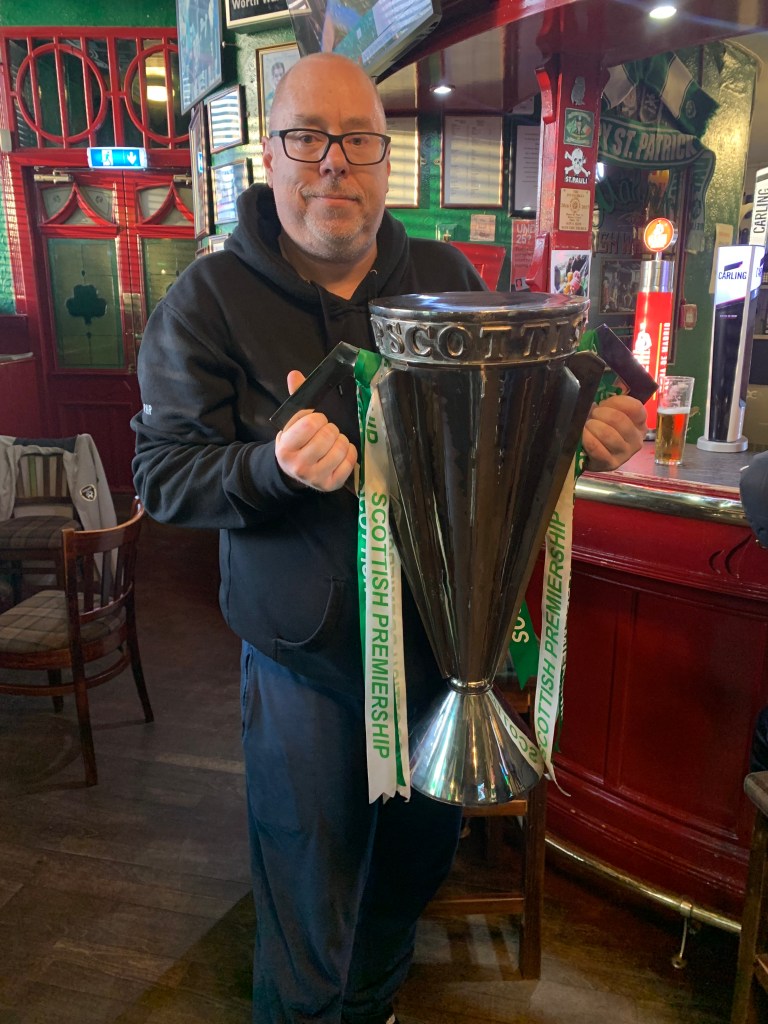
(South African Premiership team)
Rugby
At Ellis Park again, Nelson Mandela showed the world the kind of leader he was through the unforgettable story of the 1995 Rugby World Cup
In 1995, only a year after the end of apartheid and South Africa’s first democratic elections, the nation hosted the Rugby World Cup—the sport’s biggest stage at a time when the country’s fragile transition could tip toward peace or violence.
President Nelson Mandela saw the Rugby World Cup as an opportunity to unite a fractured nation. Wearing the green Springbok jersey—once reviled by the Black majority—he threw his support behind the team. Against all odds, South Africa triumphed over New Zealand in the final at Ellis Park, where Mandela presented the trophy to captain François Pienaar in a moment that came to symbolize national reconciliation.
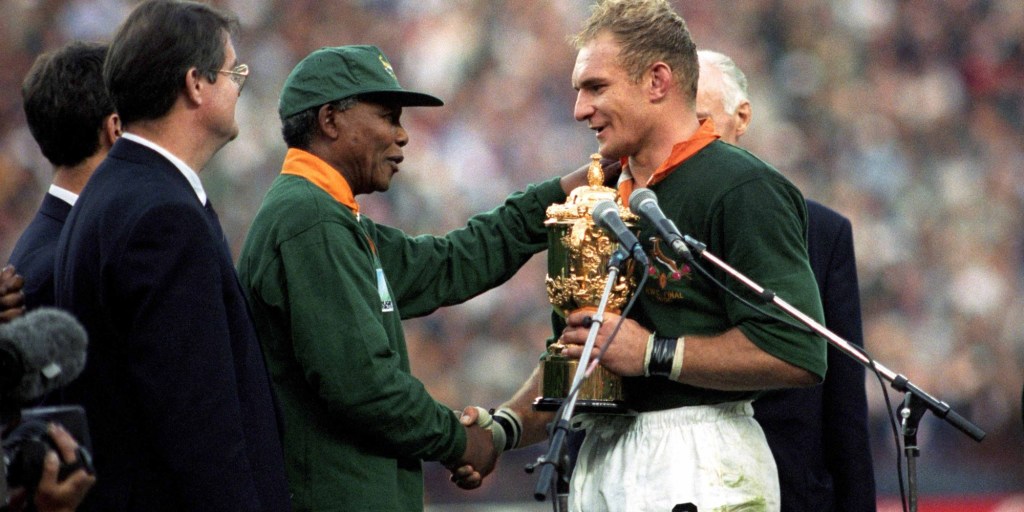
This would have to have an impact on many South Africans. However, statistics suggest the immediate bump in unity was overshadowed by continuing distrust and hatred between citizens. Anecdotally I’d have to agree.
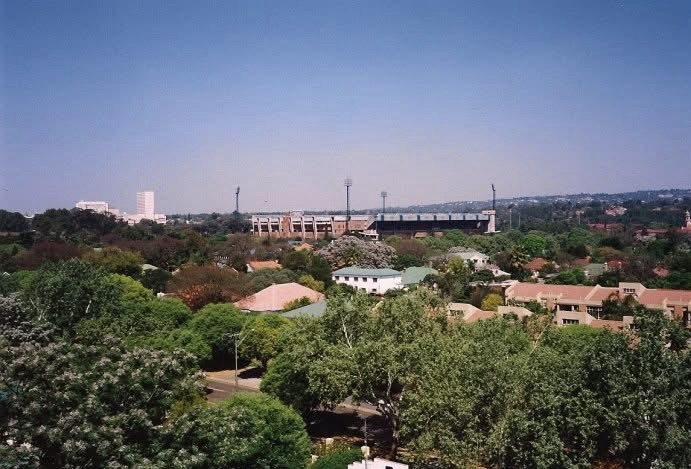
The most blatant racism I witnessed came at a rugby match in 2002. None of my friends had ever been to one—neither had I—so I brought them to a professional game at Loftus Versfeld Stadium in Pretoria, South Africa’s capital.
The stadium held about 35,000 fans, and I’d wager all but three were white. At least in our section, that was certainly the case. None of us knew the rules, so we entertained ourselves by rating the best tackles.
I couldn’t tell you much about the game—not because I was awestruck by any Mandela type figures, but because of an incident that reflected the attitudes he spent his life fighting.
We didn’t last past halftime. By the second ‘accidental’ beer spill from the fan behind us, it was clear it was deliberate. The rising chorus of the ‘K’ word—the Afrikaner version of the N-word—confirmed it. We left, only to have a full beer hurled at us as we went.
I felt awful—I’d bought the tickets as a surprise, never imagining what would happen. It was the complete opposite of the hope found in the football experience. My friends were gracious, assuring me it didn’t bother them anymore; it was simply what they had come to live with.
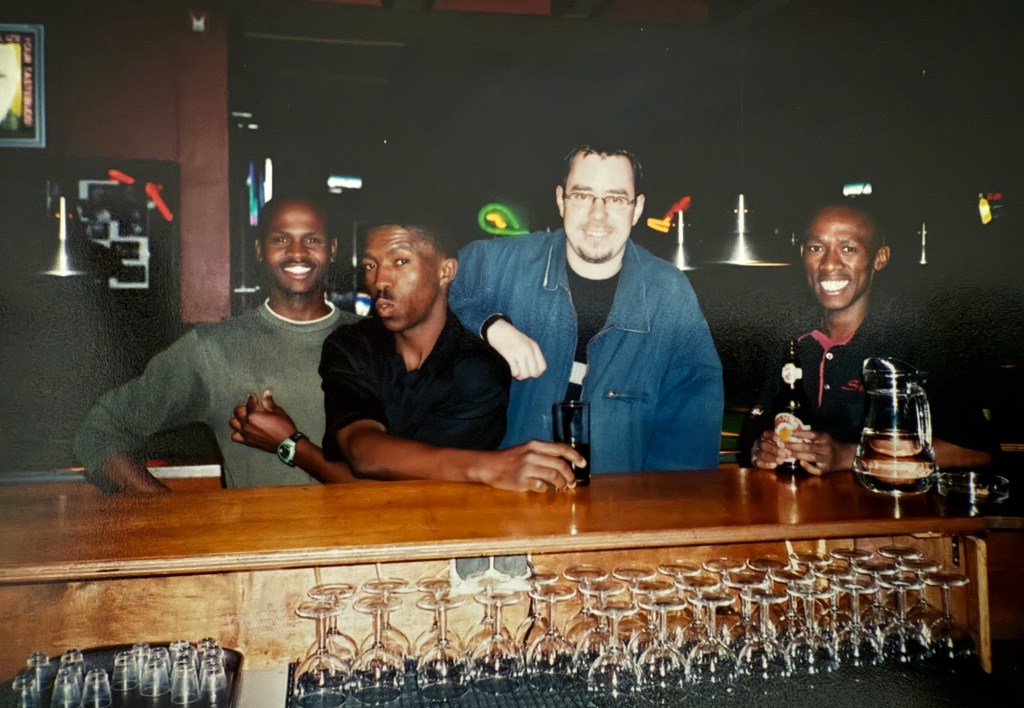
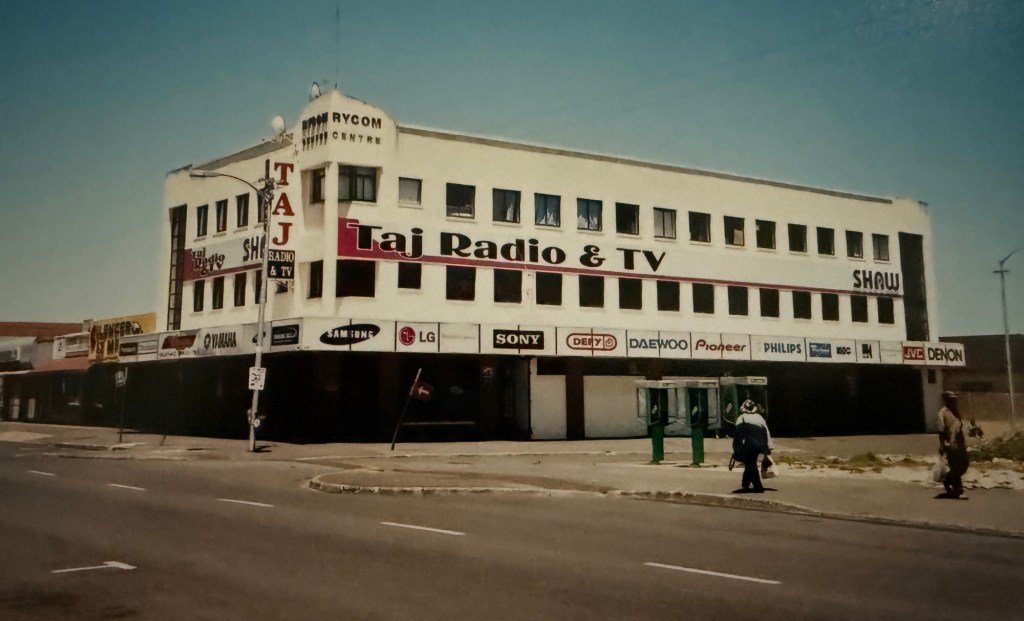
University above an electronics store
I came away with many positive memories – and many unfortunate ones that helped me build a resolve to be active against human rights abuses. One of the most lasting was my ‘re-education on Palestinian issues’ as told by South Africans who lived through apartheid.
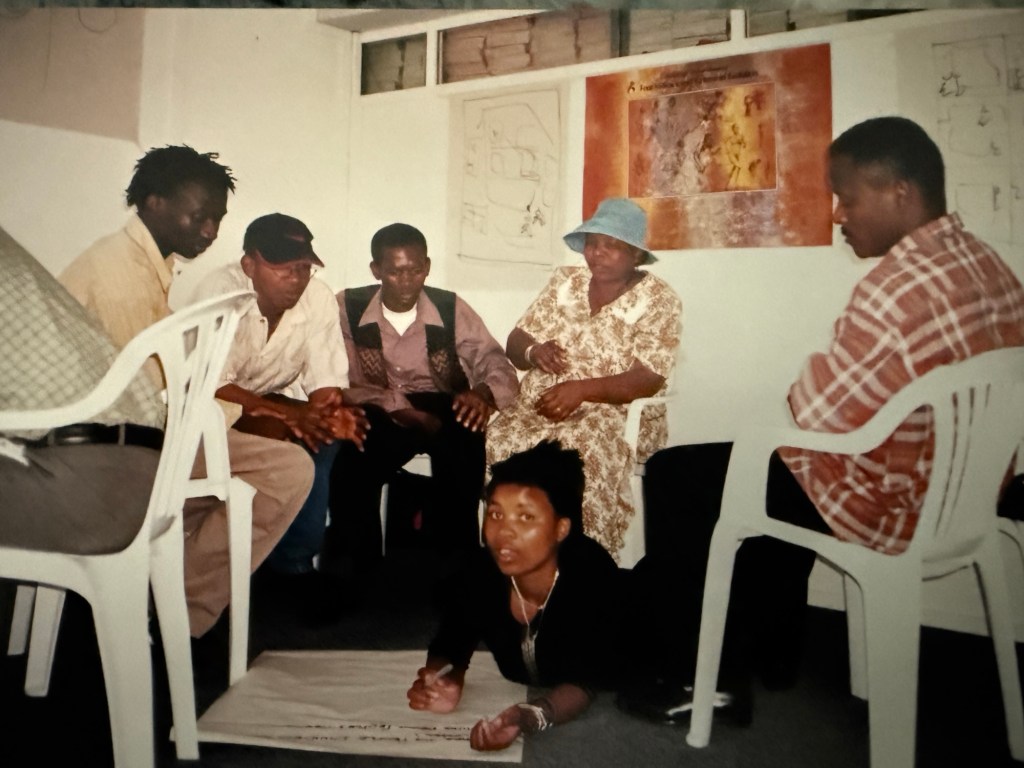
I worked out of a small Cape Town office—just a few rooms above an electronics store in Athlone, a Black community. We often hosted community-building events there. During one of those gatherings, the conversation turned to the Middle East. I repeated the old Israeli phrase, “a land without people for a people without land.” The room instantly fell silent. The lively discussion stopped, and I was met with stunned faces.
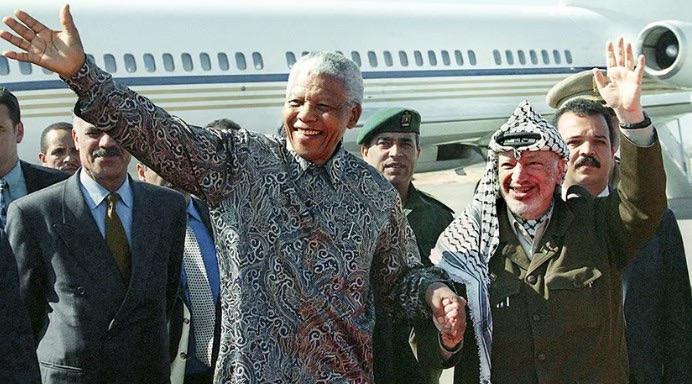
The weeks that followed became my re-education, pushing me beyond the limits of Western propaganda. I came to know the Palestinian people and their struggle, learned of the bond between Arafat and Mandela, and heard claims that Palestinians lived under a system even harsher than apartheid South Africa. This connection helps explain why South Africa would later lead the charge at the International Criminal Court, accusing Israel of genocide.
That awakening reshaped my perspective and has defined my interest in Palestine ever since.
The Glasgow Celtic
Sports and politics collide when teams themselves are born from culture, religion, or class divides.
Glasgow Celtic, Scotland’s powerhouse club, was born in the shadow of the potato famine—its modern supporters still mindful of the civil rights abuses the Irish faced under the United Kingdom.
British policy turned Ireland’s crop failures of 1845 to 1852 into mass starvation. During the famine, one in four Irish fled the country; about 125,000—roughly 10%—landed in Scotland, many settling in Glasgow’s East End.
Celtic were founded in 1887 as a charity to ease poverty among Glasgow’s Irish Catholic immigrants, many still facing discrimination, joblessness, and poor housing. Folklore suggests many signs across the UK read, “No Irish, No Blacks, No Dogs.”
Celtic supporters often test the limits of political expression at matches. Earlier this year, they faced legal scrutiny after honoring Brendan Bik McFarlane, a Belfast Irish Republican Army (IRA) freedom fighter.
Bik later emerged as a peace process leader, but in his prime he was involved in some of The Troubles’ (1968-1998) most violent acts—targeting British loyalist paramilitaries and civilians alike in urban guerrilla warfare. For many Irish, those loyalists reflected a privileged class in a system where they were second to British settlers in law, politics, and society.
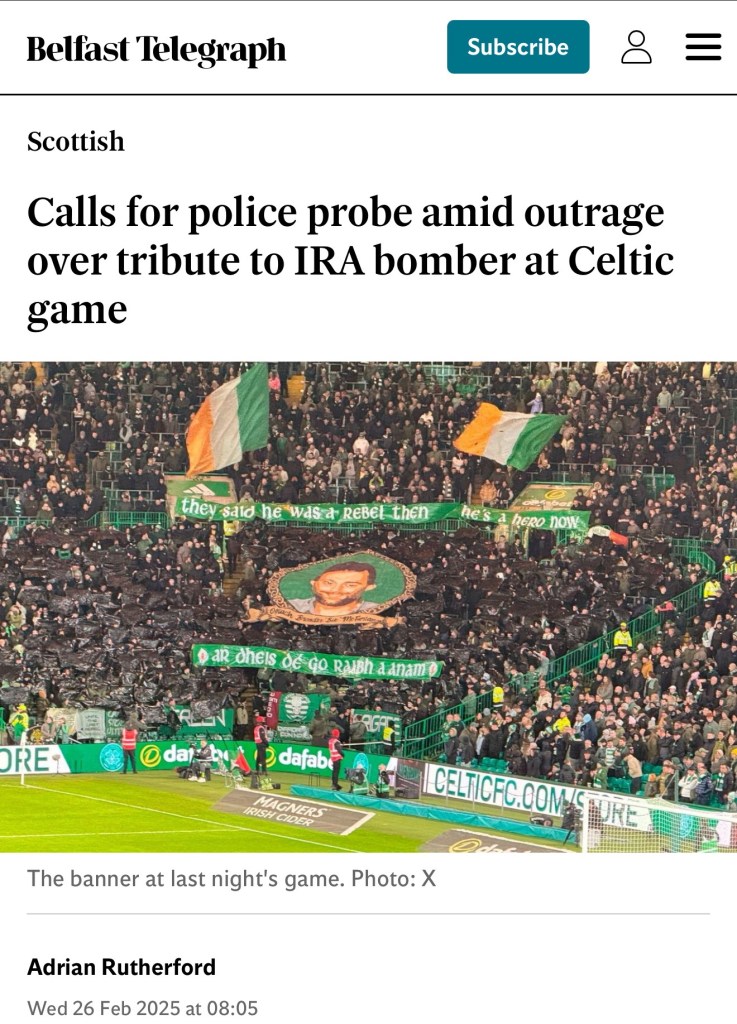
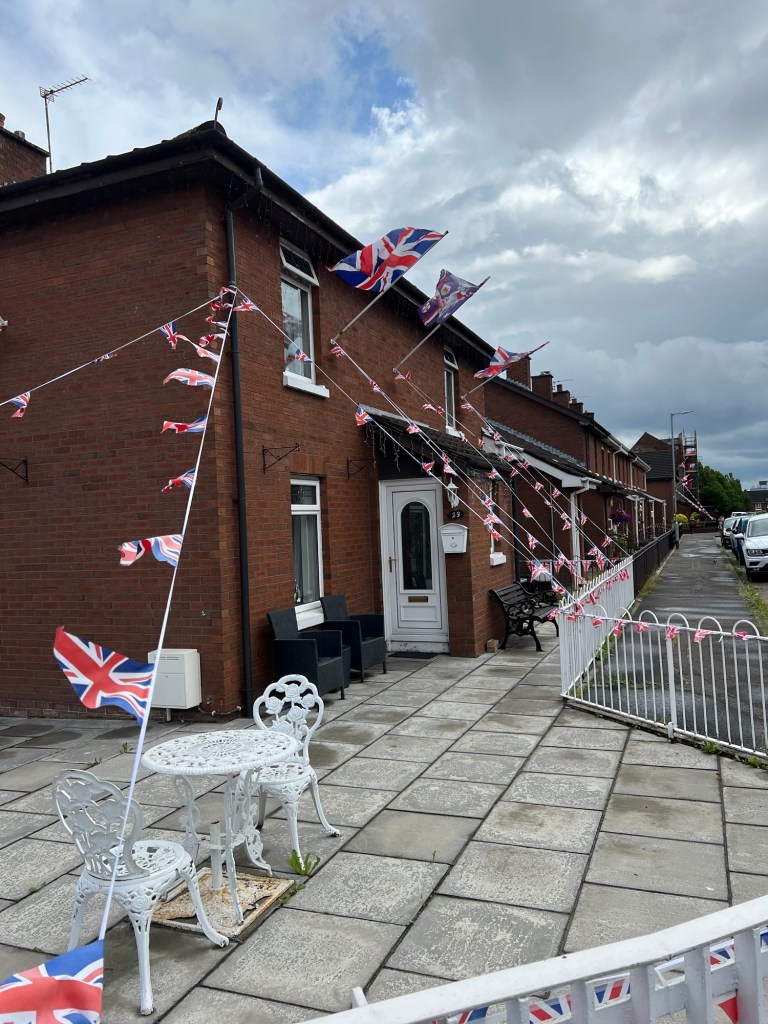
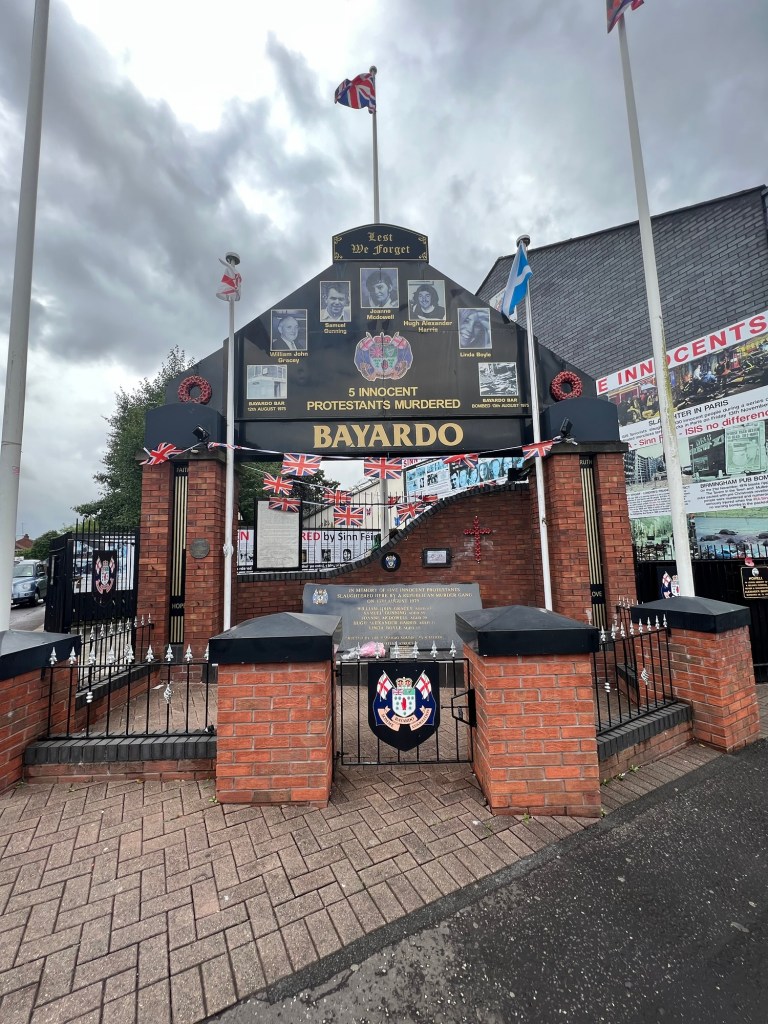
In 1975, McFarlane orchestrated the Bayardo Bar Massacre on Belfast’s Shankill Road, killing five and injuring more than 50. His violent legacy—and that of other IRA fighters—remains a flashpoint in Loyalist Belfast, a Protestant community still segregated today.
Our Uber driver from the bus station to our accommodations was quick to remind us of Belfast’s open wounds. An Irish Catholic, he questioned why we chose the British side of the city. He admitted he felt uneasy driving us there, recalling how Catholics were excluded from economic life—taxi medallions monopolized by Protestants, a system more recently democratized by peace and new ride-share technology.
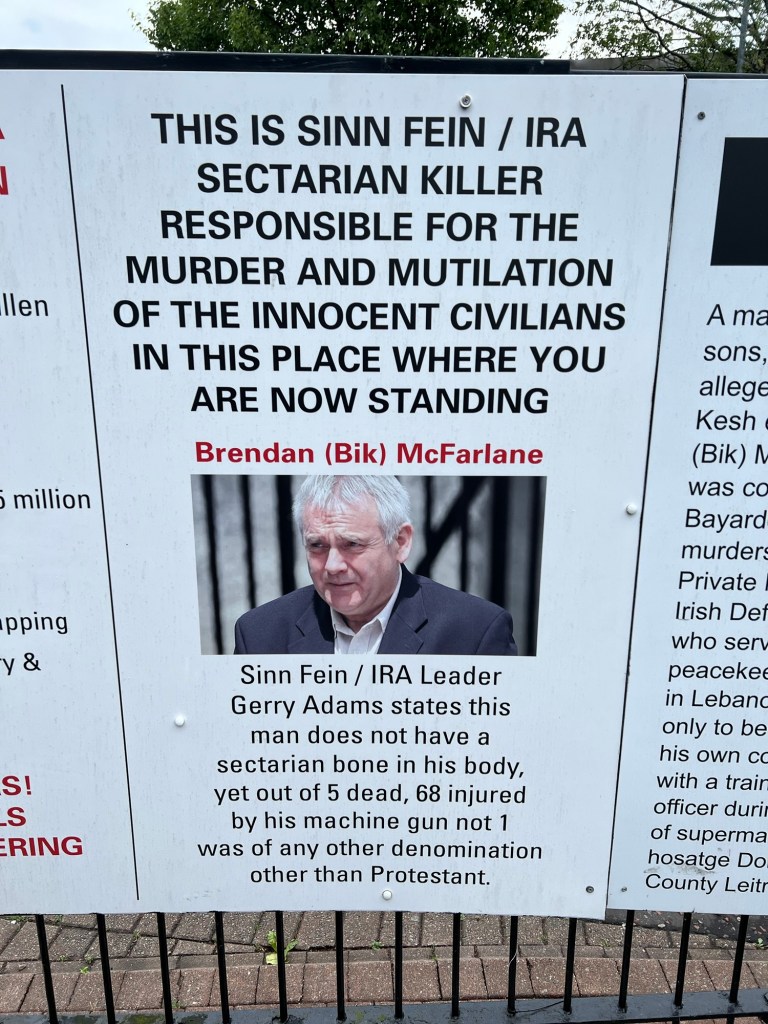
In 1976, McFarlane was sentenced to life in prison. There he rose as a leader among IRA inmates and orchestrated the UK’s largest prison break—one of the IRA’s greatest propaganda coups.
In 1983, McFarlane led the Maze Prison escape, using hostages and a food truck to free 38 Irish Republicans—a breakout later dramatized in the 2017 film Maze. Rearrested, he became the prison’s longest-serving IRA inmate before his 1997 parole, as peace talks advanced.
It takes less than ten minutes to pass through the wall dividing Protestant and Catholic communities—still locked at night. Soon you’re on Falls Road, IRA territory, where men like McFarlane are seen as heroes.
On Falls Road, a mural of Bobby Sands—McFarlane’s protégé who died on hunger strike—covers the side of Sinn Féin’s offices. The hunger strikes drew global pressure on Margaret Thatcher, forcing limited reforms to conditions for political prisoners.
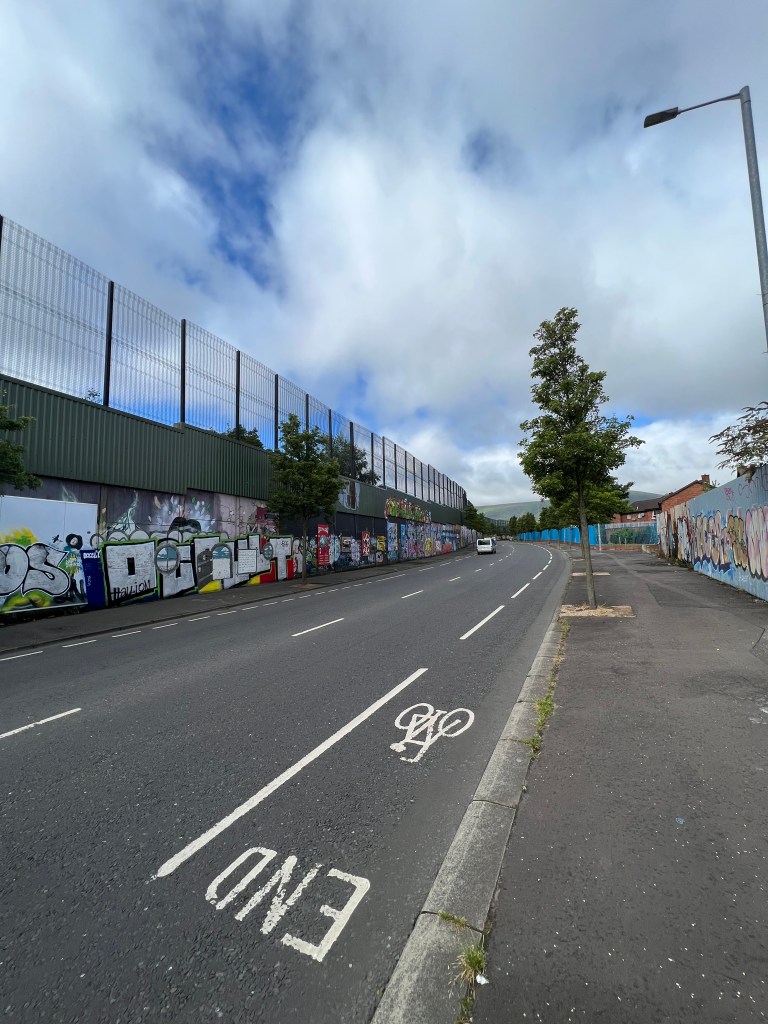
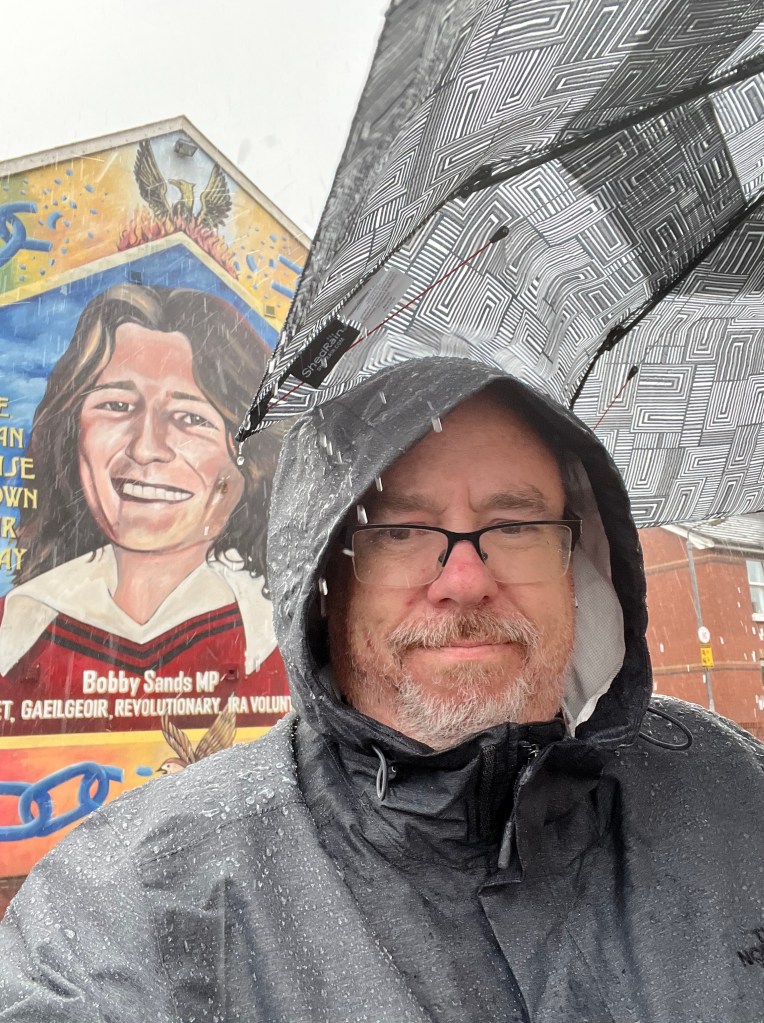
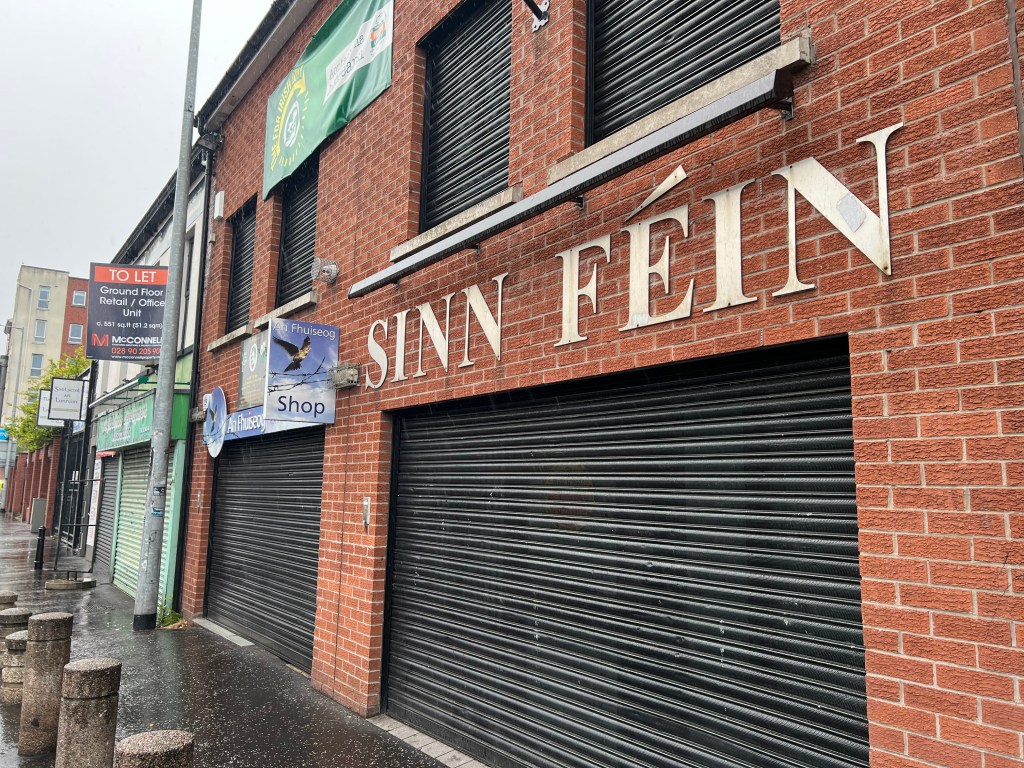
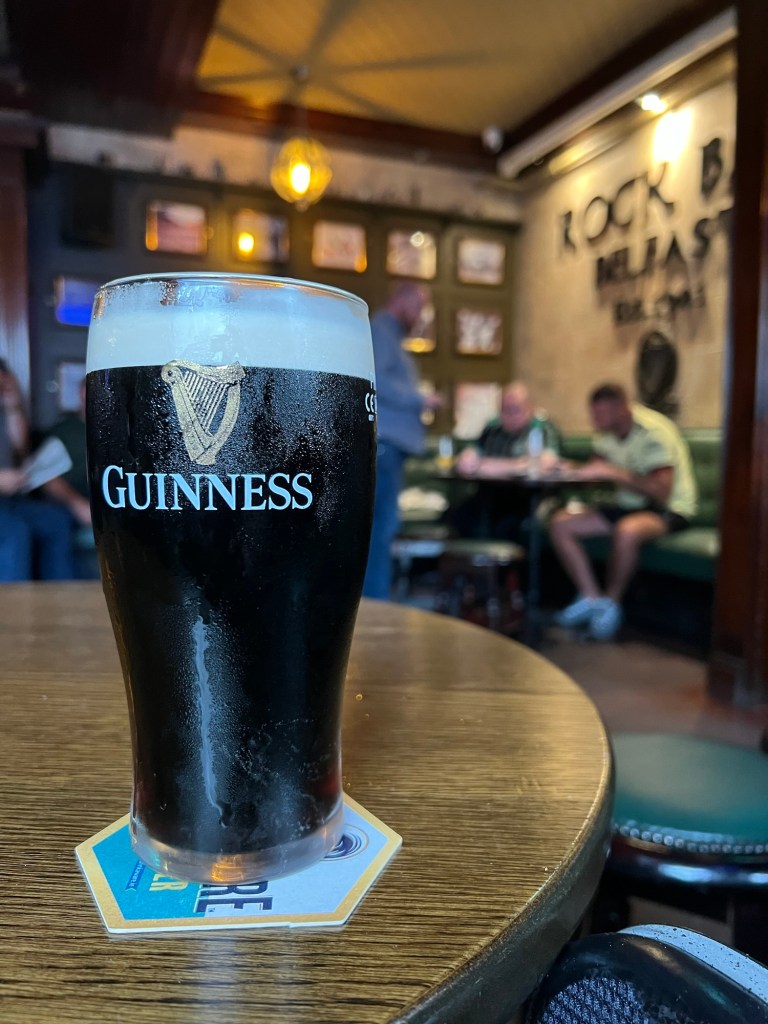
I walked on to The Rock Bar, an Irish Catholic pub founded by Frank O’Neill, part-owner of Glasgow Celtic. The bar was the other side of The Troubles—regularly bombed and even hit by a Loyalist rocket in 1994 that, unbelievably, killed no one.
The Rock Bar remains a community staple, honoring traditional music and the Irish struggle with its “Rebel Sundays.” Over a pint of Guinness, I watched Bik McFarlane—his mic stand draped with a Palestinian kufiya—take the opening slot in what was the last years of his life.
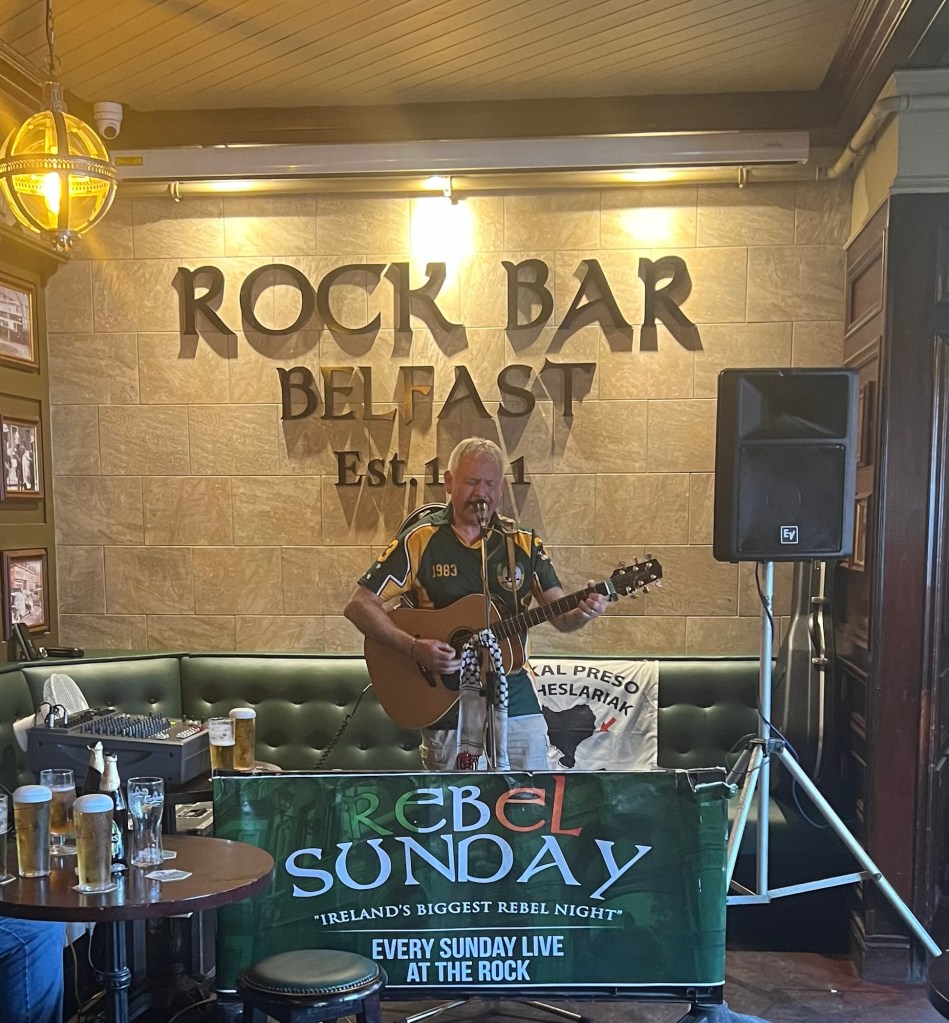
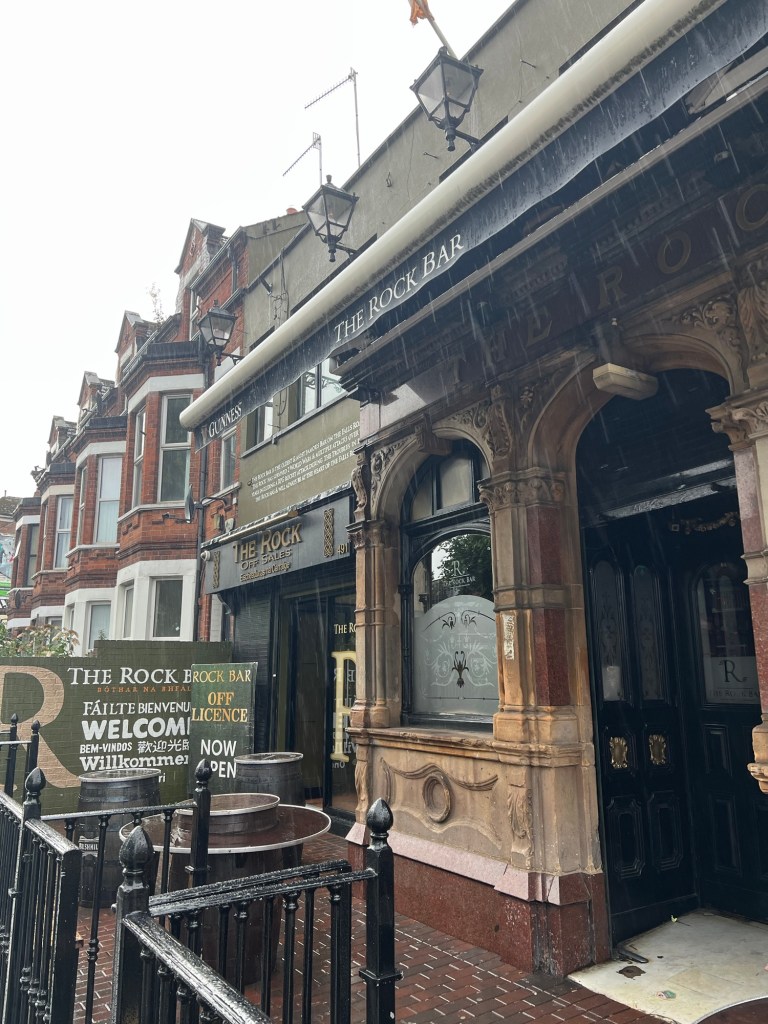
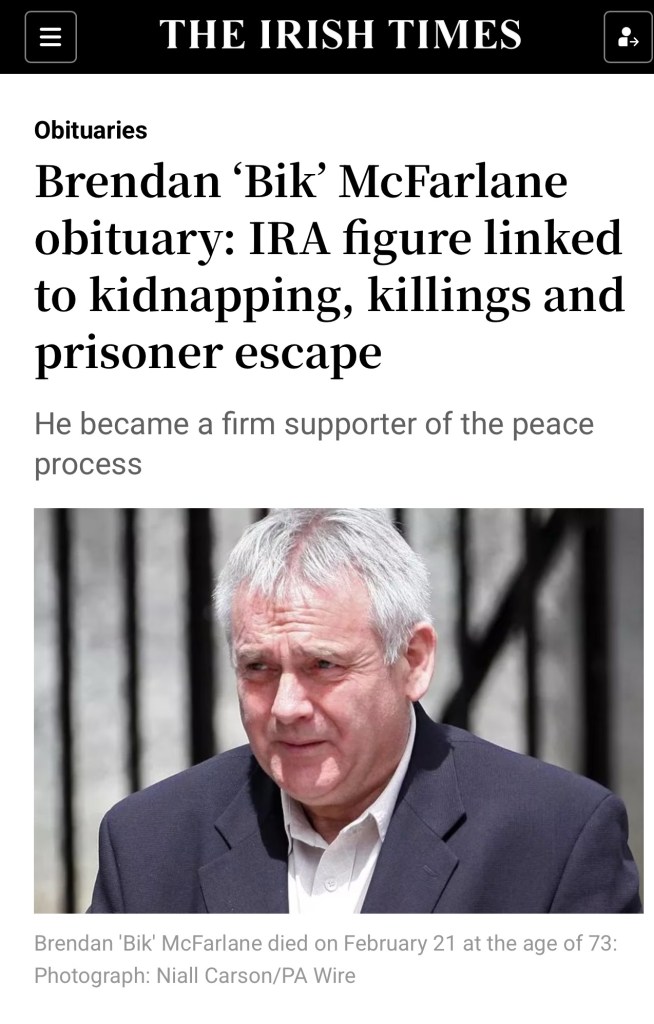
The evening almost over – I started the walk back to our accommodations – the last thing on the Irish Republican side is a demonstration of solidarity with the people of Palestine.
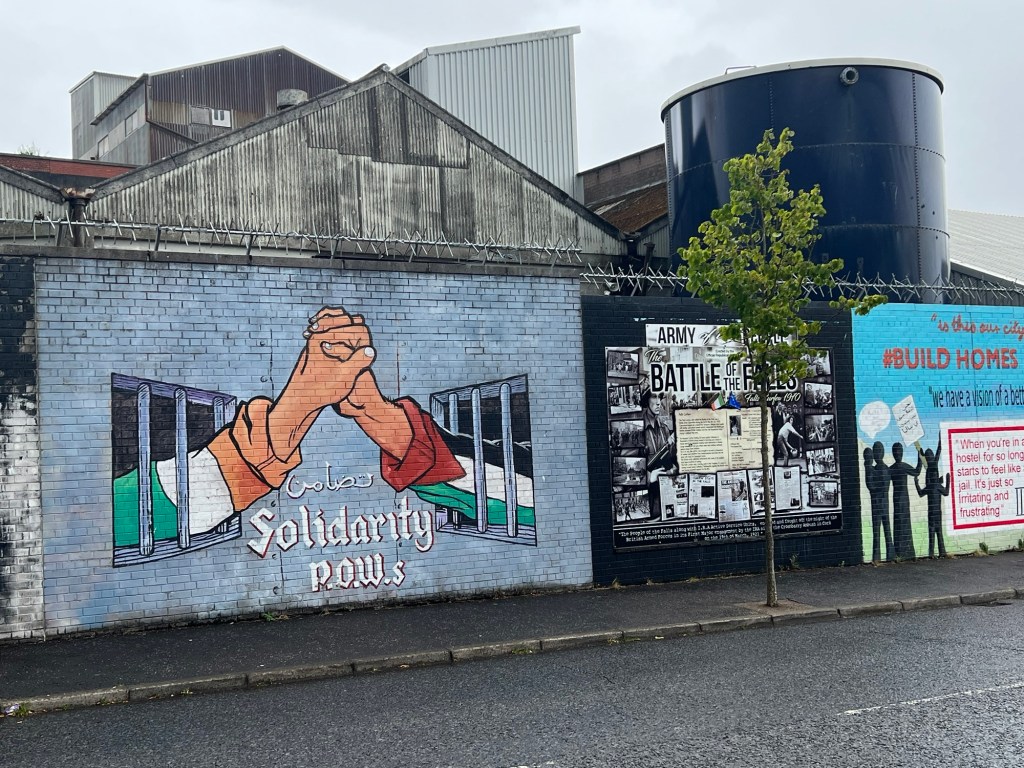
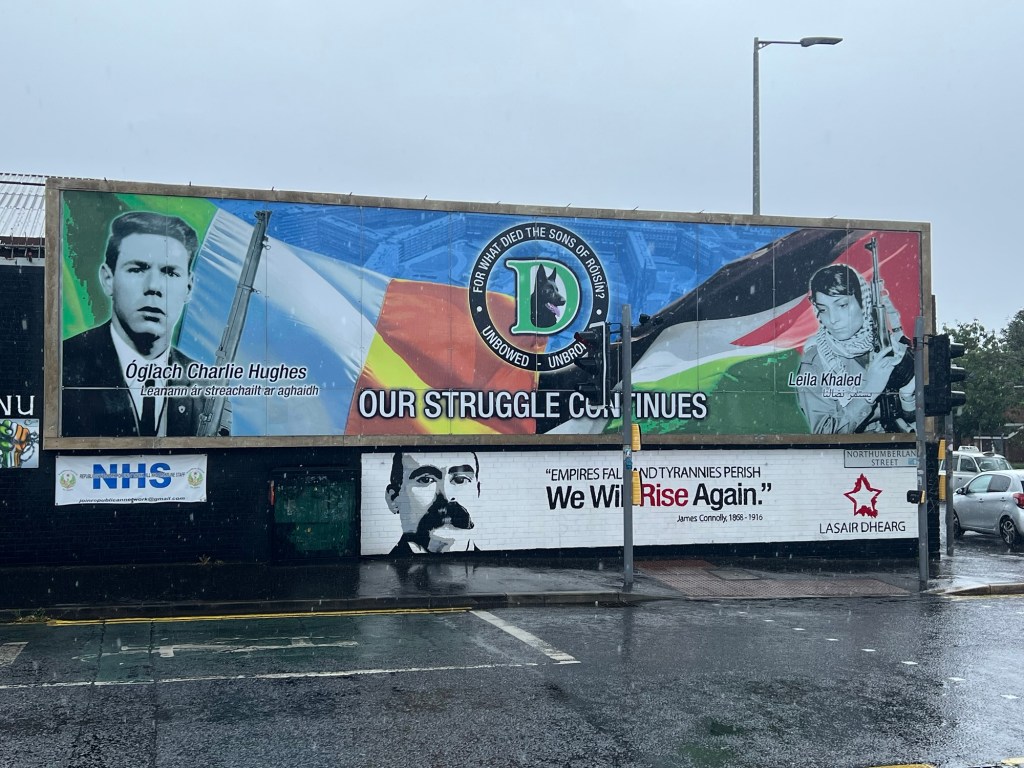
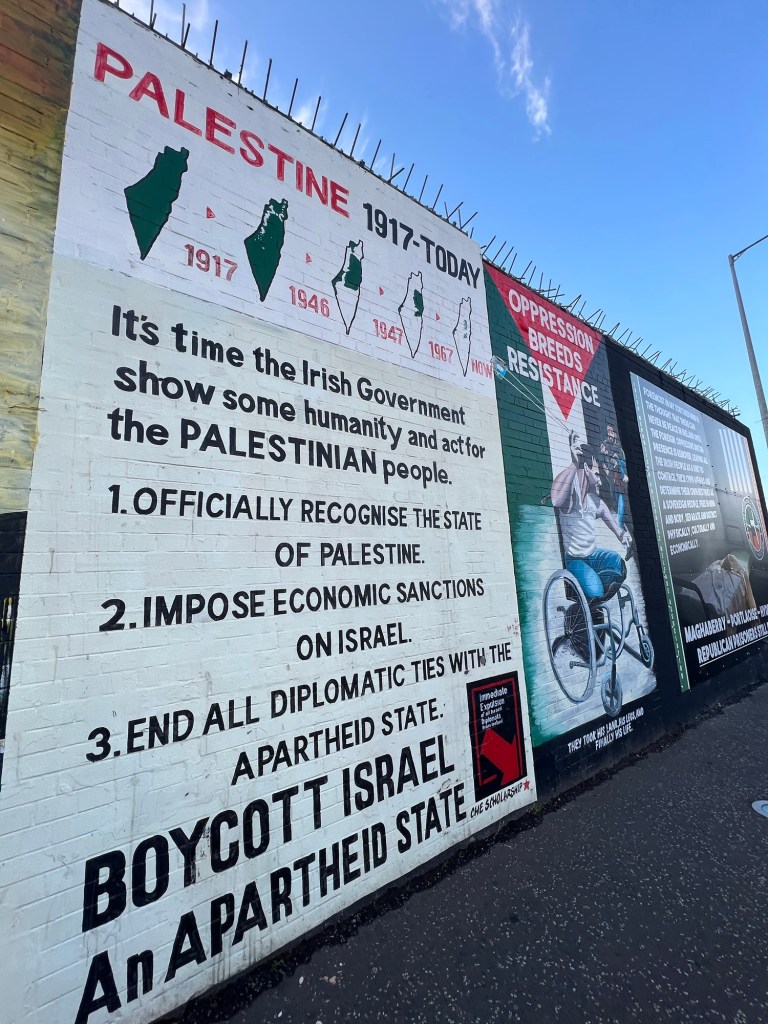
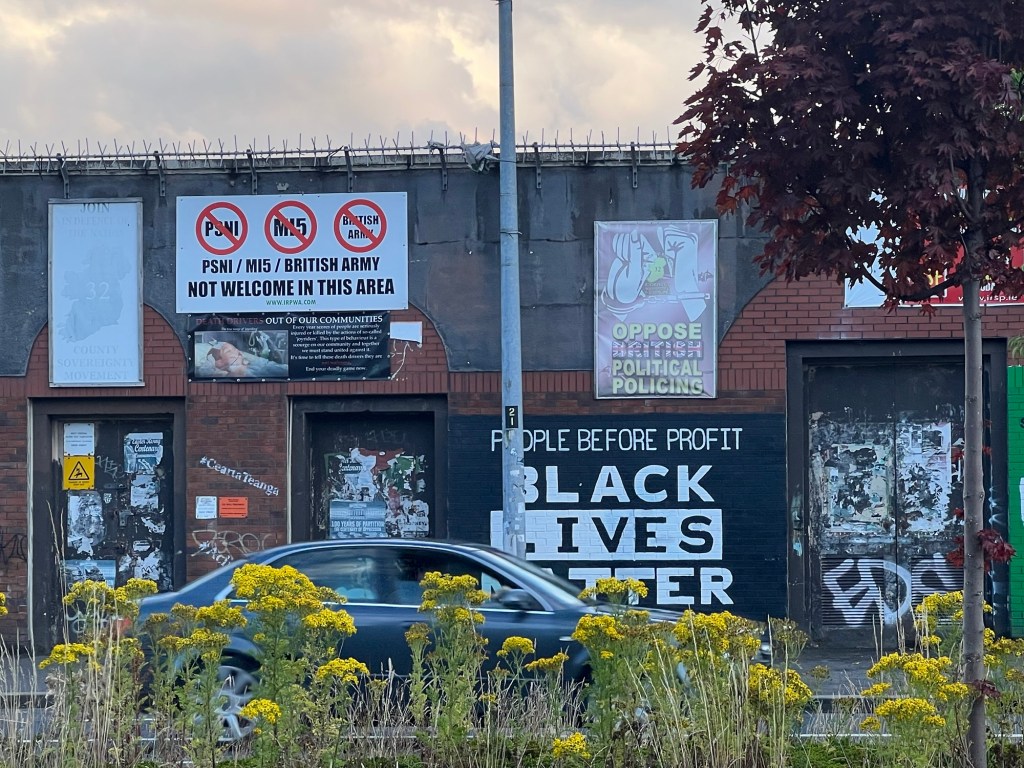
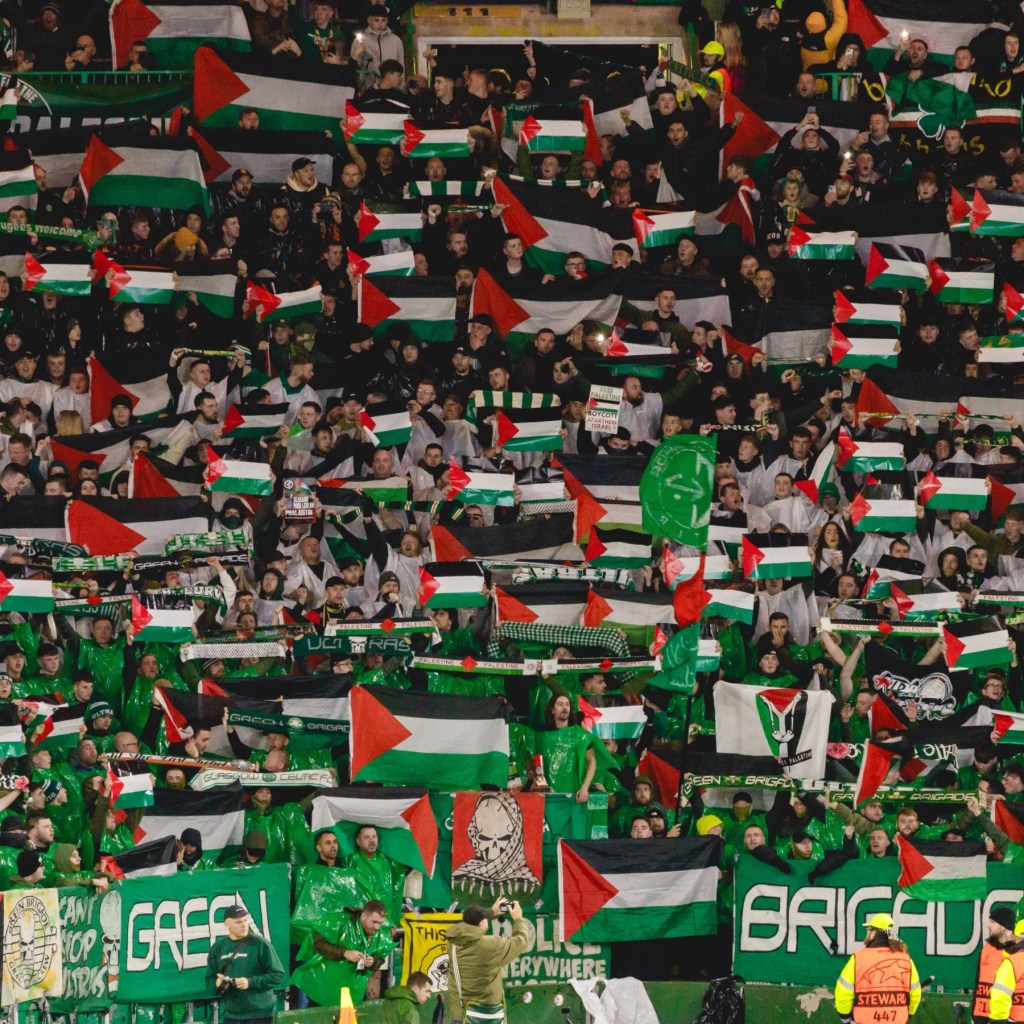
And so we return to Glasgow, where fans raise the Palestinian flag in solidarity with a people facing discrimination, apartheid, and hunger—struggles not unlike those once endured by the Irish.
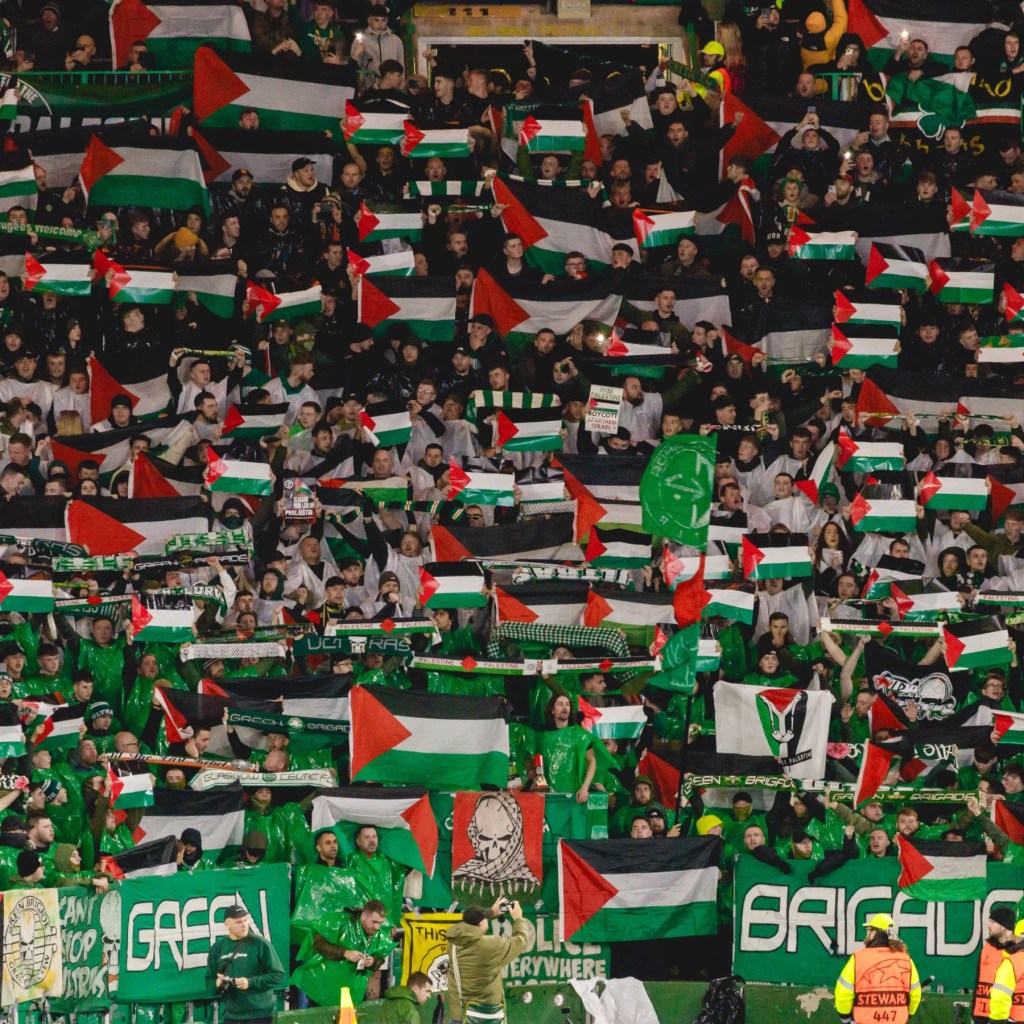
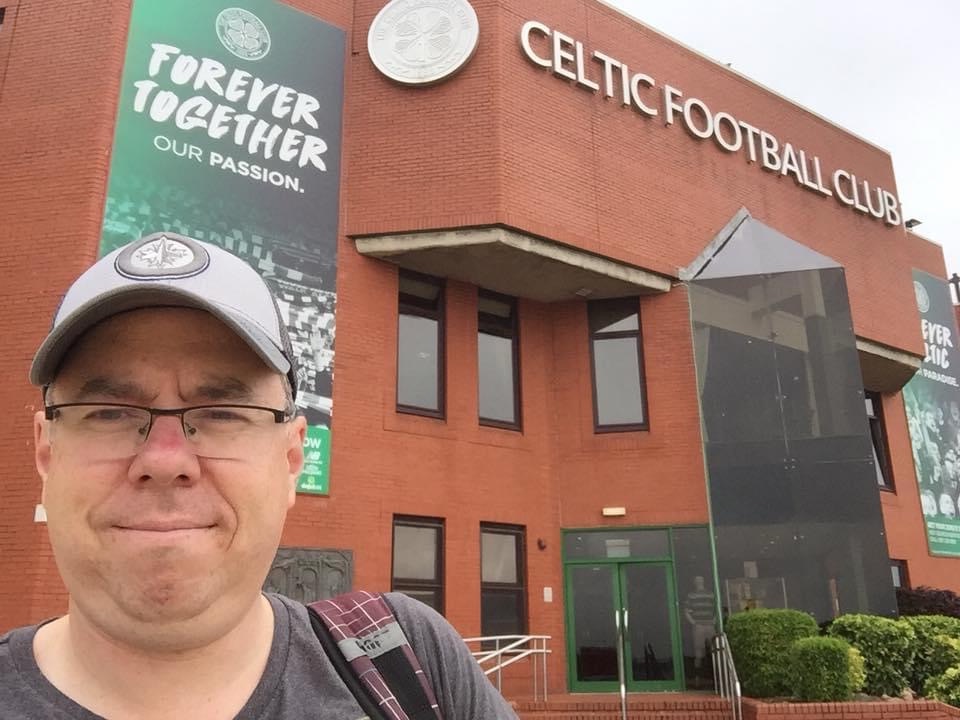
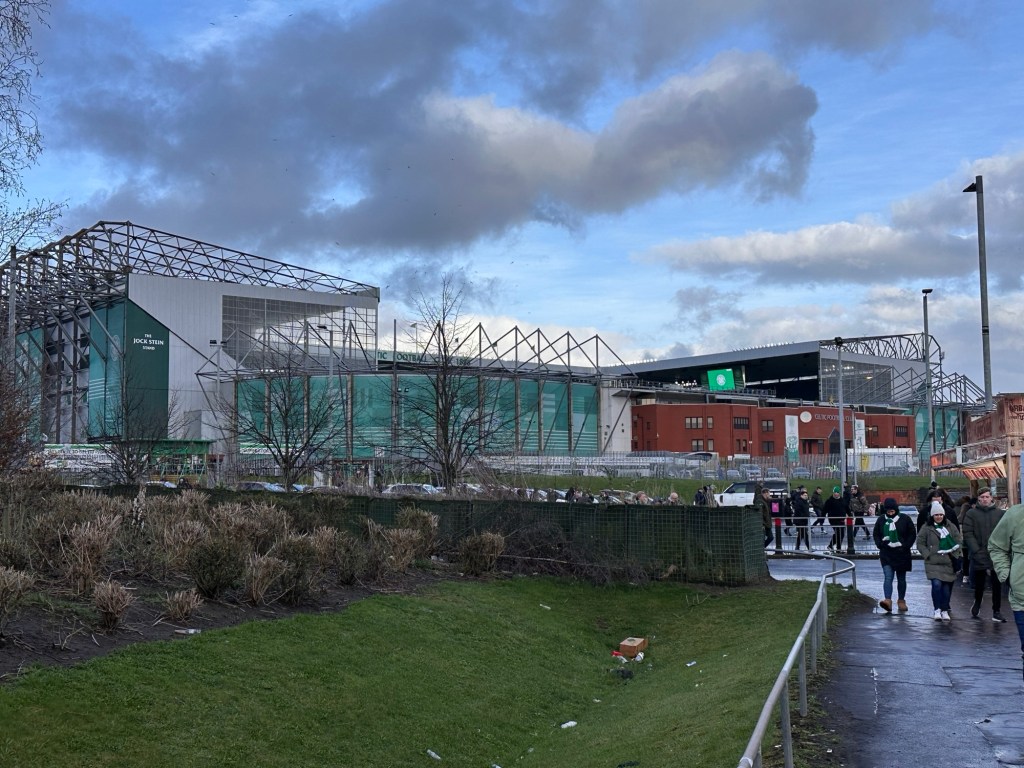
Celtic Park – 2016
Chilean Football’s Palestinian Connection
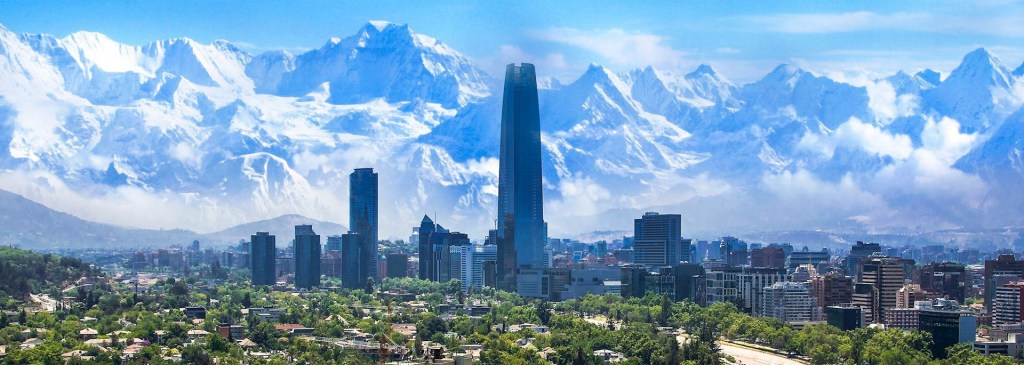
I’ve never been to Chile, though it’s long been on my list. Santiago, the capital, rests at the foot of the Andes and within reach of the South Pacific. Its airport is one of the few gateways to Easter Island. My desire to visit began well before I understood Chile’s deeper connection to Palestine—and to sport.
I bought what I thought was a Glasgow Celtic alternate third jersey to support Palestine. The jersey has the Celtic look with the addition of kufiya-inspired stripes and the Palestinian flag.
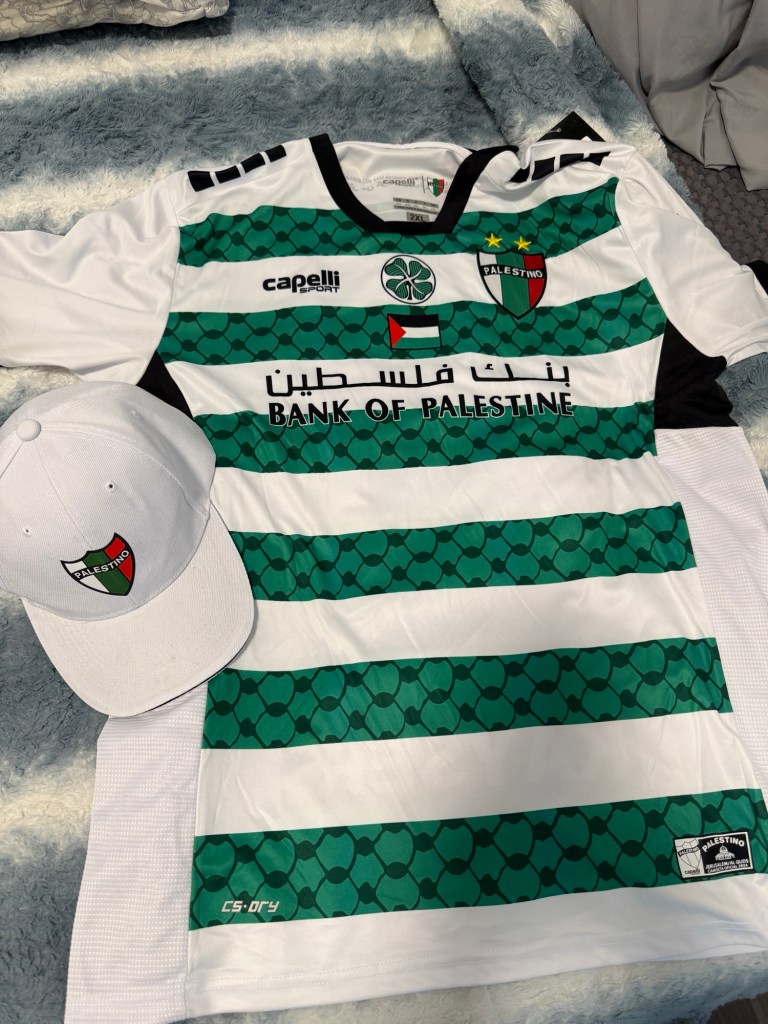
It turns out the jersey wasn’t Celtic at all, but an alternate third kit from Club Deportivo Palestino, a professional football club in Santiago that competes in Chile’s top-flight Primera División. They were showing their support for the Celtic who have always supported Palestine.
Palestino was founded in 1920 by the Palestinian community in Chile as a space for recreation and connection. After 1947, when Britain’s withdrawal and the creation of Israel raised fears that Palestine was being erased from the map, Father Raúl Hasbún—a young Chilean-Palestinian priest who would later court political controversy—pushed to professionalize the club. His goal was simple: “Palestine is being erased from the map. In Chile we have to put it back on the map.”
He understood that turning Palestino professional would keep the name of Palestine in the media every week—first in Chile, and eventually across South America. The club entered the second division, but quickly won the championship and earned promotion to the top flight. Since then, Palestino has gone on to win two Primera División titles.
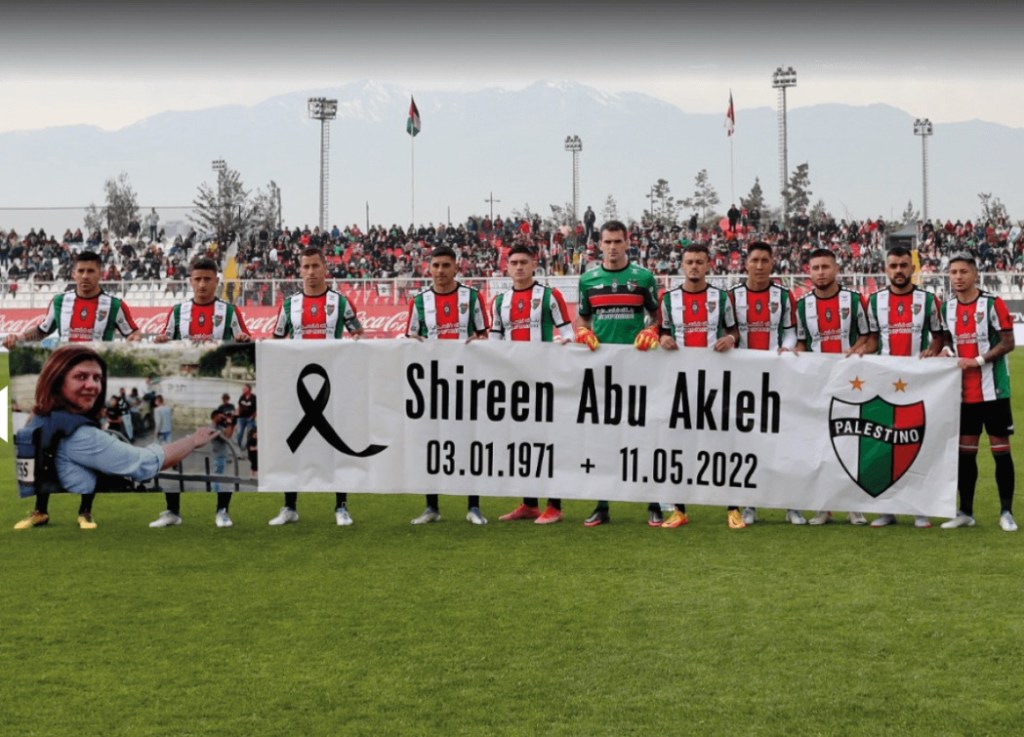
In 2014, Palestino’s jersey was banned by the league after complaints from the Israeli government and local Zionist groups. The controversy centered on the number “1,” which the club had stylized to represent the full map of historic Palestine. Officials ruled the design “too political,” but the decision only amplified Palestino’s symbolism. Fans rallied behind the team, sales of the banned jersey surged, and the club leaned even more openly into its role as a cultural and political emblem for the Palestinian diaspora.
Full Circle to Palestine
Each of these moments—Mandela lifting the Webb Ellis Cup, Celtic supporters raising Palestinian flags in Glasgow, and Palestino’s fight to keep their identity stitched into a jersey—are not isolated stories. Together, they map a path that continually led me back to Palestine. What began in South Africa as an awakening to injustice became clearer with every connection: that sport can be a mirror of oppression and resilience, and a stage where the erased reclaim their place.
The path to Palestine is not just geographic; it is written in the struggles and solidarities of communities across the world.


Leave a comment