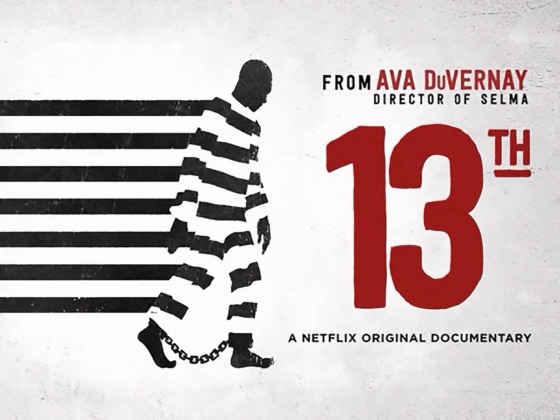
One of my favourite Netflix documentaries is The 13th. The film examines the 13th Amendment, which abolished slavery and involuntary servitude—except as punishment for a crime. The documentary argues that this loophole enabled the continuation of free labour, a foundation of the American economy. In turn, laws were crafted to criminalize everyday behaviours, effectively targeting Black Americans and ensuring they remained a controlled, unpaid labour force.
In the documentary, James Kilgore — an expert on the economics of incarceration — highlights one of the most striking examples of racial disparity in U.S. sentencing laws: “The same amount of time in prison for one ounce of crack cocaine that you would get for 100 ounces of powder cocaine.” In practice, this meant that a young Black man selling small quantities of “crack” could be sentenced as harshly as a major drug trafficker — a system designed to punish poverty and race rather than crime itself.
The last time I watched the documentary, I couldn’t shake the feeling that the name James Kilgore sounded familiar. After a bit of reflection, it hit me — it brought me back to the summer of 2002, when I was living and working in Cape Town, South Africa.
Friday Night Police Lights
Most days in Cape Town followed the same rhythm. I’d wake up, down a drinkable yogurt, shower, and leave a small pile of clothes for the housekeeper to wash and iron. Then I’d rummage through a stack of burned CDs—the kind that squeezed a hundred songs into a file format so small it seemed like magic—and load one into my portable Discman for the walk ahead. It took about half an hour to reach a colleague’s house, where I’d catch a ride to work.
Friday, November 8, 2002, began no differently. Being a Friday, though, there was a little extra lightness in my step, and I knew post-work beers were the norm. Cape Town was officially in the last weeks of spring, but the season had already surrendered to summer. The sky was flawless, the sun relentless, the air thick and bright—about twenty-eight degrees by noon.
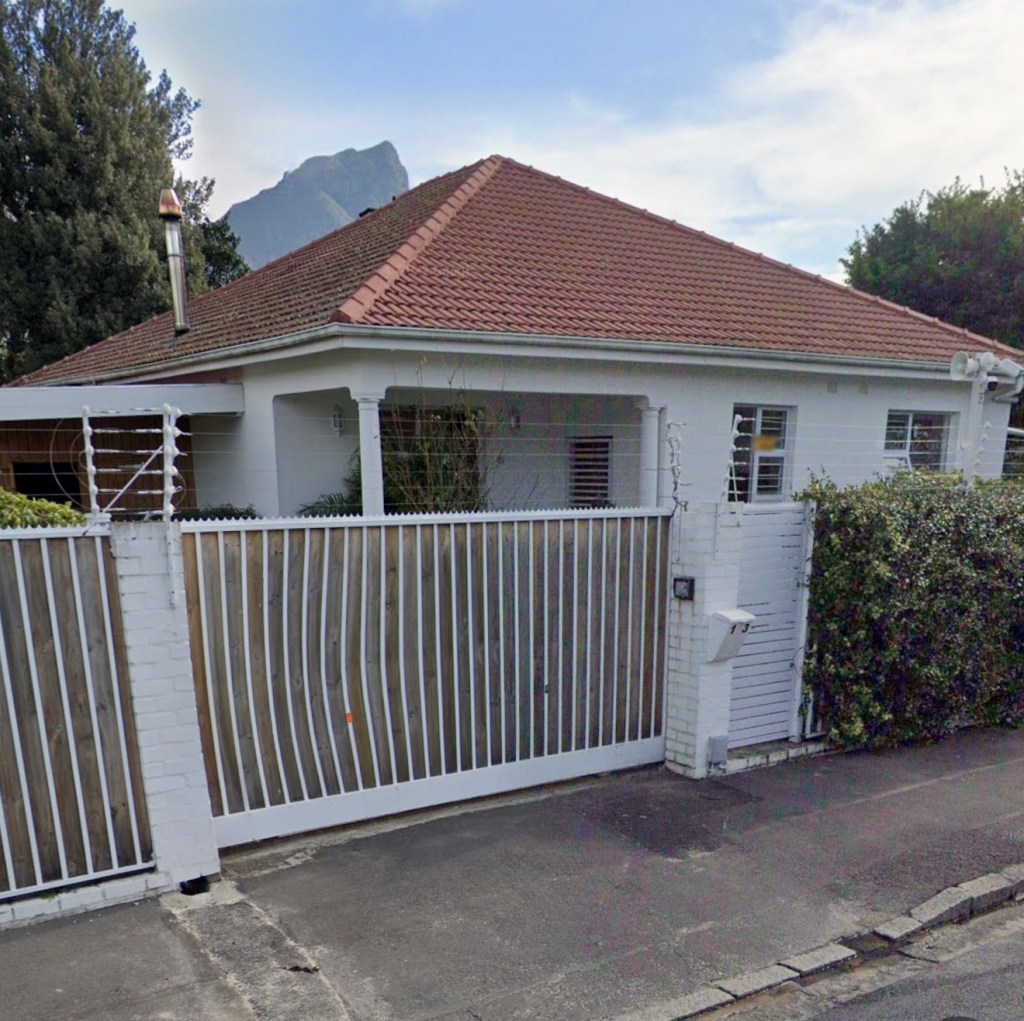
I didn’t know my neighbours well. A polite wave or nod was usually enough to keep up social protocols. Across the street lived a man I vaguely knew worked at the University of Cape Town. To me—back then everyone older than thirty seemed middle-aged—he was simply the friendly guy with the big smile and the large glasses. Most mornings our routines overlapped: me locking my front door just as he loaded his car to leave for work. I can’t say for certain it happened that Friday, but chances are that we gave a wave or nod to each other like most mornings.
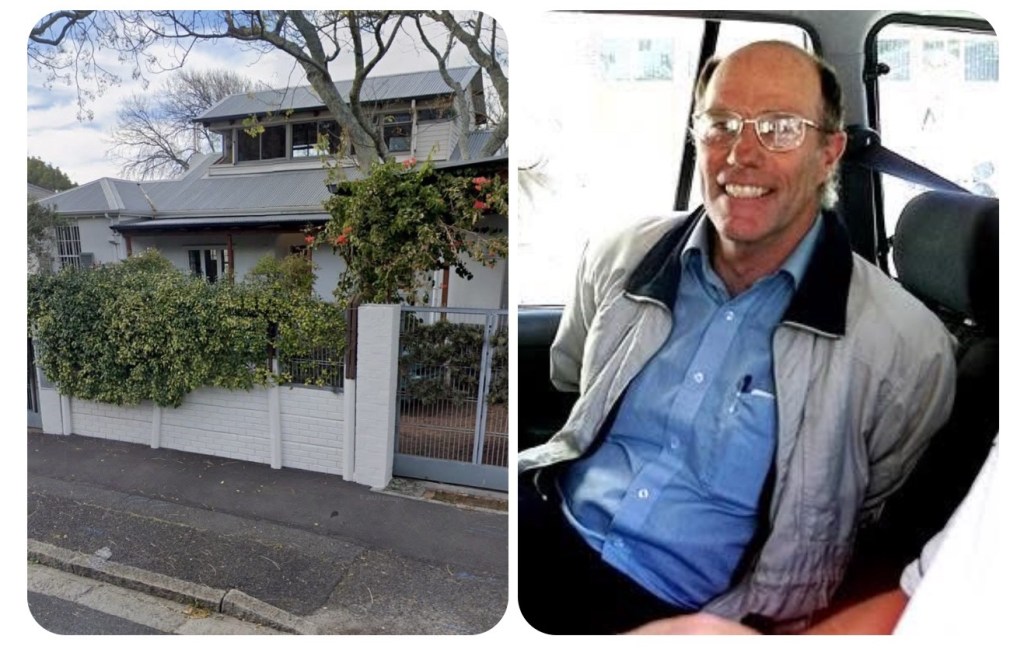
That evening, I got home around seven-thirty after dinner and post-work beers. My street was blocked by police cars. The commotion was centered on his home across the road. I couldn’t see him, only the officers standing guard at the door. The easy rhythm of the day, the heat, the lightness—all of it suddenly felt distant. I would later learn that he had been arrested and taken away just moments earlier.
These were the days before social media and smartphones. I had almost forgotten about the incident until I picked up the Saturday edition of the Mail & Guardian—a leading South African newspaper. Even then, it took me a moment to fully connect the dots and realize that I had witnessed the aftermath of the arrest they were reporting.
The front-page headline read:
Symbionese Liberation Army Leader Arrested in Cape Town.
The article described an arrest in the middle-class suburb of Claremont. I thought to myself,
“Wait—that’s my neighbourhood!”
Other media reports were more specific, stating that a terrorist had been arrested on Dunluce Road in Cape Town.
“That’s not just my neighbourhood,” I thought, “That’s my street!”
In disbelief I realized that my neighbour had long been wanted by the American government as certain phrases in the article jumped out at me:
“FBI” — “Interpol” — “lived under an alias” — “wanted for murder, armed robbery, and possession of explosives (homemade bombs)” —“Patty Hearst.”
Living Next to America’s Most Wanted Fugitive
I had been living next to James Kilgore—arrested under the alias Charles William Pape—one of the longest-standing fugitives on America’s most wanted list. He had evaded capture since the mid-1970s.
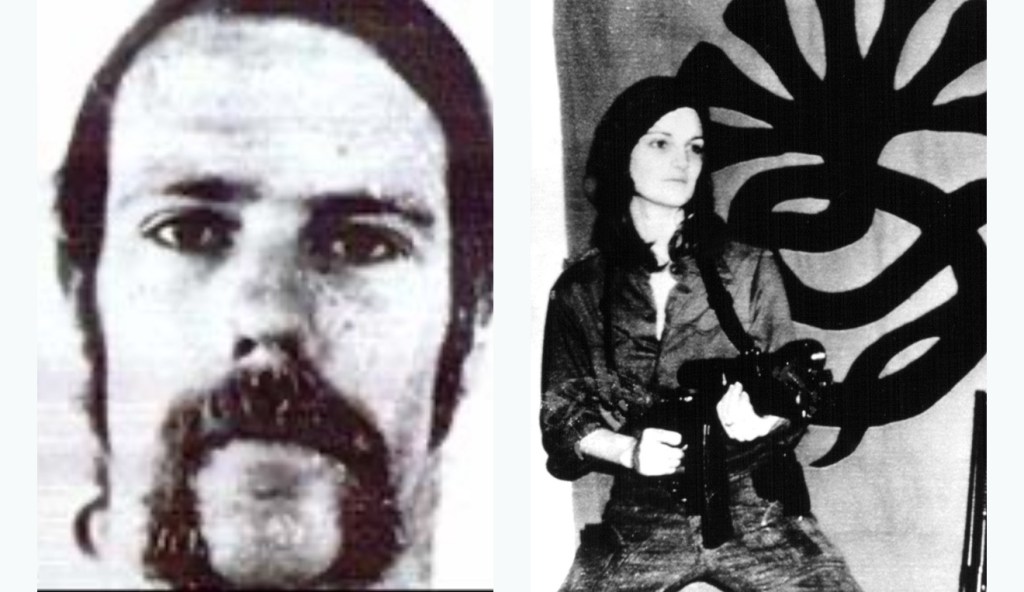
Kilgore was a former leader of the Symbionese Liberation Army (SLA), a small, far-left militant group that the FBI labeled as the first American-born left-wing terrorist organization. Active between 1973 and 1975, the SLA saw itself as a united front for leftist causes: feminism, anti-racism, anti-capitalism, and more.
In practice, however, the SLA was short-lived and—by most accounts—highly amateurish in both its goals and operations. The group murdered Marcus Foster, one of the first Black school superintendents, whom they branded a fascist for introducing student ID cards in Oakland schools. That killing alienated them from the very Black communities they claimed to support.
The SLA also funded its operations through bank robberies, during one of which Myrna Lee Opsahl, a customer, was killed. In 1974, six SLA members died in a televised shootout with the LAPD.
Despite all of this, the group is most infamous for the 1974 kidnapping of Patty Hearst, the heiress to the Hearst publishing fortune. The abduction was aimed at gaining publicity and leveraging demands for the release of jailed SLA members. Hearst would later join the group, reportedly helping to make explosives and acting as a lookout during a bank robbery.
Her involvement sparked years of controversy, particularly around her claim of suffering from Stockholm Syndrome—a contested psychological condition where hostages come to sympathize with their captors. While some believed she had been brainwashed, others remained skeptical. Hearst’s federal sentence was eventually commuted by President Jimmy Carter, and she was fully pardoned by President Bill Clinton.
Kilgore fled the U.S. in 1975 under indictment and remained a fugitive for 27 years, living in Zimbabwe, Australia, and South Africa. During that time, he reinvented himself as John Pape—an academic, author, and respected activist. His work focused on labor movements, poverty, and—ironically—incarceration.
Those who knew him as John Pape spoke highly of his contributions. Tony Ehrenreich, leader of the Western Cape Congress of Trade Unions, said: “John is an important activist who made a huge contribution towards the workers’ struggle in South Africa.” Even Archbishop Desmond Tutu, the Nobel Peace Prize laureate, wrote a letter of support on his behalf.
When police finally arrived at his home, they asked, “Are you James Kilgore?”
He reportedly replied, “Yes, that’s me.”
Some say he felt an immense sense of relief—no longer having to live as a fugitive.
Kilgore was extradited to the United States, where he served a prison sentence until 2009. While incarcerated, he became a respected prison educator. After his release, he began working at the University of Illinois.
Controversy arose in 2014 when news of his past led to protests against his employment. The university withdrew its job offer. In response, over 300 faculty members signed a petition demanding his reinstatement—and he was ultimately rehired.
This memory reminds me that we never truly know the full story of a person. Some people change and go on to live entirely different lives. Others master the art of disguise — wearing virtual masks and new IDs that let them hide in plain sight.


Leave a comment